


Sacred Dolpo, Dhorpatan & Hidden Shaman Villages Camping Trek
Great Himalayan Trail (GHT) | Nepal Himalaya Trek
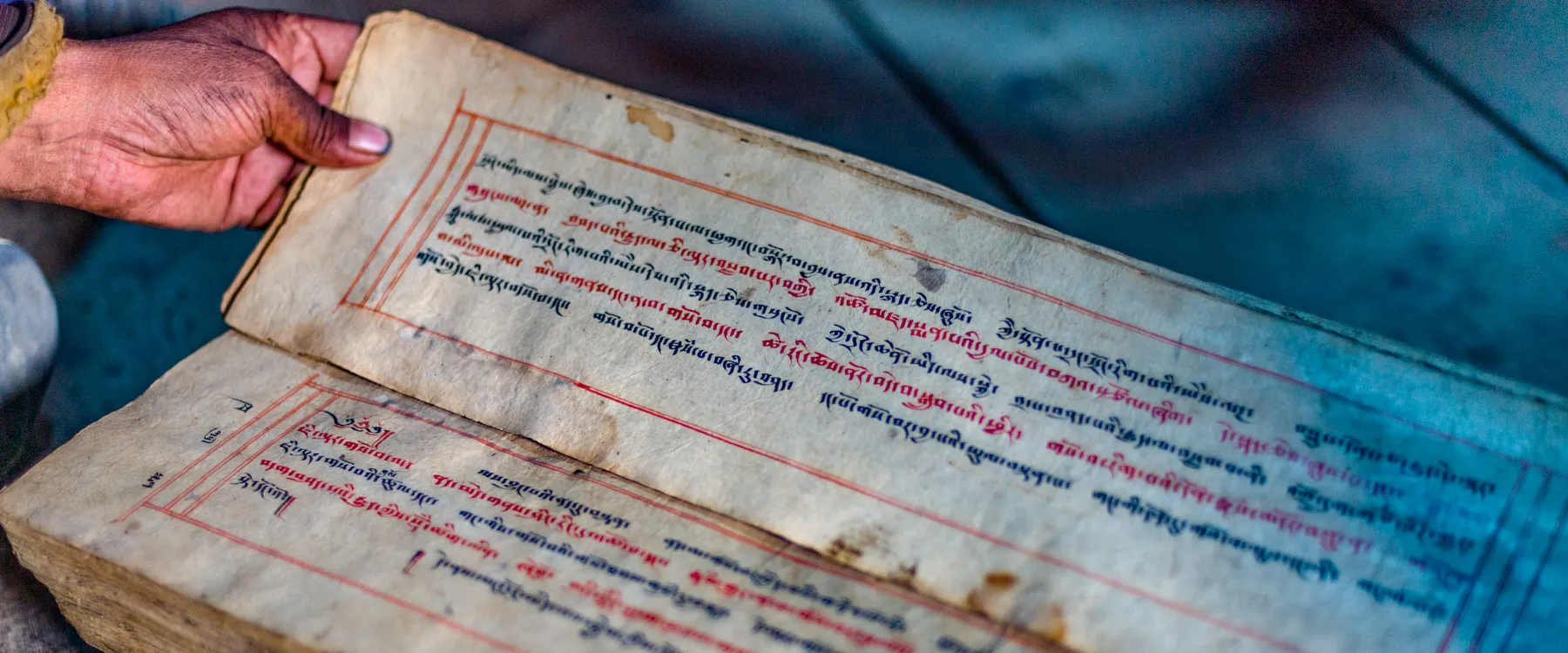
Our Kamzang Journeys guided Himalayan camping trek through sacred Dolpo, the Dhorpatan region south of the Dhaulagiri range, and an exploratory section through hidden shaman villages of East Rukum, one of Nepal’s most sublimely beautiful regions. Our original Dolpo route was crafted almost 20 years ago, over a cup of salt-butter tea with Thinle Lhondup, the beloved Dolpo village chief who starred in the movie ‘Himalaya’. Thinle Londup, along with nephew and guide Thinle Gyalgen, helped to create our unique, far-flung treks into the ethnically Tibetan region of Dolpo. We explored the Dhorpatan trekking route years ago, during their yartsagunbu (caterpillar fungus, Nepal’s ‘gold rush’) season, and our exploratory shaman East Rukum route was recently researched during a beautiful West Nepal Middle Hills cycling trip.
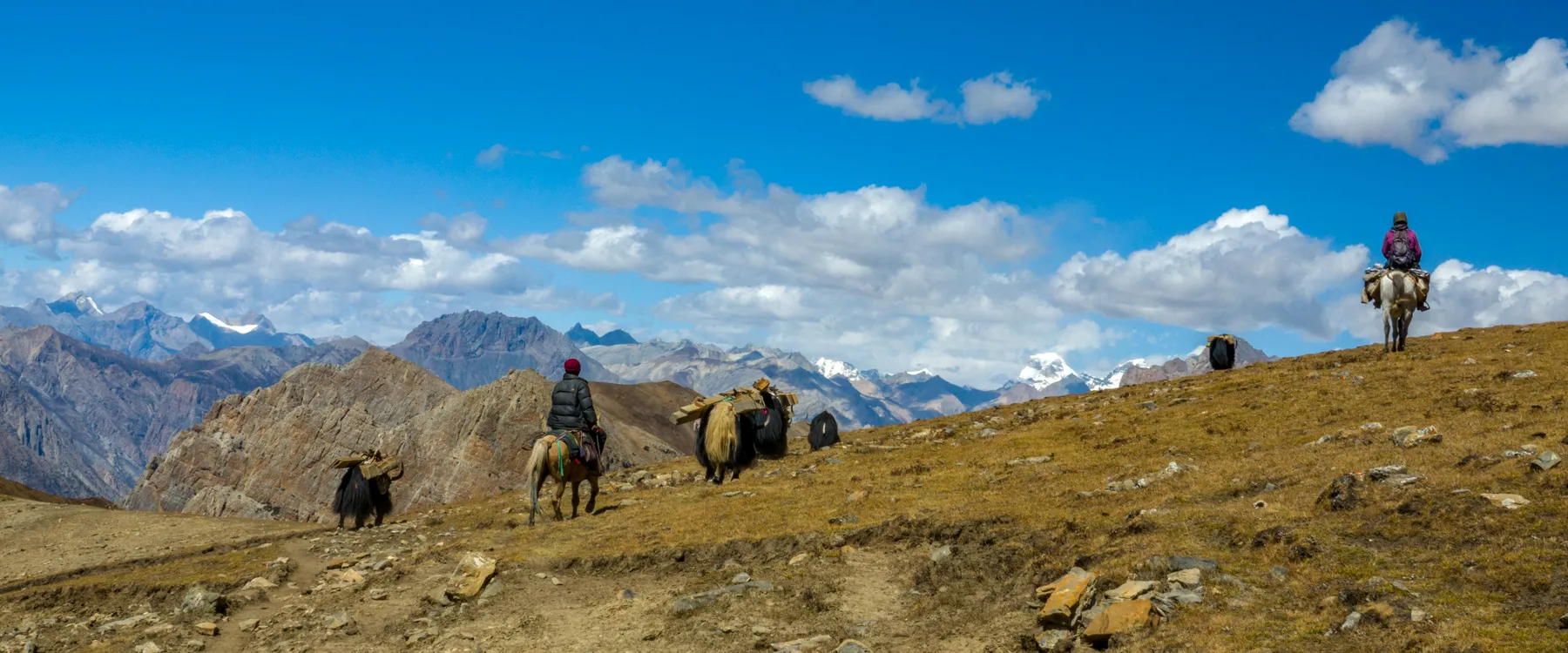
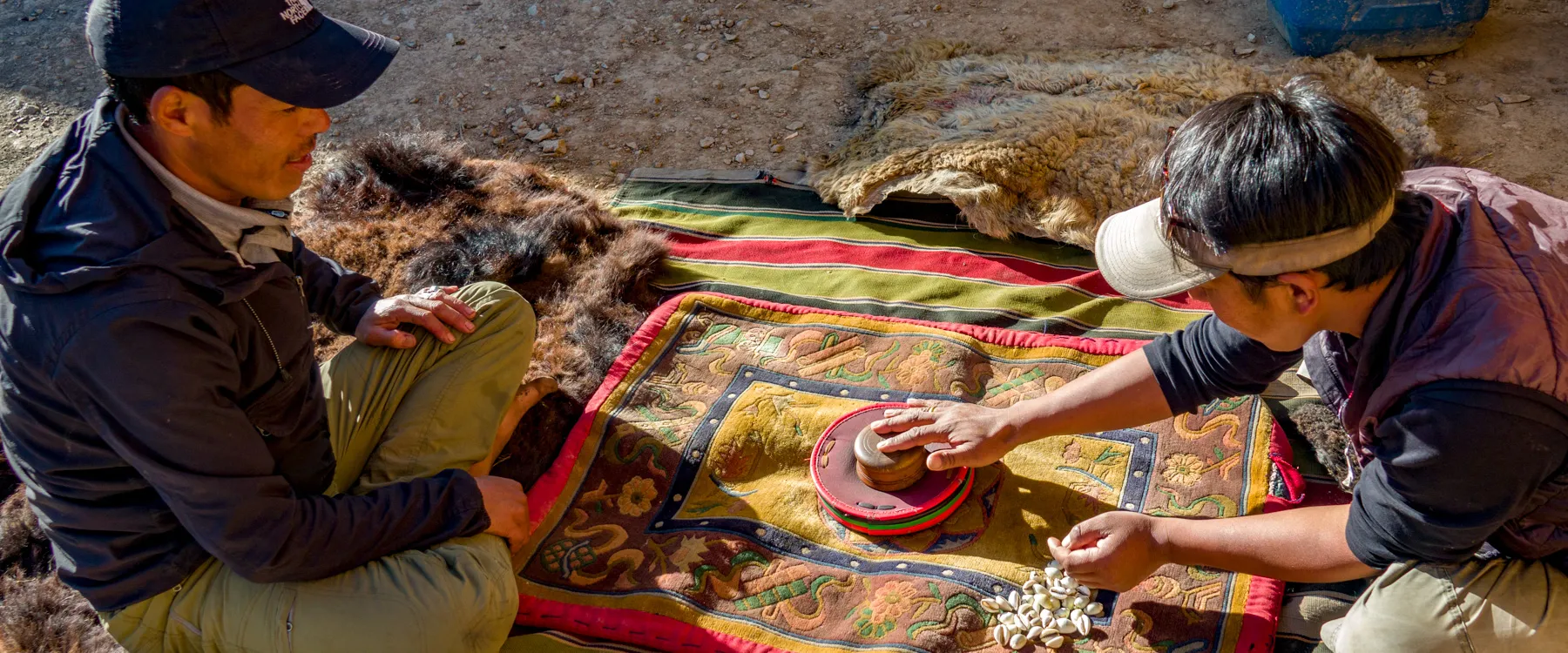
Dolpo is a remote, spectacular region of snow leopards, blue sheep, Tibetan wolves, yaks, sacred snow peaks, turquoise lakes, crumbling ‘dzongs’ (fortresses), traditional trade routes with Tibet, billowing barley crops, yaks, autumn harvests, a colorful variety of birdlife and Dolpo-pa on horseback. This Himalayan border region is one of Nepal’s most culturally vibrant regions, which still practices traditional Tibetan medicine, and is a bastion of both Tibetan Buddhism and Bon religions.
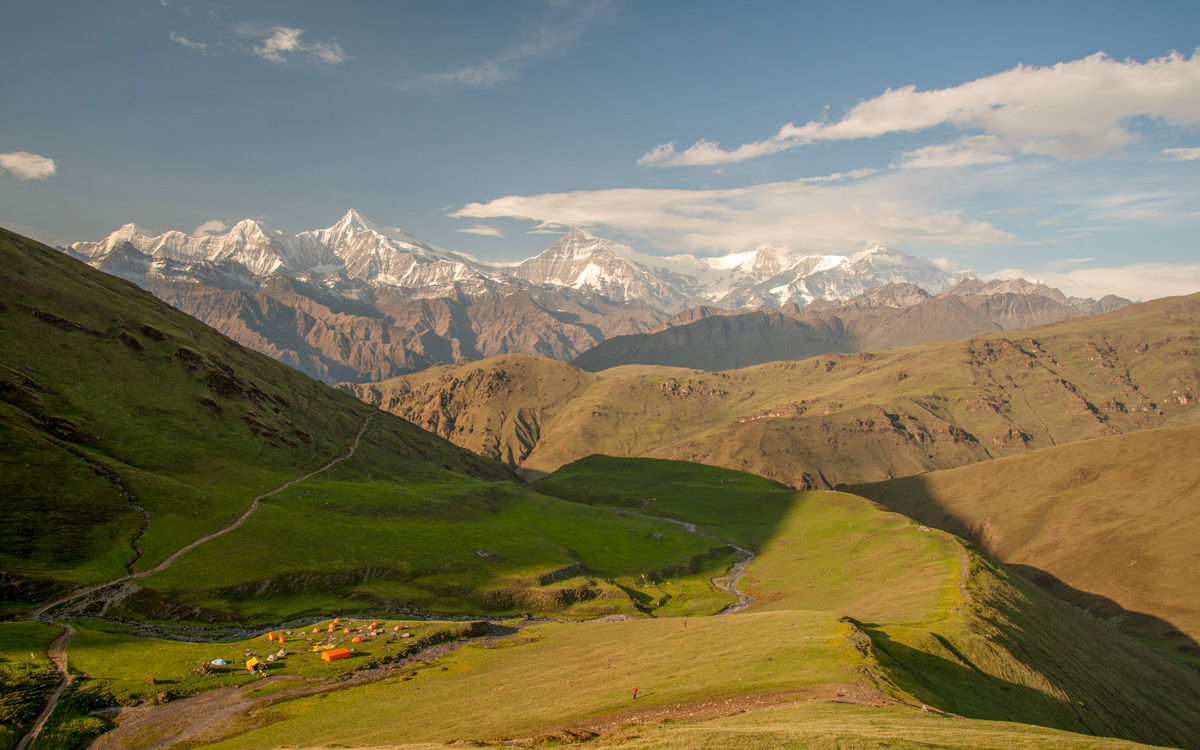
A highlight of this epic trek is a week-long trek through the spectacular, rugged Dhorpatan Hunting Reserve, Schaller and Matthiessen’s original route into Upper (Inner) Dolpo. The Dhorpatan route to reach Shey Gompa is featured in their books ‘The Snow Leopard’ and ‘Stones of Silence’. (The springtime is yartsagunbu (caterpillar fungus, ‘the world’s most valuable fungus’) harvest season, ‘Himalayan Gold Rush’). The beautiful Dhorpatan region, forested with a wide variety of trees and evergreens, is home to rare wildlife such as the red panda, wolf, musk deer, goral, Himalayan thar, and blue sheep, is also a very cultural region of Nepal’s fertile, green Middle Hills. Dhorpatan Hunting Reserve is Nepal’s first (and only) hunting reserve, a conservation area situated just below the Dhaulagiri Massive, known for its mixed Kham Magar–Tibetan heritage and yartsagunbu collecting in the early summer months. Dhorpatan, an ancient trade and migration route, is a natural corridor between the Karnali and Gandaki basins and a place where Tibetan medicine (Sowa Rigpa) is still actively practiced by amchis (Tibetan doctors), linked to Bon monasteries. The wide, high altitude meadows, locally called ‘patan’, give the area its name, and are prime grazing and wildlife habitats.
Our Dolpo journey begins with a spectacular flight to west Nepal along the Himalayan peaks, to the small mountain airstrip at Juphal. We trek up the dramatic Sulighad River gorge to Ringmo and Phoksumdo Lake. We explore ever further into spectacular Dolpo and its bordering regions, camping at far-flung Dolpo villages, hiking to the turquoise Phoksumdo Lake, crossing high Himalayan passes, visiting ancient Tibetan Buddhist and Bon monasteries with Buddhist and Bon-po lamas and gilded rooftops, exploring Dho Tarap and the shaman-like nagpa lamas, sharing chaang (barley beer) with the local Dolpo-pa. and searching for wonderful striped Dolpo blankets and textiles. Our Lower Dolpo trek includes many remote villages, all bustling with the Autumn barley harvest and traditional Dolpo village life. Our journeys always include extensive cultural interactions as we have close relationships with villagers throughout this remote Himalayan region through our years of exploratory treks and the Kamzang Fund.
The last section of this epic Himalayan trek is an exploratory route through some of Nepal’s Middle Hills shaman villages in the fabulously scenic, cultural East Rukum district of Nepal’s Middle Hills, inhabited by ethnically Tibetan Kham-Magars. Dhami and Jhakri, traditional shamans in Kham-Magar society, serve as spiritual leaders and healers who mediate between the human world and the spirit world. This region has a rich and ancient culture, and besides being extremely beautiful (many videos of Nepal are filmed in this region), contains ‘hidden valleys’ hardly ever visited by westerners, only recently partially connected by roads.
Join us for this once-in-a-lifetime trek through sacred Dolpo, the beyul of Dhorpatan and our hidden shaman villages, an unforgettable Himalayan journey, one of Nepal’s most unique trekking routes!
👣👣👣
Trek
Sacred Dolpo, Dhorpatan & Hidden Shaman Villages (East Rukum) Camping Trek – GHT Nepal Himalayan Trek
Day 1 – Sunday, 27 September 2026 – Arrive Kathmandu | Transfer Kathmandu Guest House
Day 1 – Wednesday, 29 September 2027 – Arrive Kathmandu | Transfer Kathmandu Guest House
Day 2 – Kathmandu | Optional Heritage Sightseeing
Day 3 – Fly Nepalgunj | Transfer Siddhartha Hotel
Day 4 – Fly Juphal. Trek Rupgad
Day 5 – Trek Chhepka
Day 6 – Trek Chuniwar | Amchi Gompa
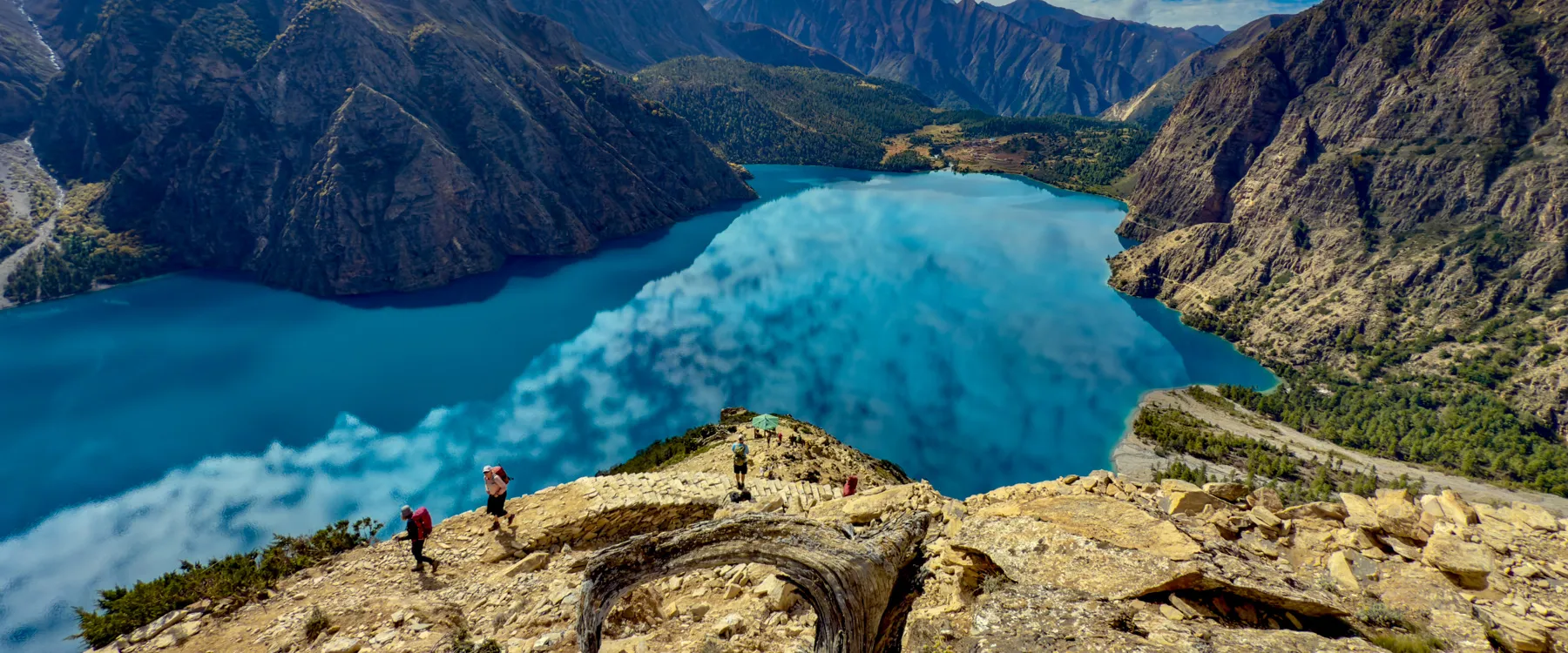
Day 7 – Trek Ringmo | Phoksumdo Lake
Day 8 – Ringmo | Day Hike
Day 9 – Trek Chabluk Phu | Cross Ringmo La 4090m
Day 10 – Trek Lake Valley Camp (Schaller’s Camp) | Cross Phoksumdo Ridge La
Day 11 – Trek Sagar Camp | Cross Schaller’s Pass (La) 5000m
Day 12 – Trek Yartsa Gumbu (Caterpillar Fungus: Himalayan Gold Rush) Camp
Day 13 – Trek Dho Tarap
Day 14 – Dho Tarap | Explore Bon Monasteries
Day 15 – Trek Nawarpani Dovan
Day 16 – Trek Laina Odar
Day 17 – Trek Tarakot (Sahadara)
Day 18 – Trek Jang La High Camp
Day 19 – Trek Purbang | Cross Jang La 4520m
Day 20 – Trek Seng Khola (Phuphal Phedi) & Dhule
Day 21 – Trek Hanpa Rija (Exploratory)
Day 22 – Trek Maikot (East Rukum)
Day 23 – Trek Trek Pelma Tatopani, Dimmurghaira & Mayang | Cross Dimmurghaira Ridge (Exploratory)
Day 24 – Trek Birgum Khani (Exploratory)
Day 25 – Drive (Jeep Road) Shaman Village (East Rukum)
Day 26 – Drive Pokhara | Transfer Hotel Barahi
Day 27 – Fly Kathmandu | Transfer Kathmandu Guest House
Day 28 – Saturday, 24 October, 2026 – Trip Ends | Transfer TIA Airport
Day 28 – Tuesday, 26 October, 2027 – Trip Ends | Transfer TIA Airport
Dolpo Photos
Dolpo Photos
Distances 👣
+ Total Kilometers of Trekking (Approx) – 265 km
+ Total Miles of Trekking (Approx) – 160 miles
Travel Advice
+ We strongly recommend scheduling an extra day in Kathmandu post-trek in case of flight delays or cancellations!
+ We require that all travelers have a current travel medical insurance policy that includes helicopter evacuation.
+ We require that all travelers have a current complete medical check-up with a doctor’s recommendation letter. All travelers over 60 years of age must also have a current cardiac examination with exercise treadmill stress test included.
+ We recommend purchasing travel insurance with trip cancellation.
Private Trips & Customized Journeys
We’d love to create a private journey or trip extension for you! We specialize in custom-crafted Himalayan treks and trips including heritage tours in the Kathmandu Valley, Pokhara & the tea regions, wildlife safaris in Chitwan & Bardia National Parks, luxury and boutique get-aways, cycling adventures and unique journeys in Bhutan, Tibet, Nepal & the Indian Himalaya. Inquire for helicopter tours and additional travel options …
Kim & Lhakpa’s Personally Guided Trips
Featured Journeys
Client Highlights & Reviews
Travelers’ Comments


Why Travel with Kamzang Journeys?
Why Trek with Us?
Kamzang Journeys Reviews!
Kamzang Journeys Reviews
Kim Bannister Photo Gallery | Trip & Trek Photos
Kim Bannister Photography
Dolpo Photos
Dolpo Photos
Nepal Journeys & Chitwan Photos
Nepal Journeys Photos
Kamzang Journeys Menus
Camp Menus
Chitwan National Park | Maruni Sanctuary Lodge
Amazing Nepal Heritage Tour | Kathmandu, Chitwan, Bandipur & Pokhara
Chitwan & Bardia Luxury Wildlife Safaris | Tiger Tops Lodges
Tiger Tops Wildlife Safaris | Chitwan Tharu Lodge + Bardia Karnali Lodge
Cafe Caravan & Dolpo Gallery
Dolpo Artist Tenzin Norbu creates wonderful Dolpo paintings, the prints (and some originals) available from our Cafe Caravan at Boudhanath Stupa.
Kamzang Journeys Products
Duffel bags, t-shirts, camp towels, buffs, handcrafted leather passport wallets, totes + bags, Himalayan textile pillow covers + more available in Kathmandu!
Kamzang Journeys Products
Kamzang Design ETSY Shop
These handcrafted products designed by Kim & local craftspeople are available online & in Kathmandu. Check us out!
Kamzang Design Etsy Shop
Nepal Modules
Nepal & Kathmandu Modules | Customize Your Trip!
Itinerary
Sacred Dolpo, Dhorpatan & Hidden Shaman Villages Camping Trek – GHT Nepal Himalayan Trek
Day 1 – Arrive Kathmandu 1340m / 4395′ | Transfer Kathmandu Guest House
Welcome to Nepal! You’ll be met at the Tribhuvan International Airport by a representative from the Kathmandu Guest House. Once you exit the airport, look for the Kathmandu Guest House sign and a sign with your name on it. Rajendra (+977 9841623270) +/or the KGH driver will transfer you to the Kathmandu Guest House, where your rooms have been booked for you. Relax in their beautiful, newly expanded garden, hydrate, enjoy a snack and recover from your jet lag.
Kim will meet you at the guest house and introduce you to Thamel, the bustling tourist area of Kathmandu. Thamel is a myriad of shops of all imaginable varieties, bakeries, cafes, restaurants, bars, hotels, spas, climbing walls, colorful banners and signs, and eccentrically clad backpackers. Over dinner at Roadhouse Cafe, New Orleans, Denchenling, Yin & Yang, Third Eye, or one of Thamel’s other restaurants we’ll get to know each other over a few drinks …
Day 2 – Kathmandu | Optional World Heritage Sightseeing Tour
Morning meeting at 8:30 AM in the back garden of the Kathmandu Guest House to collect passports, insurance information and photos, and go over some of our trek details and logistics. Enjoy a free day exploring Kathmandu’s many World Heritage sites or embark on a tour of the beautiful Kathmandu valley, surrounded by Himalayan snow peaks (see Kathmandu Valley Tours for optional tours with a qualified guide, car, and entrance fees included). Or just relax at the hotel, visit the spa, have a massage, wander Kathmandu’s fascinating streets, pop into neighborhood Hindu temples and Newari-styled courtyards, join in on koras of the Buddhist temples.
We’ll have time for a bit of gear shopping in Thamel for anyone who needs to adjust their gear, and in the evening we’ll get together for dinner in another of Thamel’s great restaurants. Option to visit Boudhanath Stupa, Cafe Caravan and have dinner at Roadhouse Boudhanath overlooking the stupa. (B)
Cafe Caravan & Dolpo Gallery
Dolpo Artist Tenzin Norbu creates wonderful Dolpo paintings, the prints (and some originals) are available from our Cafe Caravan at Boudhanath Stupa, housed in one of Boudha’s original historic buildings, decorated in a bright, Tibetan style and overlooking the magnificent stupa!
Massage in Kathmandu (Ramji of Relieving Hands)
Ramji is a blind masseur trained by Seeing Hands in Kathmandu, who now offers wonderful at home (or hotel) massages, with his own massage table and oil. He is truly a master masseur, a real healer and VERY highly recommended. His prices are extremely reasonable. Let us know if you want help to arrange a massage.
Relieving Hands by Ramji
Sightseeing in Kathmandu
Nuru Wangdi Sherpa (Khumbu Adventures & Café Caravan) has his Kathmandu guide license and a large SUV vehicle, and can arrange any sightseeing you might want to do in Kathmandu and the Kathmandu valley. He is often available for guiding your excursions as well. Mobile + WhatsApp: +977 9803633783 (WhatsApp)
Kathmandu | World Heritage Sightseeing Tours – Pashupatinath, Boudhanath, Durbar Square & Swayambunath
Kathmandu is filled with World Heritage sites and sacred destinations, crowded with traditional neighborhoods and colorful festivals. Spend a few days exploring Nepal’s exotic capital and the history-laden Kathmandu valley. We can arrange sightseeing guides and vehicles as required. See Kathmandu Heritage & Happenings for more details.
We recommend beginning with Pashupatinath in the early morning and moving on to Boudhanath mid-morning. Hindu Pashupatinath on the sacred Bagmati river and its sacred temple complex is one of Nepal’s most important sites, a powerful cremation site, and Nepal’s most important Hindu temple. Here, monkeys run up and down the steps of the burning ghats, and trident-bearing saddhus draped in burnt-orange and saffron sit serenely meditating when they’re not posing for photos-for-rupees. Local guides can explain the significance of the complicated ceremonies. Please be respectful when taking photos.
Boudhanath, in the midst of traditional monasteries (gonpas in Tibetan) and hung with long strings of multi-colored prayer flags, attracts Sherpas, Tibetans, and tourists alike for daily circumambulations (koras) of the iconic stupa. The striking Buddha eyes of Boudhanath Stupa watch over a lively and colorful Tibetan community and attract pilgrims from all over the Himalayan Buddhist realm. There are wonderful spots for lunch at Boudhanath (Roadhouse Cafe has wood-oven pizzas and a breathtaking view of the stupa and colorful Nepalis circling it), and it’s a good place to learn the technique of thanka painting and purchase a thanka (Buddhist mural). See also Bhaktapur for more options for shopping for thankas.
Wander through the many temples, pagodas, courtyards, and the museum at Kathmandu Durbar Square, a timeless gathering spot and a UNESCO World Heritage site. Kathmandu Durbar Square, including the old royal palace, is Kathmandu’s ‘Palace Square’, a showcase for the world-renowned artisans and craftsmen of Kathmandu and a synthesis of Hindu and Buddhist palaces, temples, stupas, and statues. The Malla and Shah kings ruled over the Kathmandu Valley during the centuries of the building of the layers of this Durbar Square. Along with their opulent palaces, the square surrounds numerous courtyards and temples, all works of art with intricate and often erotic carvings. Kathmandu Durbar Square is known as Hanuman Dhoka Durbar Square, a name derived from a statue of Hanuman, the monkey devotee of Lord Ram, at the entrance of the palace. The social, religious and urban focal point of the city, Durbar Square is often the site of festivals, marriages, and other ceremonies such as Teej. Some important structures are Hanuman Dhoka Palace, Kumari Ghar (Abode of the Living Goddess), Taleju Temple, built between the 12th and 18th centuries, the 17th century stone inscription set into the wall of the palace with writings in 15 languages.
In the evening (take the interesting back streets from Durbar Square) climb the many steps to the gilded Swayambhunath stupa (known as the monkey temple) which rises from the Kathmandu valley floor at 1420 meters and is one of the holiest Buddhist sites in Nepal. Swayambunath, the ‘self-created’ stupa, was founded over 2000 years ago at a time when the Kathmandu valley was filled by a large lake, with a single lotus in the center. Mythology says that Manjusri, a bodhisattva, drained the lake with one cut of his sword and the lotus flower was transformed into the stupa. From its commanding views of Kathmandu, circumambulate Swayambunath’s white-washed stupa, painted with distinctive Buddha eyes, the complex a unique synthesis of Buddhism and Hinduism. Another interesting time to visit Swayambunath is in the mornings when Nepalis visit the temple dedicated to the God of Smallpox with colorful offerings for the goddess.
Stop to photograph reflections in Kathmandu’s many pokharis or ponds, including the beautiful Rani Pokhari (queen’s bath) near New Road, and the Naga Pokhari (pond of the snake gods of the underworld) just beyond the palace gates. The many bathing ghats, square enclosures with steps leading down to water spouts and often decorated with naga heads, are also interesting and colorful gathering spots.
Day 3 – Fly Nepalgunj 150m/495′
We have a scenic morning flight to tropical Nepalgunj in Nepal’s western Terai region. Our flight over the terraced hillsides and thatched villages of Nepal’s green middle hills, and across the western Himalayan peaks. Some of the peaks en route include Everest, Dorje Lhakpa, Shishapangma (Tibet), Gauri Shankar, Boudha Himal, Himal Chuli, Ngadi Chuli, Manaslu, Larkya Peak (Manaslu region), Lamjung, Annapurna 2, 4, 3, Machapuchare, Gangapurna, Hiunchuli, Annapurna South, Annapurna 1, Niligiri, Tukuche, Dhampus, Dhaulagiri 1, 2, 4, 5 & 6, and Mukut Himalaya. Finally, we head south and descend to Mahendra Airport in Nepalgunj, the largest city in the western Terai. Set in the steamy plains of southern Nepal less than ten kilometers from the border of India, Nepalgunj is a jumping-off point for many flights and buses into western Nepal. The drive to our hotel passes through the main road of this bustling town, a mix of modern and old Nepal, but doesn’t reveal the real Nepalgunj markets in back.
Nepalgunj is incredibly diverse, a mix of hill-Nepalis, Indians, Muslims, Hindus, Christians + Buddhists. For those venturing into Nepalgunj, you should look for the ‘Grasscutter’s Lane’ in the old bazaar, the main vegetable market, sample some street food on Surkhet Road, where you might also find the Kamaiya (bonded labor) camps. Local multi-hued beans exported from Humla are exported from Nepalgunj. Visit one of Nepal’s most sacred, and one of the region’s oldest, Hindu temples in the center of town, Bageshwori Temple, and note the Shiva with a mustache temple also in the complex. This is a Durga temple, so receives many visitors bringing offerings (sacrifices) during Desain and other Hindu holidays.
We stay the night at the air-conditioned Siddhartha Hotel, with a nice pool, a good restaurant, and is just a short rickshaw ride from the colorful bazaar of Nepalgunj. (B)
TRAVEL NOTE | Single rooms (+$) are an option at Hotel Siddharta if confirmed early. Only breakfast is included in Nepalgunj, dinner is a la carte off the upstairs cafe menu. If the group is delayed in Nepalgunj due to canceled flights, everyone is responsible for any extra nights, as well as lunches and dinners.
Day 4 – Fly Juphal 2490m/8170′. Trek Rupgad 2075m/6810‘
We’ll be up early for our 45-minute flight to the small mountain airfield at Juphal — coffee and tea at the hotel, and a real breakfast at a lodge once we land in Juphal. The exact departure time is determined by the Mahendra Airport in Nepalgunj that same morning. We’ll have beautiful views of the wrinkle of green ridges, peppered with small, terraced villages and surrounded by snow-capped peaks, from our small craft as we head north towards Juphal, the main airport of the Dolpo (Dolpa) region. It’s an exciting landing on their newly paved landing strip, built onto a small plateau just above the town. Juphal and the surrounding villages, built high above the Thuli Bheri River, are a mix of Hindu and Buddhist inhabitants with many ancient animist and shamanistic elements thrown in, an interesting vignette of the middle hills culture of Nepal. Women wear traditional Nepali dress, sarong-like skirts, and adorn themselves with gold nose-rings and earrings and thick, colorful strands of glass beads.
We’ll have some time to explore this interesting village of wooden and mud white-washed houses while repacking and loading our horses and mules (organized by Nima), which come from Dunai. You can resort your duffels and daypacks at Tarok and Babin’s Hotel Mount Putha (with a green camp site) at the far end of town as we wait. There are a few small Nepali shops where basics such as cookies, snacks, bottled drinks, washing powder, rum and beer are available.
Descending steeply out of Juphal through the terraced village of Dhagmara, decorated with frayed pink spots on the white-washed walls and hung with tangerine-colored marigold leis for Desain. The local Hindus are weathered by the harsh mountain sun, slightly resembling and ancient, carved animistic figures on the rooftops. Contouring around the terraced village fields, we pass wooden bridge posts carved with shamanistic faces which connect fields of red sorghum, millet, corn, buckwheat, local rice, vibrant red chilis and other local grains as we drop to the main trail far below. Other ancient customs such as hanging a dead raven on a high post make today’s hike an interesting one.
Once down the steep hill, the last section on a dirt trail, we continue to hike along a wide trail following the western bank of the clear, turquoise Thuli Bheri River. In back of us is Tripurakot village, an important Hindu pilgrimage sight with a tantric Kali temple, perched high on a hillside. Across the river are clusters of local villages, starting to resemble the Tibetan villages that we encounter higher up but with connected terraces. We pass more of the wooden, folk-artsy animistic figures along the trail, a throw-back to pre-Hindu and pre-Buddhist days, still in use, and continue to descend down to the river. After a few hours of easy walking along a newly built road, with the Kanjiroba range behind us, we reach a small, wooden bridge (which we cross) and a few tiny tea-houses of Rupghad and camp at a green clearing on the Rupghad Khola. Often during Dashain festival, we hike with locals, adorned in their festival finest, including young, green wheat grass stalks in their hair, and large, red rice and yogurt tikas on their foreheads. Dashain is Nepal’s longest (15 days) and most significant Hindu festival, typically held between late September and mid-October, celebrating the victory of goddess Durga over the demon Mahishasura. The festival symbolizes the triumph of good over evil, celebrated with family gatherings, lots of food, flying kites, bamboo swings (‘lingeging’ in Nepali), and receiving tikas and jamaras from elders.
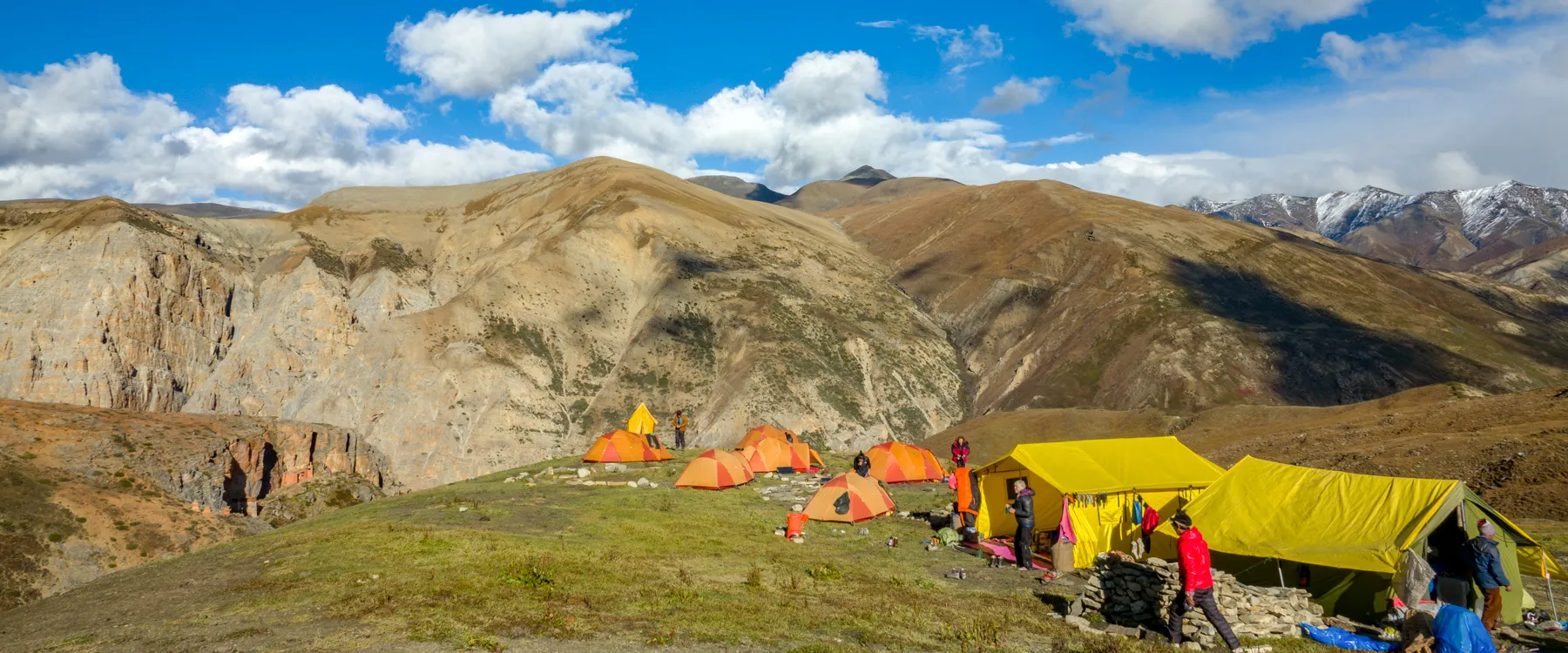
At camp we will introduce you to the ‘Kamzang-style’ trekking set-up – our signature Kamzang yellow dining tent, your personal 3-person North Face (copy) tents and our amazing Kamzang Journeys team. Have a cup of chai, relax and enjoy the afternoon. A great afternoon hike starts across the small bridge, and continues past the local house and up the green hillside for about 200 meters, for incredible views up and down the valley. (2½ hrs) (B, L, D)
Distance: 7.5
TREK NOTE | We may continue on to the hamlet of Kageni, where there is a lovely green campsite at the second lodge, another 6 km of hiking from Rupghad.
Distance: 13.5 km
Day 5 – Trek Chhepka 2675m/8778′
Leaving camp and turning right on the jeep road, we have a short walk to the new suspension bridge, at the confluence of the Thuli Bheri and the Suligad Rivers, which leads to the Army post and Upper Dolpo. A short walk up-river along the left bank brings us to a small wooden bridge (one was washed away in 2010, this is a newer one) and a suspension bridge, both leading to the small hamlet of Sulighat, the entrance of Shey Phoksumdo National Park. The park is Nepal’s largest (3555 square km), established in 1984. One of Susma’s aunties lives in the first house on the left across from the check post as we wait for Lhakpa to check us into Lower Dolpo. Trekking along the clear, blue Suligad, the trail is dusty and hilly, sometimes high above the river and often right along the bank. After two hours of (low) cliff-side hiking, taking the new trail which crosses and recrosses the Sulighad on small wooden bridges, we reach the small hamlet of Kalarupi, where a friend used to run a local shop across from Susma’s grandmother’s house, always colorful with dried pumpkin, peaches and other local crops. Nearby is a fig tree, and the three-house (now two lodges) village of Kageni, one of which, Raju’s Lodge and Campsite, makes a good camping spot. At the end of the village, we cross the Suligad on a large suspension bridge, and continue along the western (left) bank of the river. We pass several goths (grazing pastures) and the basic stone huts at Jyalhasa, an overgrown (with marijuana trees and spiky green pod weeds) seasonal settlement of Ringmo inhabitants. Just past this settlement, past red daisy-like flowers, is a wonderful swimming spot on sculpted rocks and a small beach, and a perfect late morning rest stop!
Next, a gradual climb, hiking through open woods for an hour, to Shyanta where the owners of the small, green campsite and teashop keep bee-hives, the property planted with colorful flowers and an extensive vegetable garden, a perfect lunch spot. This region belongs to the pre-Cambrian Himal zone in geological terms, and is made up of garnet, schist, mica and quartzite which form talus slopes and make the valley sparkle in the sunlight.
After crossing the river again on a metal bridge, it’s just an hour of ascending through a lovely forest of spruce, cedar (which looks like large juniper) and white pine, with mossy, lichen-covered rocks, to reach the grassy campsite at the hamlet of Chhepka, a small Tibetan settlement tucked away amongst the steep hill-sides. These Tibetans arrived here forty or fifty years ago, refugees from Tibet. In the Autumn, the Tibetan women, dressed in their striped Tibetan skirts but having adapted a mix of Tibetan and Nepali clothes, will be beating their crop of dried barley with wooden threshing sticks and drying corn for animal fodder. Head up the trail for 5 minutes to a rocky ‘beach’ along the river for a wash, or there is a tap next to camp, and cold beers and salt-butter tea are available at the local Tibetan shop owned by the lovely Nyima. Look out for langurs sneaking down to raid the village barley fields from the nearby hillsides. Rooms available for about $10-15 if we book ahead. (6½ hrs) (B, L, D)
Distance: 12.7 km
Day 6 – Trek Chuniwar | Amchi Hospital 3115m/10220′
Leaving Chhepka, enjoying bird songs as we hike, we soon reach Thinle Londup’s memorial chorten in the middle of the trail; a lovely riverside spot in the serene forest; we will stop in remembrance of this incredible man.
We have a wonderful forest day of trekking today, hiking through steep, dramatic gorges, the landscape reminiscent of the Pacific Northwest. We cross the Suligad numerous times, crossing four bridges before reaching Rechi, two bridges afterward, and at least one tributary stream on a smaller wooden bridge. We’ll be trekking through rich forests of spruce (Christmas trees, round pricky needles), white pine, cedar (resembles large juiper, deep striped bark), fir (rounded needles), cyprus, birch, and larches (deciduous conifers, turning their Autumn hues), much of the day dwarfed by the steep canyon walls bordering the Suligad. We also trek under massive walnut trees, the shells of cracked nuts on the side of the trail, and along a trail of tangled roots and stones, up stone staircases and through flowering, thick woods of bamboo and these indigenous trees. The gorge is dramatic and deep-sided, and we often hike right by the riverside on flat, stone steps. Bird watchers will love this section of the valley; wag-tails and redstarts flit from rock to rock along the riverbank, and the trees are alive with many other varieties of small birds.
We hike 45-minutes through dense, damp forest to reach the first suspension bridge which we cross high above the river. En route look for the empty shells of cicadas glued to cedar trees. After approximately two hours of hiking after leaving Chhepka we reach a riverside camp and take a break in the shade of large firs or on the rounded river rocks. From here, we start again with a steep climb of about 150 meters to a viewpoint hewn out between rock and tree-trunk. After admiring the Suligad views, we have a steep descent and a riverside walk on a stone path built right along the river. We’ll stop for lunch at a lovely spot by the river, and then continue for half an hour to the small village of Rechi and its small campsite. From Rechi, we have another hour of hilly trekking to reach camp. We pass a small bridge leading west and then, soon afterwards, reach the confluence of the Pungmo Chu and the Suligad, now known as the Phoksumdo Khola. From the west bank of the river a trail leads northwest towards the Kagmara La (pass) and on to Jumla. Tomorrow’s trail to Phoksumdo Lake follows the west bank of the river, and the trail on the east of the Phoksumdo River branches off and leads to Dho Tarap; thus the name Sum (three) Duwa (trails).
Dolpo starts to have a real Tibetan feel from now on, the locals dressed in traditional Tibetan garb, and the women adorned in their Tibetan turquoise, coral and amber necklaces. We might see peach pits drying on the sides of the trail, the oils used as a local insect repellent! We reach the lively Tapriza Cultural school (and adjoining monastery), attended by children from villages all over lower Dolpo. The school is named after an important master from the ancient Zhangzhung kingdom in western Tibet who achieved ‘Rainbow Body’, or enlightenment. The school is a very good cause if people would like to make a donation. After visiting the kids we pass through the northern gate door, descend slightly to the river which we cross on a small bridge and then ascend very gradually to camp ten minute further on in the small hamlet of Chunwar, where our friend (former horseman) Tsewang Druktar and his wife Purba Sangmo run a small, local teahouse. Their children, who study (or have studied) in Kathmandu, are Lhamo Tsering (20, BA), Tsewang Thokgyal (22) and Chuldim Sangmo (23, BA). We camp in their grassy campsite; note the small pikas (mouse hares) peeking out of their holes between our tents. Locally woven textiles, hand-made by Purba Sangmo, are always for sale if anyone is interested; they are incredible works of art! (7 hrs) (B, L, D)
Distance: 13.7 km
Day 7 – Trek Ringmo 3650m/11975′
A classic Himalayan trekking day as we ascend towards Phoksumdo Lake and the large(r) village of Ringmo, the northernmost village in Lower Dolpo and the gateway to Upper (or Inner) Dolpo. After freshly brewed coffee (the sun hits the campsite late morning) we head up quite steeply through barberry, cotoneaster and juniper for twenty minutes to Polam (3270m), one of the winter doksas of the Ringmo-pa. We ascend steeply for another 45 minutes through juniper to our first and second viewpoint huts, and then ascend on a cliff-side trail, through the landslide area of several years ago, overlooking the magnificent waterfall, 200 meters high, that drain into the Sulighad. The older gazebo trail is less used these days, and requires switchbacking uphill for another half an hour on a spectacular, dusty, alpine trail to the gazebo at 3700m, strewn with multicolored Tibetan prayer flags. A bit further up this trail, at another set of prayer flags and is the first view of the opaque, turquoise Phoksumdo Lake, a magnificent sight. Note that there are two trails, the newer one much larger, and which avoids going to the upper gazebo or prayer flag viewpoint, but providing a magnificent view of the waterfall from a different angle, sometimes hiking on stone steps with a guard rail.
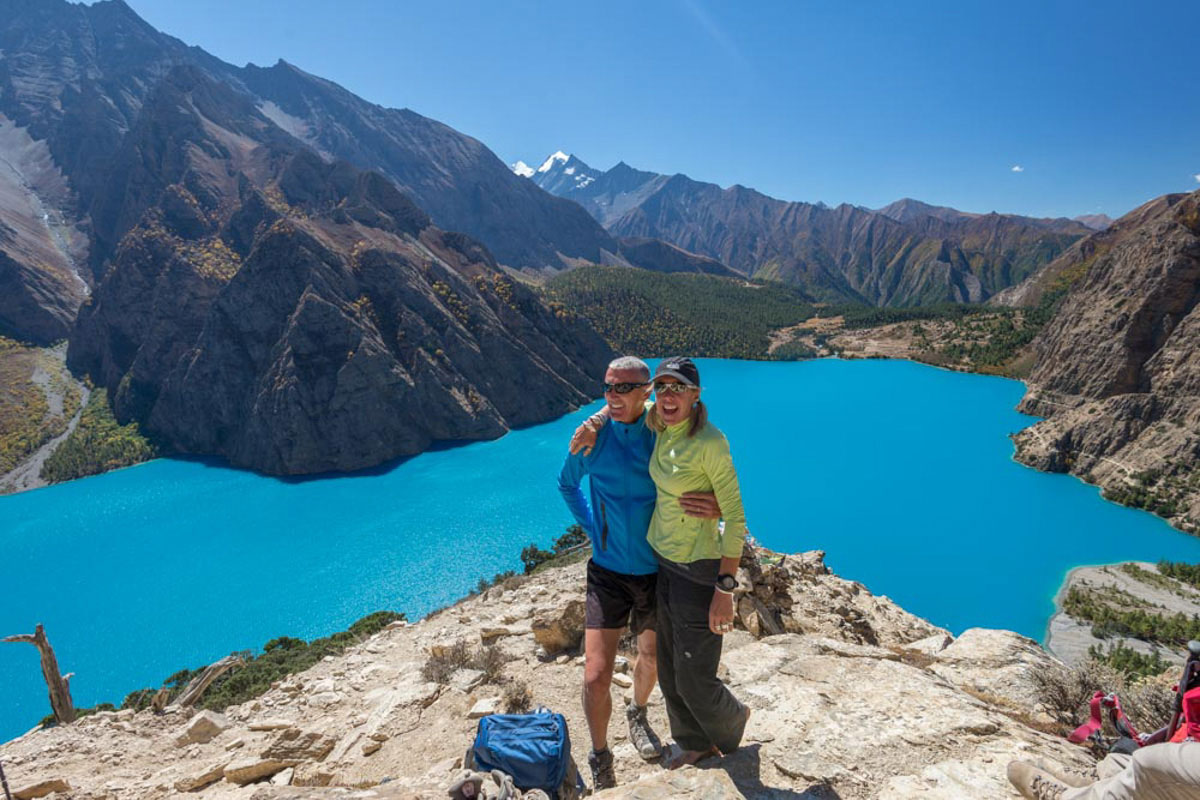
We continue along this high, sandy trail, descending slowly through a lovely forest of larches and birch turning their Autumn colors to Phoksumdo Khola (river). Just past a series of entrance chortens and a mani wall we reach atmospheric Ringmo, built right above the banks of Phoksumdo Lake. Legend tells of a demoness that caused this lake to be formed during Guru Rimpoche’s conversion of Dolpo to Buddhism, a perpetual symbol of the struggle between the Bon and Buddhist religions. The snow-capped peak to the lower right corner of the lake is Norbung Kang (6085m).
Before reaching our grassy campsite at the Himalayan Hotel, we’ll stop to visit good friend, the lovely Mingma, the most talented weaver in Ringmo (and perhaps of Upper Dolpo), and just lots of fun to spend time with. Her husband was the Hindu school at Ringmo school for about three decades, and now runs the best shop in town. Getting to our campsite, we’ll have a short wander through town, noting the earthquake proof timber and stone construction.
At camp, we will have the afternoon to relax and wash up next to the yaks, in the river draining the lake as it’s the lake is sacred, or take a hot shower at the Himalayan Hotel. Our friend Nima’s family runs The Himalayan Lodge at the top of town, not far from our campsite, where you can shop, get a cup of salt-butter tea, a soft drink or a cold beer. Ask to see the yersta gumbu that Nima trades with Tibet (see Dolpo tab for lots of information on this caterpillar fungus). Wander around to the lake, and then down into town to explore after lunch. Several of the local tea-houses, fast encroaching on this little village, sell colorful, wool Dolpo blankets and a variety of other local crafts (some of which come from Kathmandu these days). Local Dolpo-pa women will often be weaving their traditionally striped ‘kamlo seta’ and ‘kamlo zangba’, striped white or dark blankets, on wooden looms outside their houses. Tibetan striped blankets are called ‘liu letpa’ in local dialect, and also available along with colorful, locally woven belts and bags. There is always a variety of local beans and legumes drying on colorful, woven blankets throughout the village, each house with its own vegetable garden and often a greenhouse. We’ll stop for a look at by the impressively repainted kane chorten (entrance chorten), 300 – 500 years old. Further in the main section of town, our horsemen Chhimi and Sherap’s family run The Yak Lodge, another cozy spot for a cup of tea and some textile shopping! Jackals will often be heard howling just outside of the village as well as around other parts of these high Himalayan regions, although most of the sheep and goats will still be at the doksas on the other side of the lake. Rooms available at Himalayan Hotel for about $15 – $20 if we book ahead. (3 hrs) (B, L, D)
Distance: 5.8 km CHECK STRAVA MIDDLE ROUTE
Day 8 – Ringmo | Visit Thasoon Chholing Bon-po Gompa & Exploration Day
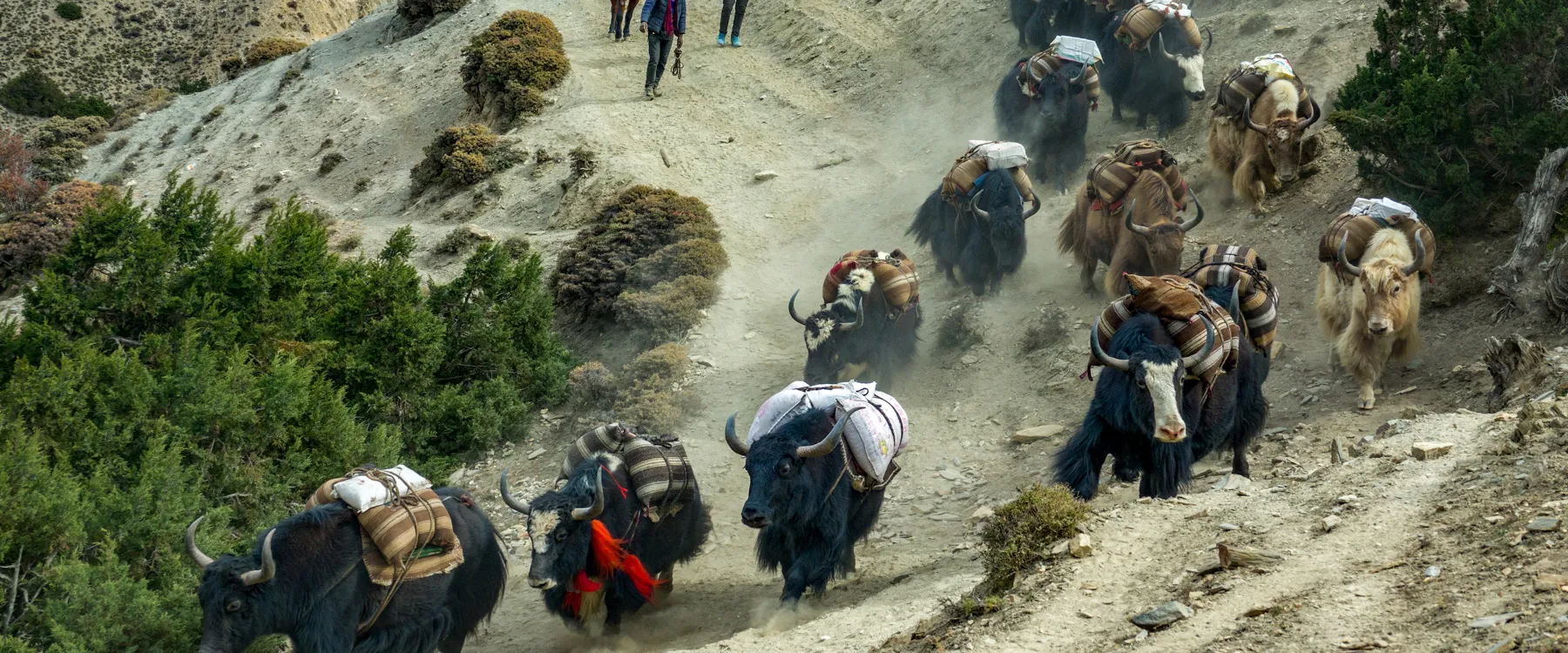
An acclimatization and exploration day in this picturesque Tibetan village of flat-roofed stone houses, mani walls and Tibetan chortens surrounded by juniper and pine forests. Take some time to soak in the fabulous surroundings and perhaps join us for one of several hikes, including the newly constructed viewpoint above the Bon Monastery, about 7 – 8 km of hiking including the visit to the gompa. Another option is to head towards the waterfall after the Bon Monastery, and hike up more gradually for views back in that direction. Remember the harrowing scene in ‘Himalaya’ when Thinle’s yak caravan attempted the ‘Devil’s Trail’? We look out onto this impressive trail from just above our campsite, and morning views down onto the lake are spectacular. Yak caravans head in and out of Ringmo on their way north towards the border of Tibet, and our most northerly destinations, Saldang, Thinkyu and Tsarka.
The spectacular Phoksumdo Lake is the deepest lake in Nepal (650 meters), with nothing living inside it because of the cold and high mineral concentration. Ringmo is part of the Paleozoic geological zone, formed of shallow marine environments. Much of this zone is limestone and quartzite with bands of siltstone and limestone. To the east of Ringmo is the Mesozoic or Tibetan Sedimentary zone (dinosaurs), formed by sandstones, slates, shale and shallow continental platform sediments. In this section many ammonites can be found.
The ancient, white-washed Thasoon Chholing Bon-po Gompa, 500-800 years old, is a 20-minute walk from our campsite along the forested eastern shores of the lake, worth a short hike through the woods of evergreen and trees turning their autumn golden hues. There are four monks who reside at the Bon Monastery; one of them will give us a tour, and we can do a short kora of the monastery, going the opposite way around the monastery and mani walls as the Buddhists (anti-clockwise).
MONASTERY NOTE | See ‘Bon vs Buddhism’ tab for discussions about the similarities and differences between these two religions or philosophies.
Day 9 – Trek Chabluk Phu 3605m/11830′ | Cross Ringmo La 4090m/13420′
More stunning Himalayan trekking ahead of us as we trek along the western shores of Phoksumdo Lake, ascending on the narrow, cliff-side trail (the ‘devil’s trail’). We head north along this dramatic, precipitous (and slightly exposed) trail high above the lake, the scene of the famous yak scene in ‘Himalaya’. The mountain and lake views are wonderful if you can take your eyes off the trail! Half an hour later, we descend back down to the lake, cross a small stream that passes through a lightly wooded valley, and then climb steeply, much higher this time and along a trail of loose scree and slippery sand. We eventually reach a crest at 3920 meters, followed by another at 4030 meters, the first especially worth a long rest and many photos. Ringmo La is a narrow pass 4090 meters another half an hour of climbing above us. We continue along this spectacular trail, staying high, as the lake opens up in different aspects in front of us, often with Himalayan griffin and lammergeier soaring high above us. Near the northern end of the lake we make a long, gradual descent through a lovely forest of craggy Himalayan birches to reach the scenic and grassy Chabluk Phu, a local grazing area, just where the trail reaches the lakeside. Local Ringmo-pa women have set up their tents as basic teashops, and sell locally woven textiles.
We’ll have lunch by the lake as the staff sets up our camp, and do some shopping with the Ringmo women. Up the valley to the north, with Kanjiroba on our left, is Forest Camp and the route to Upper Dolpo. Local Dolpo-pa will pass through our campsite on their way to or from the doksas or higher up in Dolpo. In the evening, we will collect driftwood for a roaring campfire as we enjoy the sunset. One year our yaks wandered into the lake to cool down, a few still loaded (with Kim’s bags), a fitting ending to a Himalayan trekking day. (4½ hrs) (B, L, D)
Distance: 9.7 km
Day 10 – Trek Lake Valley Camp (Schaller’s Camp) 3660m/12010′ | Cross Phoksumdo Ridge La
Trekking into George Schaller and Peter Mattheissen’s Snow Leopard territory, this route through a beautiful Dolpo river valley is so little known that we will continue to keep it a secret. Leaving Chabluk Phu camp, we trek around the top of the lake, and ascend to a spectacular ridge top pass (a smaller one) with mind-boggling views across Phoksumdo Lake and Ringmo! We’ll enjoy this sublime trekking day, virtually un-trekked by westerners. (B, L, D)
Distance: 8.5 km
Day 11 – Trek Sagar Camp 4285m/14040′ | Cross Schaller’s Pass (La) 5000m/16404′
We continue our exploratory Dolpo trek through our ‘secret’, stunningly beautiful and rarely trekked (by westerners, at least, though locals use these regions for trade and grazing) snow leopard and blue sheep territory, with a 5000-meter pass to cross! Enjoy the rosy Himalayan sunset from our high Himalayan campsite, one of our most sublime on the trek! (B, L, D)
Distance: 8.5 km
Day 12 – Trek Yartsa Gumbu Camp (Caterpillar Fungus: Himalayan Gold Rush) 4720m/15485′
More of our exploratory autumn trekking, crossing through some of Dolpo’s most remote, high and un-trekked regions with golden, autumn colors surrounding us, to reach our remote Yartsa Gumbu camp. See below (and in our Dolpo tab) for more information on this income-generating crop in the Himalaya! (B, L, D)
Distance: 12.5 km
Yartsa Gunbu (Yersagumba) | The Himalayan Gold Rush
“For the past 500 years, Yarsagumba (Cordyceps Sinensis), has been prized as an aphrodisiac by the Chinese. It can be found in the high pastures of the Himalayas above 3500m, and is traditionally picked in early spring before the monsoon rains. Each year, hundreds of Tibetan traders cross the border illegally into Nepal to buy Yarsagumba from local villagers and sell it back to China. One kilogram can fetch up to $10,000.
“The medical properties of Yarsagumba are numerous and many,” says Carroll Dunham, a medical anthropologist who has worked in Nepal for the past 25 years. Yarsagumba is known as an immune booster. It’s also known as a great aphrodisiac. It works in a way similar to Viagra. It’s considered to be helpful for impotence in men and it’s considered to be a great stimulant.” This has meant that Yarsagumba has become the most valuable commodity in this remote region that has few economic opportunities. It has become so lucrative that the district government now operates a permit system for those who want to collect Yarsagumba. In certain areas, the permits are more expensive for people from outside the region. In others, outsiders are completely banned from searching for the drug.
From March, the Yarsagumba picking season will start again and hundreds of locals will scour the mountainsides searching for the valuable drug in the hope that they will make their fortune. But for many who live here, Yarsagumba is not a blessing but a curse. And they remember the old Buddhist saying that it will bring nothing but bad luck.” – BBC
Day 13 – Trek Dho Tarap 4080m/13385′
After a scenic breakfast, we’ll continue a few hours of our exploratory route to regain one of our known trekking routes leading to Dho Tarap, a timeless hike via the bustling Tokyu village, probably in the middle of their barley harvest in October. Passing villagers in their distinctive Dolpo-striped aprons out threshing the barley with wooden threshers, we’ll have lunch en route, and continue to our campsite at Dho Tarap. Dho is the name of the village at the south of the region of Tarap, but the extended village is usually referred to as Dho Tarap. Dho Tarap is a maze of mud-brick Tibetan houses, featured in ‘Himalaya’, the village where Karma and his band of young Dolpo-pa, and Thinley and his older group of Dolpo-pa, set off with their salt to trade for barley, trekking over high passes with their yaks.
Dho Tarap is one of the highest permanently inhabited human settlements on the planet (we camp at many of these during our Himalayan explorations). The village was once thought of as a living cultural time capsule, preserving ancient Tibetan traditions that have remained largely unchanged for centuries – but these days is much more connected to the rest of Nepal, and has been visited trekkers for decades. To survive the brutal winter winds, houses in Dho Tarap are built tightly together using local rough-cut stone and mud. They typically feature flat roofs, which are used strategically for drying firewood, yak dung, and animal forage before the winter snows lock the valley down. As the growing season is incredibly short, locals cultivate hardy crops like barley, buckwheat, and potatoes. Their wealth is measured in livestock — mainly yaks, sheep, and goats — which provide milk, cheese (chhurpi), meat, and wool. (B, L, D)
Distance: 17.5 km
Day 14 – Dho Tarap | Explore Bon-po Monasteries
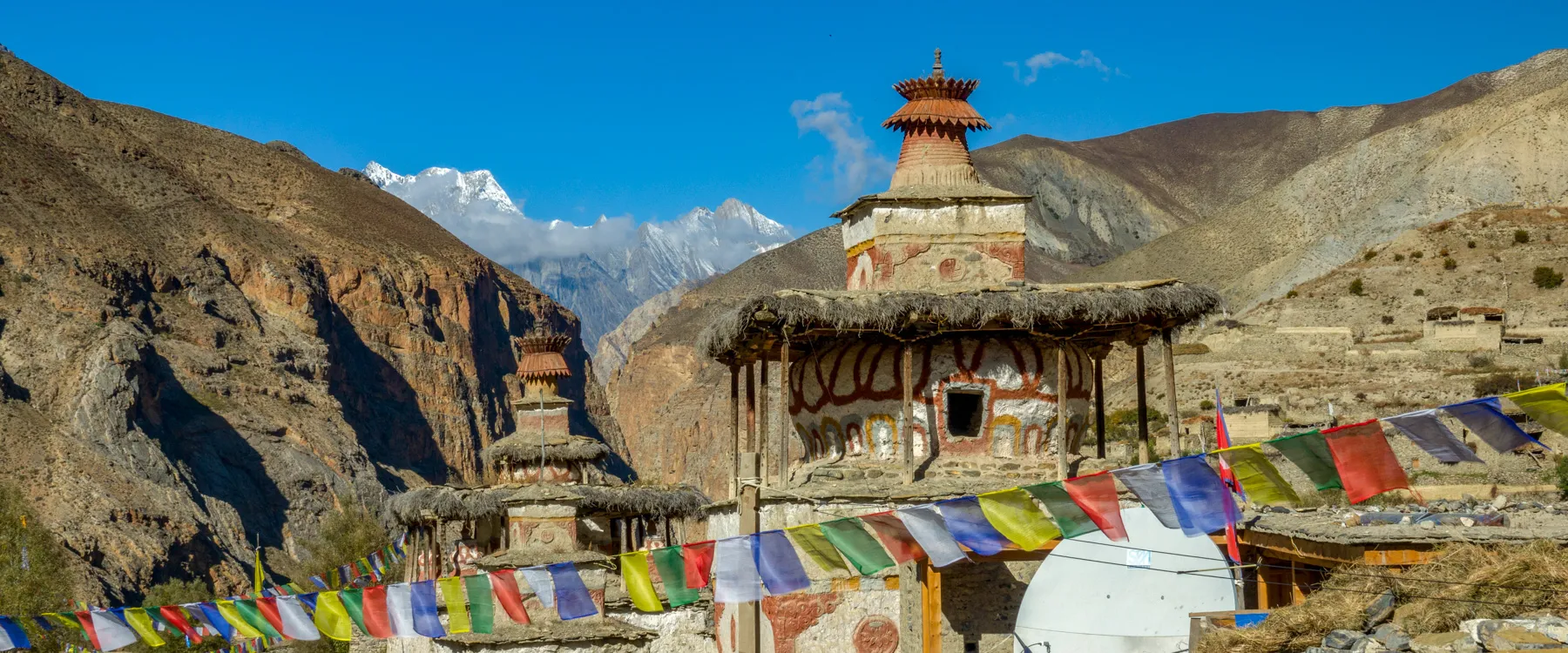
A free day to explore this very ‘Tibetan’, and extremely culturally and religiously interesting village. We’ll head out for a day hike to visit several gompas that date from centuries past; Ripuche Gompa, Chamba Gompa, Kakar and the gompa at Dho Tarap called Ribo Bhumpa, rebuilt in 1955. Interestingly, there is a Bon chorten next to the Buddhist gompa, which is said to contain the relics of a demon killed by Guru Rimpoche. Above this gompa is another older Buddhist gompa, Mekyem Gompa.
Dho Tarap Religion
Tarap is a deeply spiritual valley where daily life is entirely intertwined with religious practice. It is one of the few remaining sanctuaries where Tibetan Buddhism and the ancient Bon religion (the pre-Buddhist animistic faith of Tibet) exist side-by-side in harmony. The valley is dotted with centuries-old monasteries that serve as the spiritual and educational hearts of the community. Key sites include Shipchhok Gomba (Bon) and Ribo Bhumpa Gomba (Buddhist), which contains sacred relics and overlooks the valley. The trails entering the village are lined with massive mani walls (stone structures carved with sacred mantras) and whitewashed chortens. Modern healthcare is virtually non-existent here. Instead, the valley relies heavily on Amchis – practitioners of Sowa Rigpa (traditional Tibetan medicine). They diagnose illnesses using pulse reading and treat the community using local Himalayan herbs collected from the surrounding high pastures.
The Salt Route
Historically, Dho Tarap was a crucial hub for the trans-Himalayan salt trade. Locals traveled south to trade Tibetan rock salt for grain from the lower valleys of Nepal. While modern roads are slowly changing this, traditional yak caravans are still actively used to transport goods across treacherous mountain passes. Dho Tarap is the village where Karma and his band of young Dolpo-pa, and Thinle Lhundop and his older group of Dolpo-pa, set off with their salt to trade for barley, crossing the high passes. The movie gives an interesting picture of daily life in the village; the house, the particular dress and jewelry of the Dho inhabitants, the yaks and animals, weaving, dying cloth, making bread and chaang, working in the fields, archery, astrology, Buddhist customs, relationships and the vigor of life in a high, remote and arid Himalayan village. The pass in the movie is directly to the east of Dho.
The Yarsagumba Gold Rush
Life in the Tarap valley is defined by agro-pastoralism, but it undergoes a radical transformation every spring. Every May and June, Dho Tarap practically turns into a ghost town as entire families migrate even higher into the mountains. They spend weeks combing the alpine slopes for Yarsagumba (Caterpillar Fungus). This highly prized medicinal fungus fetches massive prices on the global market and has become the primary source of cash income for the entire valley, funding everything from winter supplies to children’s education in Kathmandu.
Day 15 – Trek Nawarpani Dovan 3780m/12405′
Leaving Dho Tarap via a wide field to the south of town (where we once almost were hit by a drone), we trek along the traditional trading route, passing many yertsa gunbu hunters en route. Our beautiful and remote trail is undulating though it follows the Tarap Khola all of the day. At Langa camp, we cross the river on a suspension bridge and continue trekking through the forested, steep-sided valley to Sisaul, where we cross a tributary stream. Crossing the Tarap Khola again on a suspension bridge, we reach Ghyamgar camp, crossing again to the opposite side of the river and hiking past Toltol camp. Just before the next suspension bridge, the staff has set up a remote camp for us at Nawarpani Dovan, by the river. (B, L, D)
Distance: 18.5 km
Day 16 – Trek Laina Odar 3370m/11056′
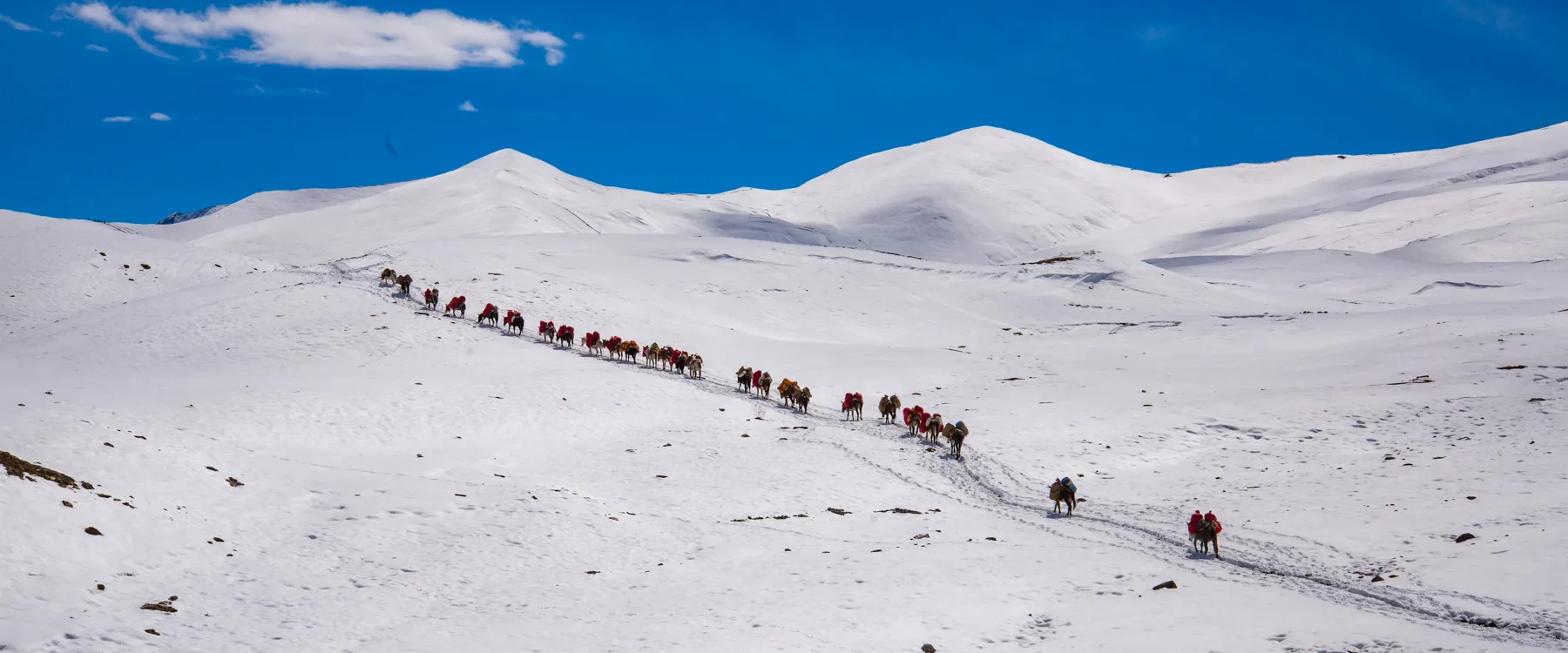
From camp, there are two small trails to take this morning, one on either side of the river, across two suspension bridges. We continue to trek south following the Tarap Khola, and passing more yertsa gunbu hunters, with goats to slaughter and sell at the large camps in tow, as well as children, grandparents and pack animals if they are some of the lucky ones. Others carry their supplies for the next few months in baskets (doka), by a strap (namlo) on their foreheads. Passing by Chhungar camp, our trail ascends above the river a bit and after Lamachaur (3600m), descends to our campsite at Laina Odar, another green grazing settlement in the valley. (B, L, D)
Distance: 19.5 km
Day 17 – Trek Tarakot (Sahadara) 2600m/8530′
We have a climb in the morning, reaching a ridge high above the river valley, from where we descend through forests again towards the river and trek below the village of Khanigaon. We pass by Chhedhul Gonpa Laisicap, where there is a yearly full moon fair, finally crossing the large Thulo Bheri River on a long suspension bridge.
We continue trekking slightly west below the terraced, green village of Kolagaon, cross the Yalankot Khola on another bridge, and look up at Lam Gonpa to our left. Finally, we reach the large village of Tarakot where our staff has set up a lovely campsite for us, and cold beers are available at the many shops! (B, L, D)
Distance: 13.5 km
Day 18 – Trek Jang La High Camp (Tagne Meadows) 4105m/13468′
Passing just south of Dunai, we head south towards the Dhorpatan Hunting Reserve, on the southern and of Dhaulagiri, with views of Dhaulagiri and Annapurna throughout the weeklong trek. Dhorpatan is home to rare bird and wildlife such as the red panda, wolf, musk deer, goral, thar, blue sheep, cheer pheasant as well as a wide variety of colorful plants and flowers.
We trek through forests of hardwood, fir, pine, birch, rhododendron, hemlock, juniper and oak, and cross many ridges and lower passes as we pass through the traditional villages of this scenic and cultural region during yertsa gunbu hunting season. We continue to hike on hilly trails through Sahar Tara (3-4 hrs) and on to Thagi Dhure Danda, camping in the ‘Dunai Valley’ before tomorrow’s Jang La pass. (B, L, D)
Distance: 11 km
Day 19 – Trek Phurbang 4065m/13336′ | Cross Jang La 4520m/14830′
We cross the Jang La pass this morning, a wide, flat pass with an entry ‘arch’, officially entering Dhorpatan Hunting Reserve, trekking through wild, beautiful and remote country as we head south along the yertsa gunbu trail. We will meet the large, interesting, and sprawling campsites of the yertsa gunbu hunters, massive complexes with everything from thukpa, momo tents, and teahouses to gambling tents, and shops selling a variety of dry goods, washing soap, children’s clothes, warm jackets, Chinese teas and products and watches. After several undulating hours of trekking through this beautiful and interesting region, we descend down the valley to reach our campsite at Phurbang. (B, L, D)
Distance: 11.5 km
Day 20 – Trek Seng Khola (Phuphal Phedi) & Dhule 3300m/10827′
Following the Pani Dhal Khola, we continue trekking to the intersection of the Seng Khola which flows from the northeast. We pass several more large yersta gunbu camps en route, and continue to hike along the undulating trail until we reach our once-campsite at Phuphal Phedi, along the Seng Khola (river) (3900m) in the early afternoon. We continue to follow the Seng Khola for the rest of the day on our remote trail, stopping at more yersta gumbu camps, finally reaching our campsite at Dhule early afternoon. (B, L, D)
Distance: 12.5 km
Day 21 – Trek Hanpa Rija (Exploratory)
We love our exploratory Himalayan trekking days, and are looking forward to checking out the rugged, remote trekking route to the fabulously beautiful (East) Rukum region of Nepal, in Nepal’s incredibly scenic and cultural middle hills. The last section of this epic journey is an exploratory route to some of Nepal’s Middle Hills shamanistic villages in the East Rukum district of Nepal, inhabited by Magars and shamans, with a rich and ancient culture, backed by the Dhaulagiri range, incredibly interesting and beautiful hidden valleys little visited by westerners. (B, L, D)
Distance: 9.5 km
Day 22 – Trek Maikot 2300m/7545′ (East Rukum) (Exploratory)
We’ll trek through this incredibly green and scenic region to the village of Maikot, a remote middle hills village located in Eastern Rukum district of Nepal. Maikot, mostly inhabited by the ethnically Tibetan Magar ethnic group (particularly the Kham (eastern Tibet)-speaking Magars), is a peaceful, little visited village (by westerners), and recently offers local home stays allowing visitors in their flat-topped houses to get to know their intricate Magar culture. As we trek, we’ll encounter shamans, traditional spiritual healers (dhami and jhakri in local languages), deeply respected figures who mediate between the community and nature spirits, and perform centuries-old rituals and dances.
The people of East Rukum have always been semi-nomadic and live a pastoral lifestyle, relying entirely on subsistence farming and transhumant herding, a seasonal, cyclic form of pastoralism where herders move their livestock between fixed seasonal pastures. Transhumant herders navigate precise, generational routes between high alpine meadows in the summer, and lower valleys in the winter, to exploit seasonal grass growth. During the summer, herders migrate up to the high patans (pastures) with vast flocks of sheep, horses, and buffaloes, living in temporary shelters before descending back to stone villages when the winter freeze arrives. We will set up a scenic campsite, and head into Maikot village to explore, shop and talk with the locals. (B, L, D)
Distance: 8.5 km
Day 23 – Trek Pelma Tatopani, Dimmurghaira & Mayang 2185m/7120′ | Cross Dimmurghaira Ridge 2064m (East Rukum) (Exploratory)
A shorter trekking day today, first passing through Pelma Tatopani, and afterwards, crossing Dimmurghaira, a rugged ridge connecting the thermal zones of Tatopani to the lower farmlands of Mayang. Tatopani, Dimmurghaira, and Mayang are located within the remote and rugged Putha Uttarganga region of Eastern Rukum – it’s going to be hard to get more adventurous ‘off-the-beaten-path’ as this route! Tatopani means ‘hot water’ in Nepali, and these natural, riverside hot springs are prized by Kham Magar (locals herding their animals) as medicinal healing hot springs. Let’s check them out! “This area is famous for the newly constructed Pelma Tatopani Suspension Bridge, a massive 342-meter-long engineering marvel that swings high over the raging waters of the Uttarganga River. Before this bridge was built, locals and trekkers had to navigate treacherous, steep cliff faces (Yamkhar Bhir).
Mayang is a beautiful, traditional village, another in the chain of authentic Kham Magar settlements. The village architecture features tightly clustered stone houses with wooden beams, surrounded by gravity-defying agricultural terraces where locals farm local staple crops. We’ll set up camp somewhere in this village, and head out to explore! (B, L, D)
Distance: 6 km
Day 24 – Trek Birgum Khani 2428m/7965′ (Exploratory)
More exploration as we trek through the cultural, rugged and breathtakingly beautiful East Rukum region of western Nepal. We’ll camp in the village of Birgum Khani, a village of approximately 100 houses, with a population of around 500, many of them residing much of the year in seasonal pastures (doksas). The village is located along the ‘Guerilla Trekking Trail’, connecting to neighboring settlements like Padmi. (B, L, D)
Distance: 14.5 km
Day 25 – Drive (Jeep Track) Shaman Village (East Rukum) 2200m/7218′ (Exploratory)
We continue our relatively un-trekked route through East Rukum, although those of you who would prefer to drive this section of jeep track are free to do so; we will have vehicles for this section of transport. Although we haven’t trekked this route, we have cycled to visit the incredibly interesting village of Taksera, in the East Rukum municipality, Lumbini province. East Rukum is renowned for its sublime beauty and expansive views of the Dhaulagiri range amongst Nepalis, and has a culture steeped in Magar traditions, who practice shamanism.
We’ll stay at a Taksera community guest house – or perhaps camp – depending on what’s available for our group size, and head out to explore the fascinating village of Taksera, built in an expanded amphitheater style, with flat mud-roof houses also used for drying grains, and built of local slate, stone and timber. The villages in this region are packed closely together, built on steeper hillsides (probably to save the good farmland, and share decks, adorned with wooden hooks, unique hay stacks, locals out on the decks drying beans and pulses, and representing shamanistic traditions. Unusually, locals wear boars tusks as protective amulet necklaces. Like other middle hills villages, locals keep chickens, brew chaang and raksi, weave baskets for carrying wood for their fires, compost for their drop toilets, and crops from their subsistence farms, spin their own yarn, and weave their own blankets and textiles from sheep wool. There are many uses for these hand-woven textiles in Himalayan villages, which we’ll discuss when we explore the village. (B, L, D)
Distance: 6 km?
East Rukum & Kham Magar Shaman Villages
“The Magar villages in East Rukum are predominantly inhabited by the Kham Magar community, and this region is recognized as one of Nepal’s most densely populated Jhakri (shaman) villages, where shamanism is deeply embedded in daily life and cultural identity. The shamanic rituals are often performed during major festivals like Bhume Puja, which honors the earth deity, and during community life events to invoke blessings and ward off evil spirits. These traditions have been preserved over generations and remain central to the Kham Magar people’s worldview and social cohesion. Local shamans perform ritualistic dances and ceremonies involving rhythmic movements, chanting, and drumming. These practices are believed to connect the community with spiritual beings and natural forces, for healing, blessing, and protection purposes. The Dhami and Jhakri are traditional shamans in Kham Magar society, a prominent indigenous group that serve as spiritual leaders and healers, mediating between the human world and the spirit world.
The Dhami primarily perform rituals related to appeasing deities and earth spirits, ensuring community well-being through ceremonies such as Bhume Puja (earth deity worship). They often conduct healing rituals and are believed to have the power to communicate with ancestral and nature spirits to restore balance and harmony. The Jhakri also act as healers and spiritual guides but are particularly known for their trance-induced shamanic dances and rituals used to drive away evil spirits, cure illnesses, and protect the community from misfortune. Both Dhami and Jhakri use chanting, drumming, and symbolic rituals to fulfill their roles, which are essential for maintaining the cultural identity and spiritual health of the Kham Magar people.
Their practices are deeply intertwined with the local belief system, where nature, ancestors, and spirits are respected and actively engaged in everyday social and religious life. These shamans hold considerable respect and authority, acting as custodians of ancient knowledge and cultural heritage within Kham Magar society.” – AI
Day 26 – Drive Pokhara | Transfer Lakeview Resort
Trekking finished, we’ll drive for a bit over half the day to reach Pokhara, where we’ll either stay at Lakeview Resort, or upgrade to Hotel Barahi! Either way, we’ll have plenty of time to enjoy the pool at Hotel Barahi, our wonderful, heritage (and upgraded) hotel in Pokhara. We continue our drive back to Pokhara, arriving in time for lunch (about 4-5 hours), with plenty of time to enjoy our stay at Lakeview Resort (or we can opt to upgrade to Hotel Barahi). Lakeview Resort has a cafe overlooking the lake, a choice of a variety of room types, and the heritage Hotel Barahi has beautiful traditional rooms, a beautiful pool and an amazing buffet.
Enjoy the afternoon in this sub-tropical setting: wander the shore of Fewa Lake, go paragliding or zip-lining, wander along the lakeside (Lakeside Road takes you all the way along the southeast side of the lake and there is a beautiful new walking trail right along the lake), rent a bicycle, paddle across the lake to Shanti Stupa and hike up for spectacular views (or bike around the lake and to the stupa, a challenging ride), enjoy a glass of fresh juice while doing some shopping, or just sit and relax at the hotel (bring a swimsuit) with a book. Take a boat ride to Fish Tail Lodge on the opposite side of Fewa Lake for an afternoon drink and a panoramic view of the Annapurnas and Machhapuchhre, or ‘Fish Tail’ mountain. Or take a taxi to visit Tiger Mountain Pokhara Lodge. (“Located on a ridge half an hour outside Pokhara, the lodge is an ideal base for guests to relax in a rural mountain setting, away from the bustle of Nepal’s cities. With a central lodge, bar and dining room, the comfortable rooms are arranged in clusters of cottages resembling a Nepali village.”)
Inquire at reception to book any activities, including a massage or spa treatments, and there is wonderful shopping for the creative locally-produced crafts along Lakeside. We’ll head to Moondance or Roadhouse Cafe for dinner and drinks in the evening, great restaurants on Lakeside Road. (6 hrs) (B)
Distance Driving: 146 km
Extra Day Pokhara
Want to spend an extra day relaxing in Pokhara? Confirm your intention with Kim before leaving for the trek, and we can make arrangements for you to take the flight from Pokhara to Kathmandu a day (or more) later. Enjoy your time relaxing Pokhara; wander the shore of Phewa Lake (Lakeside Road takes you all the way along the southeast side of the lake and there is a beautiful new walking trail right along the lake), paddle across the lake to Shanti Stupa and hike up for spectacular views, enjoy a glass of fresh juice while doing some shopping, or just sit and relax at the hotel with a book. (B)
Day 27 – Fly Kathmandu | Transfer Kathmandu Guest House
We transfer to the Pokhara Airport for our 22 minute flight to Kathmandu. Back in Kathmandu, our rooms are waiting for us at the Kathmandu Guest House, hot showers being the first order of the afternoon! We’ll head out to dinner at the Roadhouse later in the evening to celebrate our incredible journey through sacred Upper Dolpo.
TRAVEL NOTE | In the case of flight cancellation out of Jomsom, we’ll pay for the rooms and everyone will be responsible for their own meals as if in Kathmandu. Unless you have flexible flights we strongly suggest you add at least one, and perhaps two days in Kathmandu at the end of the trek that allows for possible flight delays in getting out of Jomsom.
Day 28 – Trip Ends | Transfer TIA
Transfer to the Tribhuvan International Airport (TIA) for your flight home. We hope to have you back trekking with us again soon! (B)
Not Enough of Nepal?
We highly suggest taking advantage of your trip to Nepal, adding on excursions into the Kathmandu Valley, Pokhara, Bandipur, Gorkha, the Annapurna Foothills, and Chitwan and Bardia National Park. Enjoy heritage tours, mountain biking, Kathmandu valley hiking, Himalayan panoramas with a hike down from the Chandragiri Cable Car, whitewater rafting, yoga and meditation courses, Nepali cooking classes, Buddhist or Hindu retreats, and much more. There are many wonderful, boutique, luxury, and heritage lodges in the Kathmandu Valley, and many options for world heritage sightseeing tours, bicycle trips, hikes, and craft-cuisine tours. Nepal boasts world-class restaurants, chic cafes, timeless alleyways to wander through, countless Hindu and Buddhist festivals, and lots of great shopping.
Don’t miss an Everest sightseeing flight or epic helicopter tour, sightseeing trips to Bhaktapur, Patan, and Panauti (Kathmandu Valley’s other historic and/or capital cities), a weekend at Shivapuri Heights Resort or Dwarikas in Kathmandu, a night at the Fort Hotel in Nagarkot for sunrise and sunset Himalayan panoramas, a spa and wellness getaway at the ultra-luxurious Dwarikas Dhulikhel Resort and visits to ancient temple and monastery complexes such as Namo Buddha, Changu Narayan, and Dakshinkali. Spend a night at The Old Inn in Bandipur or Three Mountain Lodge en route to Pokhara, or The Famous Farm in Nuwakot, and get to know Nepal’s Newar heritage.
Enjoy a luxury 3-6 day trek in the Annapurna Foothills, staying in the wonderful Ker & Downey luxury lodges. Relax in heritage style at Temple Tree Resort in Pokhara for some pampering at the spa and infinity pool, try out paragliding, zip-lining, and enjoy a morning of boating on the lake and the hike to Shanti Stupa. Once refreshed, drive to Chitwan National Park, spending a few nights at Maruni Sanctuary Resort or Tiger Tops Tharu Lodge for wildlife and bird spotting, river trips, and safaris in style. Tiger Tops also owns Karnali Lodge at Bardia National Park, reached by flight from Kathmandu, and there are nearby archeological sites to visit nearby.
Namaste!
Nepal Modules
Nepal & Kathmandu Modules | Customize Your Trip!
Date & Price
2026 Dates
27 Sept – 24 Oct
28 Days
2026 Trek Price
$5880
2027 Dates
29 Sept – 26 Oct
28 Days
2027 Trek Price
$6280
Includes & Extras
+ Hotels in Kathmandu & Pokhara (Breakfast), All Flights, Private Transport & Transfers, All Permits, Satellite Communications, Full Medical Kit, Western & Sherpa (Nepali) Guides & Kamzang Journeys Boutique Trekking Style
+ NO SINGLE SUPPLEMENT for Trek (Single 3-Person Tents) or Kathmandu Guest House!
+ Single Upgrade Nepalgunj & Pokhara – $95
+ Priced for 5+ Trekkers
Total Miles & Kilometers
+ Total Kilometers of Trekking (Approx) – TBA km
+ Total Miles of Trekking (Approx) – TBA miles
Kathmandu Guest House Single & Double Upgrades
+ Deluxe Upgrade Kathmandu Guest House (3 Nights) – $135
+ Suite Upgrade Kathmandu Guest House (3 Nights) – $225
Kathmandu Guest House | Extra Nights Room Price
Includes Breakfast & Taxes
Standard Single – $55
Standard Double – $65
Deluxe Single – $100
Deluxe Double – $110
Suite Single – $130
Suite Double – $140
Includes
- Western & Sherpa Guide | Kim & Lhakpa Sherpa
- Lower Dolpo & Dhorpatan Permits
- Kathmandu Guest House & Hotel Barahi Pokhara (Breakfast)
- All Domestic Flights (3)
- Hotels En Route to Trek
- Group Transportation by Private Vehicle
- Airport Transfers
- NO Single Supplement on Trek!
- Kamzang Journeys Boutique Camping Treks
Our signature Yellow Tent of Eternal Happiness (dining tent), 3-person dome tents (NO single supplement), delicious & plentiful food with seasonal, fresh produce, yummy snacks & deserts, French Press organic Nuwa Estante coffee, masala chai, Kashmiri & herbal teas, filtered drinking water, warm washing water, library, colorful Indian dhuri rugs, camp chairs, blankets, occasional local tent music in evenings, oxygen & PAC bag (when needed), full medical kit, horses, yaks &/or porters, Western & Sherpa guides, & our 5-star Kamzang team!
Safety & Health Precautions | Included in Trek
- Thuraya Satellite Phone
- InReach Satellite Messaging System (Free Texts on Trek)
- Updated Route Published on InReach Site
- Helicopter Evacuation Services (Excluding Cost of Evacuation)
- Oxygen Saturation Monitoring System
- Full Medical Kit & Stretcher
- Filtered Drinking Water
- Delicious, Plentiful Meals
- Large Variety of Hot Drinks & French Press Organic Coffee
Excludes
- International Flights
- Travel Medical & Travel Insurance (Both Required)
- Nepal Visa
- Helicopter Evacuation
- Lunch & Dinner (While Not on Trek)
- Monastery Donations
- Equipment Rental
- Alcohol, Sodas & Packaged Drinks
- Laundry
- Tips
Tips & Extra Cash
Allow approx $250 for meals (while not on trek), drinks (on trek) and tips. We recommend $400 per trekker thrown into the tips pool for the crew.
Map
Menu
Kamzang Journeys | Camping Menus
All meals on our Kamzang Journeys camping treks and cycling trips are prepared on site by our excellent chef Junar, our assistant chef Yam, and the hard-working kitchen team. The kitchen staff is well-trained in keeping the kitchen and food sanitized, and we sterilize all dishes, cups and utensils by steaming in boiling water before every use. All fruits and vegetables are soaked in iodine &/or baking soda, and our dining tent is well stocked with hand sanitizer, with soap and water for washing hands in front of the tent.
Much of our produce on the trip is organic, sourced from local villages to ensuring that it’s fresh, plentiful and sustainable We also buy meat, grains, potatoes, staples and whatever possible en route to provide much needed income to the local villagers. We cater to all sorts of dietary restrictions, including vegetarians and vegans, gluten-free, dairy-free and those with various food allergies and preferences. All of our meals are vegetarian, although most meals have additional meat options. Types of food we serve on our camping trips range from Asian (Nepali, Indian, Tibetan, Thai and Chinese) to Italian and Mexican, and we always have PLENTY of food to fill you up, and keep you fueled for the next day’s adventures!
Just one of the many reasons our trekkers and cyclists return year after year. A taste of what you’ll enjoy on our camping treks …
Breakfast
Freshly Ground Organic Coffee, Masala Chai & Teas
Freshly Baked Farmers’ Bread
Freshly Baked Wheat, Oat & Raisin Bread
Choice Of Eggs
Mexican, French & Masala Omelets
Aloo Anda (Potatoes & Scrambled Eggs)
Breakfast Burritos (Eggs, Tomatoes, Salsa, Cheese & Chapatti)
Huevos Rancheros (Eggs Rice, Beans Salsa & Chapatti)
Homemade Muesli
Porridges (Oat, Tsampa & Barley)
Crepes (Lemon, Chocolate & Local Apricot Jam)
Croissants (Sesame, Chocolate & Cheese)
Pancakes (Apple, Banana, Stacked & Buckwheat)
Dutch Baby Pancakes
Apple, Currant & Cinnamon Muffins
Cinnamon Spiced Rice Pudding
Cinnamon Rolls
Swedish Cardamon Rolls
Glazed Doughnuts
French Toast & Honey
Tibetan Bread With Local Jam
Cinnamon Sugar Chapattis
Masala Parathas & Sambar
Hash Browns
Fresh Fruit
Breads
Freshly Baked Farmers’ Bread
Freshly Baked Wheat & Oat Bread
Freshly Baked Cinnamon, Raisin & Nut Bread
Sun-Dried Tomato & Rosemary Flat Bread
Olive & Sundried Tomato Bread
Jalapeno & Cheese Corn Bread
Irish Soda & Currant Bread
Banana Bread
Zucchini Bread
Millet & Buckwheat Pancakes
Tai Roti (Paneer & Potato Bread)
Whole Wheat Roti & Chapattis
Cheese Biscuits
T Mo:Mos (Steamed Tibetan Bread)
Trail Lunch
Freshly Baked Breads
Himalayan Cheese
Herb & Olive Oil Paneer (Cottage Cheese)
Homemade Hummus & Baba Ghanoush
Herb & Olive Oil Infused Sun-Dried Tomatoes
Quinoa, Local Beans & Tahini Salad
Beet, Carrot & Cabbage Salad
Vegetable Fried Rice, Pilau & Biriyani
Kashmiri Rice (Coconut, Spices & Raisins)
Egg Fried, Lemon & Caribbean Tomato Rice
Mexican Rice & Beans
Thai Vegetable & Coconut Fried Rice
Vegetable Fried Potatoes
Potato & Celery Salad
Vegetable Fried Noodles
Chop Suey (Crispy Raman Noodles & Vegetables)
Tossed Pasta, Vegetable & Olive Oil Salads
Indian Samosas & Sweet Thai Chili
Millet Tabbouleh & Falafel
Smoked Salami
Tuna Salad
Deviled Eggs
Camp Lunch
Grilled Sandwiches (Tomato & Cheese, Cheese & Salami, Tuna & Cheese)
Tzadziki Wraps (Grilled Vegetables, Yogurt & Garlic)
Roasted Vegetable & Hummus Wraps
Asian Sesame & Bok Choy Noodles
Vegetable Spring Rolls & Asian Dipping Sauce
Chana Puri (Indian Chick Pea & Potato Ragout)
Sherpa Sha-Phaklay (Fried Mutton Flat Bread)
Baked Hand Pies (Vegetable & Paneer, Ham & Pea)
Thai Red Curry Coconut Noodles
Salads
Caesar Salad (Local Greens & Croutons)
Salad Niçoise & Isreali Salad
Beets, Paneer & Bread Panzanella
Soups & Stews
Fresh Pumpkin & Rosemary Soup
Fresh Potato & Spring Onion Soup
Fresh Carrot & Cilantro Soup
Fresh Chinese Tomato, Egg & Bok Choy Soup
Fresh Spinach & Mushroom Soup
Fresh Lentil & Local Beans Soup
French Onion Soup (Croutons & Cheese)
Fresh Nettle Soup
Spiced Coconut Carrot Soup
Fresh Pureed White & Black Bean Soup
Thai Tom Yum & Tom Kaa Soups (Bean Noodles)
Sherpa Shakpa (Potato, Shitake Mushroom & Vegetable Soup)
Tibetan Thukpa Noodle & Vegetable Soup
Asian Dried Mushroom, Ginger & Noodle Soup
Ramen Noodles With Egg & Vegetables
Thai Coconut & Coriander Soup
Tuscan Bread & Tomato Soup
Tomato Egg Drop Soup
Hot & Sour Soup With Chinese Dumplings
Spiced Chickpea Stew With Coconut & Turmeric
Dinner | General
Pizzas
Mexican Burritos
Mexican Baked Enchiladas & Rice-Beans
Southwestern Bean & Spinach Chili
Grilled Chicken & Mashed Potatoes
Quiche
Frittata
Couscous, Ratatouille & Italian Beans
Steamed Mo:Mos (Spinach, Paneer & Garlic, Potato & Cheese, Mutton)
Sherpa Potato Pancakes & Somar (Fermented Cheese, Green Onions & Chili)
Sherpa Shakpa (Potato & Vegetable, Potato (&/Or Meat) Stew)
Tibetan Thukpa (Noodle, Vegetable Soup)
Potato, Cheese, Onion (& Ham) Casserole
Mutton & Vegetable-Lentil Burgers
Polenta, Baked Vegetables & Cheese
Tuscan Fish & Potato Ragout
Gnocchi
Sushi Rolls
Dinner | Pasta
Spaghetti, Linguine & Penne Pastas
Italian Pasta Sauces (Vegetable, Garlic & Olive Oil, Bolognaise, Puttanesca, Carbonara)
Tossed Pastas (Pesto & Sun-Dried Tomatoes, Sautéed Garlic, Olives & Mushroom)
Lasagna (Spinach, Mushroom, Eggplant & Tomato)
Ravioli With Tomato, Spinach & Garlic Sauce (Mushroom & Spinach, Mushroom & Cheese, Ham, Pumpkin & Rosemary)
Mongolian Fried Sesame & Ginger Noodles (Vegetable & Mutton)
Dinner | Rice
Thai Masman, Panang, Red & Green Coconut Curries (Vegetable Or Chicken)
Bhutanese Ema Datsi (Chili & Cheese, Mushroom Or Potato)
Palak Paneer (Spinach & Paneer)
South Indian Coconut Vegetable & Chicken Curries
Shahi Paneer, Vegetable & Chicken Curries (Yogurt)
Butter Chicken & Mutton Masala Curries
Indian Masala Curries (Vegetable, Cauliflower, Mushroom, Pumpkin, Potato & Pea)
Masala Kofta (Potato & Paneer Curry)
Dal Makani (Black Dal & Butter) & Local Dals (Lentil Curries)
Asian Ginger Broccoli & Sesame Cabbage
Asian Black Bean Sauce (Vegetables & Tofu)
Chinese Egg & Tomato Curry
Chinese Stir-Fried Vegetables
Poha (Indian Flattened Rice)
Vegetables, Beans & Potatoes
French Fries (Chips)
Mashed Garlic & Roasted Potatoes
Italian Rosemary Sauteed Potatoes
Roasted Rosemary Beets & Sweet Potatoes
Italian Sauteed White Beans, Cabbage & Potatoes
Italian Sauteed Garlicky White Beans, Broccoli (Kale) & Lemon
Lana’s Stacked Green Vegetables (& Cheese)
Mashed Garlic Cauliflower
Baked Zucchini & Egg Casserole
Eggplant & Zucchini Parmesan
Stuffed Capsicum, Squash & Zucchini
Steamed Broccoli & Cauliflower, Olive Oil & Lemon
Coconut Sesame Vegetables
Japanese Vegetable Tempura
Chinese Ginger Vegetables
Alu Sandekho
Snacks
Cheese, Pate & Crackers
Potato Cheese Balls
Masala Papadum & Peanuts
Jalapeños & Cheese Quesadilla
Bruschetta (Tomato, Olive Oil & Olive Tapenade)
Garlic & Olive Oil Crustini
Tempura (Vegetables, Paneer & Rice Flour)
Pakora (Vegetables & Chick Pea Flour)
Green Pea Guacamole
Stuffed Pea Parathas
Indian Pakora & Tempura
Fried Potato, Rice & Corn Snacks
Cumin Nimkins
Desserts
Fresh Fruit Salad
Coffee-Infused Dark Chocolate Dumplings
Chocolate, Muesli & Nut Fortune Cookie Pastries
‘Marie’ Rum, Raisin & Chocolate Balls
Mango & Apple Cinnamon Crepes
Apple Pie & Crisp (Crumble)
Apple & Apricot Tarte
Apple, Apricot, Banana, Papaya & Plum Cobblers
Apple & Banana Fritters
Banana Flambe
Gulab Jamun (Indian Doughnut Holes)
Homemade Spiced Apple Sauce
Homemade Apple Pie
Apple, Carrot, Ginger & Pumpkin Spice Cakes
Bread & Butter Pudding
Spiced Pumpkin & Apple Suiji
Grated Apple Suji (Indian Semolina)
Soan Papdi (Indian Halva) & Kheer
Dark & White Chocolate Chunk Custard
Chocolate Chunk Pan Cookies
Dark Chocolate-Covered Digestives
Chai Masala Cookies
Lemon Bars
Brownies
No-Bake Chocolate Oat Bars (Peanut Butter)
Dark Chocolates
Coffee, Teas & Hot Drinks
Organic Coffee Beans
Masala Chail
Kashmiri Spiced Green Tea
Green & Assam Teas
Variety Of Dilmah Teas
Hot Chocolate
Lemon Ginger Tea
Grog
Kamzang Hot Rum Punch
Local Beers & Rum
Highlights & Reviews
KAMZANG JOURNEYS REVIEWS
Why Travel with Kamzang Journeys?
Why Trek with Us?
Kamzang Journeys Reviews!
Kamzang Journeys Reviews
Trek Highlights
- Our Wild + Unique Trekking Route Through Upper Dolpo to Mustang
- The Crystal Mountain Kora (Sister Peak of Mount Kailash)
- A Trek Through ‘Old Tibet’, in the Tibetan Border Region
- Vignettes from Eric Valli’s movie ‘Himalaya‘
- Turquoise Phoksumdo Lake + the Devil’s Trail
- Bon Thasung Tsholing Gompa (Monastery)
- Shey Gompa + Tsakhang Gompa (Monasteries)
- Tralung Gompa | Artist Tenzin Norbu’s Monastery in Thinkyu
- Traditional Tibetan Villages | Saldang, Khoma, Thinkyu + Tsharka
- Hidden Sangtha Village | Mustang
- Beautiful + Traditional Panzang Valley
- Tibetan Buddhist Monasteries
- High Himalayan Passes en Route to Lower Mustang
- Harvest Season in Upper Dolpo
- Spectacular Himalayan Panoramas + Peaks
- Wild Trekking, Few Other Trekkers + Remote Routes
- Lots of Exploration
- Extra Days for Cultural Village Visits + Day Hikes
- Beautiful Campsites
- Kamzang Journeys Boutique Trekking Style!
Client Highlights
Kamzang Journeys has set the bar very high for treks in the Himalayas!
– Jim C (USA), Upper Mustang, Upper Dolpo to Mustang + Everest High Passes Treks
I have been with Kim and her crew on four separate treks into the Nepal Himalayas. Each one has been unique, exciting, challenging, and totally amazing. Kim has the best crew around and the Kamzang Journeys team provides a comfortable camp and great food. I would highly recommend Kim, Kamzang Journeys and her Himalayan trekking and cycling trips!
– Allan B (USA), Sacred Upper Dolpo to Mustang Trek
Best treks ever! I just finished my second trek with Kamzang Journeys, my 9th Himalayan trek overall, so I’ve seen quite a variety of what the industry has to over. Kamzang Journeys offers the best itineraries, with meticulous attention to safety and comfort, with minimal environmental impact and maximal cultural interaction. These experiences are not to be missed!
– Gary G (USA), Ultimate Ladakh, Wild Sacred Upper Mustang + Upper Dolpo to Mustang Treks
“I would recommend Kamzang Journeys and Kim and Lhakpa to anyone contemplating a Himalayan trek! We were well taken care of in every respect and I am planning to come again. Thank you!”
– Fern K (Canada), Sacred Upper Dolpo to Mustang Trek 2019
“An amazing trek through Upper Dolpo, ending in Jomson in the Mustang region! When you trek with Kamzang Journeys, you explore villages, high camps, and experience the long term connections that Kim Bannister and Lhakpa Dorji have forged over many years of travel in this region. They continue to fine tune the route and have the skill and experience in Himalayan travel to ensure safety, and a beautiful passage through the sometimes challenging terrain. The Kamzang team is stellar, the food is remarkably creative and healthy and the day-to-day attention to detail and great skill in all the facets of trekking make for a memorable adventure. I have trekked with Kamzang Journeys many times over the years, and every journey has been amazing. Highly Recommended!”
– TripAdvisor Review, Sacred Upper Dolpo to Mustang Trek 2019
“Terrific off-the-map trek of Upper Dolpo. Kim and Lhakpa are experienced, professional guides who provide an amazing experience. Quality of planning, team and itinerary simply excellent. I would not travel with anyone else!”
– TripAdvisor Review, Sacred Upper Dolpo to Mustang Trek 2019
“Sacred Upper Dolpo to Mustang Trek: It is very telling when the returning client rate is so high. You don’t even realize how seamless the entire experience is until you see and hear of other camping groups. The itinerary is well planned, the dining tent is spotless + a great hangout spot stocked with blankets, hand sanitizer, a library of relevant books, snacks, and tea. The tents are high quality and always positioned optimally, and if it’s a washing day, the staff will immediately put up a clothesline. The food is amazing, with great variety and local produce; you will not go hungry! What pleasantly surprised me was the added cultural element you get with Kim and Lhakpa engaging with the locals. Definitely recommend Kamzang and their rockstar staff; it really shows that they have worked together for many years!”
– Tanya C (USA), Sacred Upper Dolpo to Mustang Trek 2019
“Attention to safety and well-being of the group was 100%. The staff knew many of the villagers so we were able to interact in a relaxed way, and were lovely people, friendly and attentive. The landscape was wild and beautiful. It is a challenging trek, however Kamzang were able to put me in contact with a local Dolpo pony man so I was able to ride most of the way while my partner walked!”
– Maureen B (Australia), Sacred Upper Dolpo to Mustang Trek 2019
“Life is much too short to trek with anyone but Kamzang Journeys! Our Upper Dolpo to Mustang Trek was a very remote and challenging trek, extremely rewarding, certainly a lifetime top-10 experience. No one can go on this trek and not come back changed in some significant way. Everyday of the trip was thrilling! There are not enough superlatives to describe the experience, knowledge and competence of the entire Kamzang Journeys team. Over the past 30 years I have traveled, hiked, trekked and climbed mountain ranges in many parts of the world and it is obvious and easy to say that Kim + Lhakpa are the best at what they do. By a wide margin. They are simply in a class of their own. My respect and affection for Kim, Lhakpa + every one of the crew could not be higher. Looking forward to the next one!”
– Mark D (USA), Upper Dolpo to Mustang Trek 2018
Life is much too short to trek with anyone but Kamzang Journeys!
Our Upper Dolpo to Mustang Trek was a very remote and challenging trek, extremely rewarding, and certainly a lifetime top-10 experience. No one can go on this trek and not come back changed in some significant way. Every day of the trip was thrilling. There are not enough superlatives to describe the experience, knowledge and competence of the entire Kamzang Journeys team. Over the past 30 years I have traveled, hiked, trekked and climbed mountain ranges in many parts of the world and it is obvious and easy to say that Kim AND Lhakpa are the best at what they do. By a wide margin. They are simply in a class of their own. My respect and affection for Kim, Lhakpa & every one of the crew could not be higher. Looking forward to the next one!
– Mark H (Australia), Sacred Upper Dolpo to Mustang Lodge Trek
Upper Dolpo trek, along the Great Himalayan Trail; the perfect combination offered by the Kim + Lhakpa duo, who led this adventure in a very safe, very friendly and very professional manner. Top quality of the trek itineraries (off the beaten tracks with good acclimation to higher elevations), great energetic food, a smart pace for the 28 hiking days. Just perfect, hats off! Thanks Kim, Lhakpa and Kamzang team!
– Jose F (France), Sacred Upper Dolpo to Mustang Trek 2018
“Our Upper Dolpo to Mustang trek was a challenging trek to a fascinating land; anyone wanting to see what Tibet was like before its culture and religion were decimated only needs to take this trek. That is, if you’re a strong trekker and confident that you would perform well at the altitudes involved. If you’re not sure that you meet these criteria, consider one of Kim’s less-demanding treks – she has many from which to choose – and she and her top-notch crew will make your trip as safe and comfortable as possible. I’ve been trekking in the Himalaya 5 times now, and Kim and Kamzang Journeys are the only way to go!”
– Tad H (USA) Upper Dolpo to Mustang Trek 2018
This was my third trek with Kamzang Journeys and my second with them to Dolpo. I look forward to my next KJ trek! We had a small group trek through Upper Dolpo, a challenging, little trekked Tibetan region of Nepal. For most of our nearly four weeks trek we were above 3600m and crossed over four 5000m passes. We had many encounters with the people of Dolpo, spending rest days in several villages along the route.
I highly recommend Kamzang Journeys. Kim and her long-time crew provide a high quality service from the first meeting Kathmandu to when they farewell you on the last day. Single trekkers have their own tent and the big orange mess tent is KJ’s signature feature. The food is excellent and plentiful. Before the trek Kim provides an extensive itinerary and information about health, culture and gear. She also does an excellent detailed briefing in Kathmandu to ensure that all members are well equipped. Kim backs this up by ensuring that all members are healthy and well during the trek. She has extensive wilderness first aid experience and a well stocked medical kit.
The most impressive aspect of a Kamzang Journeys trek is the manner in which Kim looks after the welfare of her crew. Kim has a deep affection for Nepal which shows in her engagement with the local people. With her Nepalese and Tibetan language skills, Kim always finds some interesting or little known fact to pass on to her group. Kamzang Journeys treks go to regions that are often little visited by other groups so be prepared for the unexpected. This includes possible diversions or changes to itineraries due to weather, trail conditions etc. These diversions can be even more interesting than the intended route.
– Mark H (Australia), GHT | Upper Dolpo to Mustang Trek 2016
When we arrived in Kathmandu Kim checked out our gear and suggested a couple of purchases to make things more comfortable, gear wise, then took us to outfitters she knew had quality stuff. We were looked after superbly on trek by Kim and her staff and thoroughly enjoyed the experience. It was amazing to be in such an isolated part of the planet, the quiet was incredible. There were a couple of alternatives suggested along the way and the whole party was consulted as to what they would prefer. We loved being able to put our day packs on the horse when we were feeling tired. When the trek was finished we really felt as though we had achieved something. Would not hesitate to travel with Kamzang Journeys again!
– Julie & Alan F (Australia), Sacred Upper Dolpo to Mustang Trek 2015
“Kamzang Journeys & Kim run great treks! Lhakpa and Kim are highly experienced, skilled guides. Kim’s creative finesse makes for truly memorable trekking. A fantastic crew, dedicated & savvy, and a wonderful cook, Junar, are integral to this great team. A passion for the cultures of the Himalaya, a depth of knowledge and understanding, are all a part of what Kim shares, with great generosity and exuberance. Interactions with local villagers, from kids to elders, are a big part of Kamzang style.
I admire Kim’s creativity, deep love and knowledge of this part of the world, which she shares so generously. She is an awesome trek leader. Her incredible strength & athleticism are matched by her truly deep integrity & compassion. I have the utmost respect and admiration for all that she does. One of the great joys of this trip was watching Kim interact with kids + locals. Magical! I am grateful for the skill & great guiding wisdom that Kamzang Journeys exemplifies. Thank you for your kindness, patience and marvelous, positive spirits & good humor. The Upper Dolpo trek of October 2014 was an incredible journey. Highly recommended!”
– Susan L (Canada), GHT | Sacred Upper Dolpo to Mustang Trek 2014
We had a wonderful time and greatly appreciated you opening our eyes to Dolpo. Your composure and decision making combined with your fun personality make you truly the best trip leader we could imagine. We look forward to many more trips together!
– Mary, Kathy & Ross M (USA), Sacred Upper Dolpo to Mustang 2014
“Don’t go to Dolpo with anyone else! This trek with Kim and Lhakpa was the best of the 10 or so we have done in the Himalaya. No detail was overlooked, making for a camp that was the envy of other groups! Kim’s ability to engage with local villagers added another dimension to our experience as the locals invited us to join them in their schools, homes and daily tasks. The food was imaginative, well-presented and plentiful, and served with a smile. Kamzang Journeys crew were unfailingly helpful and generous with their time, responding to individual needs as far as possible. An experience not to be missed!”
– Karen D (Australia), GHT | Upper Dolpo to Mustang Trek 2014
I’ve just completed Kim’s May 2013 Sacred Upper Dolpo to Mustang trip. Within the first few days it was clear that the weather, and in particular the snow remaining from a particularly severe winter, would play a major role in determining what we could achieve. Almost immediately we saw numbers of other trekking groups that had to turn back because the snow on major passes was too deep. This would have also been our fate if we had stuck rigidly to the itinerary. However thanks to the hard work and information gathered by Kim & Lhakpa we were able to negotiate our way through Dolpo and share in Kim’s deep knowledge of the area and her close contacts with the local people.
During the latter part of the trip we faced a choice as to how and where the trip would end. Kim and Lhakpa spoke extensively to the local villagers, gathered all the information available at the time on the options open to us and put it to the group for a decision. The near unanimous decision of the group was to attempt to exit Dolpo via the south to the Dhorpatan Reserve. Though completely unexpected this was, for me, a real highlight of the trip and I feel privileged to have did done it. The scenery, so totally different from upper Dolpo, and the sight of the gold rush like annual yarsagumba stampede, will be memories that stay with me for the rest of my life. Indeed whatever treks I do in future these memories will be hard to better. We only completed a small part of the planned itinerary but what we achieved demonstrated, yet again, why Kim, Lhakpa and their crew, are the best trekking team in the Himalayas and why their trips are the best value for money you can find. Congratulations and thanks for an amazing experience.
– Graham N (Australia), Sacred Upper Dolpo to Jomsom 2013
“Kamzang Journeys is fantastic! Other hiking groups had to turn back due to heavy snow on passes, Kim, through her extensive local network was able to get us into Upper Dolpo using an alternate route. Her love of Nepal and it’s people is evident in everything she does. She had the best price when you look at what’s included and length of trip. The food on the trek was outstanding. I was so impressed I am doing another 2 treks with Kim this year. Absolutely outstanding!”
– Lorraine H (Australia), GHT | Upper Dolpo to Jomsom 2013
“We had a wonderful time and greatly appreciated you opening our eyes to Dolpo. Your composure and decision making combined with your fun personality make you truly the best trip leader we could imagine. We look forward to many more trips together!”
– Mary, Kathy & Ross M (USA), GHT| Sacred Upper Dolpo to Mustang 2014
“I’ve just returned from my second trek in Nepal with Kamzang Journeys. Once again Kim and Lhakpa made the trek unforgettable. We were confronted with some very difficult situations due to unfortunate weather conditions (cyclone), however, Kim re-routed our course assuring our safety and the safety of her crew. In fact the changed itinerary was brilliant and a photographers dream. Kim and Lhakpa take pride in their treks and bend over backwards to accommodate the differing needs of their clients. Safety is paramount along with fun and a lifetime of memories.”
– Sue W (Australia), GHT | Sacred Upper Dolpo to Mustang Trek 2014
Thanks for another great trek. Your boundless energy and enthusiasm is remarkable, your organisational skills are tops, and with Lhakpa and the team your treks are simply wonderful. I thought the food was excellent on last year’s trek but this time it was even better. Well done to Junar. Upper Dolpo was, as you had said, an amazing region. The scenery was spectacular and the remoteness of the area, without other trekking groups, made it even more special. I will treasure the memories.
– Viv D (Australia), Upper Dolpo to Jomsom 2011
I did the Upper Mustang Trek in 2011 and the Upper Dolpo to Mustang Trek in 2012 with Kim and her outstanding crew, and am going back again this coming April. Kim is truly professional, reliable, safe and very organized. Kim and Lhakpa’s knowledge of these remote countries make you feel so relaxed that you just enjoy the scenery everyday. They also know the people in the different villages we go through. At camp the food is excellent, clean and gear is top. It is an incredible experience!
– Nan (France),
Sky Caves & the Last Nomads of Mustang Trek 2011
Sacred Upper Dolpo to Mustang Trek 2012
“A heartfelt THANK YOU for a wonderful trek and fond memories of special people and their environment, and to you and Lhakpa for your hospitality and having made it possible to live these moments on the High Himalayan trail. I’ll never forget and will always treasure the experience! I read your Kamzang Journeys website regularly and read all the eulogies about your care, support and attention to detail till the last moments of our trek. They all ring true. You are truly a pro and I wanted you to know that it has been greatly appreciated. I consider myself a privileged person to have trekked with you in Nepal!”
– Jan Erik R (Holland, France), GHT | Sacred Upper Dolpo to Mustang Trek 2011
Travel Reading | Enhance Your Trip!
Travel Books
Articles, Books, Websites + Movies | Upper Dolpo
Himalaya (Caravan) | Movie – Eric Valli
Eric Valli | Eric Valli Website
The History of Dolpo | Drokpa INGO (Kenneth Bauer)
Yak Girl | Book – Dorje Dolma
The Only Son | Movie Trailer
Peter Matthiessen’s ‘The Snow Leopard’ in the Age of Climate Change | The New Yorker
BBC Human Planet | Mountains – Sky Burial | BBC Earth
Nomads of Dolpo | National Geographic Blog
Yak Herders’ Vanishing Way of Life | NY Times
My Friend Tenzin Norbu | YouTube (Trailer – A film by Alberto Anzani)
The Emperor’s Mighty Brother | The Economist
Peter Mattheissen | Smithsonian
We’re No Tibetans | Kathmandu Post
Forgotten Regime | Kathmandu Post
Bon Voyage | Nepali Times
Articles on Yertsa Gunbu (Yarsagumbu)
Yarsagumba – The Film – Eric Valli
Yarsagumba – Curse of Annapurna Himalayan Region – BBC
Tibet’s Golden Worm | National Geographic
The Gold Rush – Kathmandu Post
Yarsagumba – Biological Gold – The Diplomat
Caterpillar Fungus – The Viagra of the Himalayas – NPR
Harvesting Yartsa Gumbu During the Pandemic – My Republica
Yarsagumba Fungus – Health Problems in the Himalaya Gold Rush – Science Direct
Overharvesting Leaves Himalayan Viagra Fungus Feeling Short – Nature
Gold Rush for Nepal’s Himalayan Viagra – Al Jazeera
The Killing Fields – Outside Magazine
Dolpo Prints & Paintings
Dolpo Artist Tenzin Norbu creates wonderful Dolpo paintings, the prints (and some originals) available from our Cafe Caravan at Boudhanath.
Contact & Details
Guides
Kim & Lhakpa
Guides
Kim & Lhakpa
Kamzang Journeys Contact
Kim Bannister
kim@kamzang.com
kamzangkim@gmail.com
Mobile: +(977) 9803414745 (WhatsApp), 9863196743
WhatsApp: +977) 9803414745 (WhatsApp)
On-Trek Satellite Phone: +88216 21277980 (Nepal)
Kathmandu Contact
Khumbu Adventures
hiking.guide@gmail.com
Lhakpa Dorji Sherpa Mobile: +(977) 9841235461, 9705235461
Doma Sherpa Mobile: +(977) 9841510833, 9705510833
Nuru Wangdi Sherpa Mobile: +977 9803633783 (WhatsApp),
Garmin InReach | Unlimited On-Trek Text Messages & Route Map
We have a Garmin MapShare page and a Garmin InReach satellite messaging device for sending and receiving messages on the treks guided by Kim + Lhakpa. Give the link to people who want to follow or communicate with us and have them send a message. The ‘message’ button is on the top left of the email link that they receive; the sender needs to input an EMAIL address (instead of mobile number) to get a response. You can email them back directly during the trek (the device is linked to my mobile) as much as you’d like. Messages are free, enjoy!
Satellite Phone & On-Trek Communications
Mobile phones + WiFi work throughout many of the remote Himalayan regions these days, and we recommend picking up an NTC or NCell SIM card, or both, at the Kahtmandu airport when you arrive in Nepal. We carry a Thuraya satellite phone with us for emergencies. Send us a free message at the online Thuraya link below. We can call you back or email you back. If you want a return call or email include your contact info. You can send this in two SMSs if needed.
Kim Satellite: +88216 21277980
Lhakpa Satellite: +88216 87710076
Kathmandu Arrival Hotel
Kathmandu Guest House
Nepal Tourist Visas
You can get your Nepal visa at TIA International Airport (or any land border) when you arrive in Nepal, or before you leave home at a Nepali Embassy or Consulate. When you arrive at immigration in Kathmandu, scan your passport at the visa machines (no photo needed) or produce your online, printed visa-on-arrival form, pay the visa fee, and go to the appropriate immigration line.
15 Days – $30
30 Days – $50
90 Days – $125
Tourist Visa Extension (15 days) – $45 (+$3 Additional Day))
Nepal Visa
Nepal Visa Information
Kathmandu Guest House
Ward: 16, Street name: Saatghumti, Area: Thamel, District: Bagmati, City: Kathmandu, Zone: Bagmati, Phone: +977 14700004
Health Information
Nepal Health Information
CDC
We also recommend bringing probiotics with you to help prevent infections while on trek. Doctor’s recommendation!
Travel Medical Insurance
Required for your own safety. We carry a copy of your insurance with all contact, personal and policy information with us on the trek and our office in Kathmandu keeps a copy. Note that we almost always trek over 4000 meters (13,000′) and that we don’t do any technical climbing with ropes, ice axes or crampons.
Global Rescue Rescue Services
We recommend (but don’t require) that our trekkers sign up for Global Rescue services as a supplement to your travel medical insurance. You can book this directly through our Kamzang Journeys site.
Global Rescue
Medical On-Trek
We have a full medical kit with us including Diamox (for acclimatizing), antibiotics, inhalers, bandages, re-hydration, painkillers, anti-inflammatory drugs and other essentials. Kim has First Aid, CPR and Wilderness First Responder (WFR) certifications as well as many years of experience with altitude in the Himalaya but is NOT a qualified medic or doctor, so please do have a full check-up before leaving home, and inform us of any medical issues. This is for YOUR OWN safety.
DO bring all prescription medications and rehydration powders-electrolytes. We advise bringing your own Diamox, Ciprofloxin, Azithromycin + Augmentin. We do have all of these with us, but the Western versions are generallly more reliable than the Indian equivalents. See Gear List for a full list of recommended medications for the trek.
PAC Bag & Oxygen On-Trek
We carry a Portable Oxygen Chamber (Gamow Bag) with us on many treks, and oxygen with us on all treks. There is no charge for use of the PAC Bag, but the oxygen cost is $300 per canister (which you can pass on to your insurance company).
Travel Reading | Enhance Your Trip!
Travel Books
Not Enough of Nepal?
We highly suggest taking advantage of your trip to Nepal, adding on excursions into the Kathmandu Valley, Pokhara, Bandipur, Gorkha, the Annapurna Foothills, and Chitwan and Bardia National Park. Enjoy heritage tours, mountain biking, Kathmandu valley hiking, Himalayan panoramas (and a hike down) from the Chandragiri Cable Car, whitewater rafting, yoga and meditation courses, Nepali cooking classes, Buddhist or Hindu retreats, and much more. There are many wonderful, boutique, luxury, and heritage lodges in the Kathmandu Valley, and many options for world heritage sightseeing tours, bicycle trips, hikes, and craft-cuisine tours. Nepal boasts world-class restaurants, chic cafes, timeless alleyways to wander through, countless Hindu and Buddhist festivals, and lots of great shopping.
Don’t miss an Everest sightseeing flight or epic helicopter tour, sightseeing trips to Bhaktapur, Patan, and Panauti (Kathmandu Valley’s other historic and/or capital cities), a weekend at Shivapuri Heights Resort or Dwarikas in Kathmandu, a night at the Fort Hotel in Nagarkot for sunrise and sunset Himalayan panoramas, a spa and wellness getaway at the ultra-luxurious Dwarikas Dhulikhel Resort and visits to ancient temple and monastery complexes such as Namo Buddha, Changu Narayan, and Dakshinkali. Spend a night at The Old Inn in Bandipur or Three Mountain Lodge en route to Pokhara, or The Famous Farm in Nuwakot, and get to know Nepal’s Newar heritage.
Enjoy a luxury 3-6 day trek in the Annapurna Foothills, staying in the wonderful Ker & Downey luxury lodges. Relax in heritage style at Temple Tree Resort in Pokhara for some pampering at the spa and infinity pool, try out paragliding, zip-lining, and enjoy a morning of boating on the lake and the hike to Shanti Stupa. Once refreshed, drive to Chitwan National Park, spending 2 or 3 nights at Maruni Sanctuary Resort or Tiger Tops Tharu Lodge for wildlife and bird spotting, river trips, and safaris in style. Tiger Tops also owns Karnali Lodge at Bardia National Park, reached by flight from Kathmandu, and there are nearby archeological sights to visit nearby.
Nepal Modules
Nepal & Kathmandu Modules | Customize Your Trip!
Notes on Itinerary
Although we try to follow our trek itinerary, it is ONLY a guideline based on years of experience trekking in many Himalayan regions. At times local trail, river or weather conditions may make a deviation necessary; rivers may be impassible, snow blocks passes, and landslides wipe out trails. The trekking itinerary and campsites may also vary slightly depending on the group’s acclimatization rate or sickness, or improved campsites and lodges.
The Himalaya are our passion, and we take our trekking and cycling trips seriously. Although everyone is here on vacation, please come with a dollop of patience and compassion added to your sense of adventure …
Arrival Kathmandu
Arrival in Kathmandu
You will be met at the airport by the Kathmandu Guest House representative. Look for a sign with your name on it as well as the Kathmandu Guest House sign. You will be transferred to the Kathmandu Guest House where your rooms have been pre-booked. Kim will meet you at the Kathmandu Guest House to go over details and get you settled into Kathmandu life … Please hydrate!
If you arrive early and Kim can’t meet you just then, a meeting will be arranged via email. Kim’s mobile (+WhatsApp) number: +977 9803 414745. Skype is Kim Bannister. Call or text if there is any problem with your flight or pick-up, please!
Nepal Tourist Visas
You can get your Nepal visa at TIA International Airport (or any land border) when you arrive in Nepal, or before you leave home at a Nepali Embassy or Consulate. When you arrive at immigration in Kathmandu, scan your passport at the visa machines (no photo needed) or produce your online, printed visa-on-arrival form, pay the visa fee, and go to the appropriate immigration line.
15 Days – $30
30 Days – $50
90 Days – $125
Tourist Visa Extension (15 days) – $45 (+$3 Additional Day))
Nepal Visa
Nepal Visa Information
Kathmandu Guest House
Ward: 16, Street name: Saatghumti, Area: Thamel, District: Bagmati, City: Kathmandu, Zone: Bagmati, Phone: +977 14700004
Arrival Hotel
Kathmandu Guest House
International Medical Center Kathmandu
CIWEC
Nepal Temperatures & Clothing
See Gear tab for trekking and cycling clothing, as well as medical supplies recommendations.
Kathmandu during the spring and autumn trekking seasons is usually quite warm (t-shirt, sandals, light pants or skirts) during the day, and gets chilly (light fleece or jacket) in the late afternoon and evenings. Nights can be cold enough for a sweater and/or jacket, or warm enough for t-shirts. Summer is hotter and wetter, and you’ll need a rain jacket and umbrella. The winter months (late Nov – March) are chilly in the mornings and evenings, cold enough that you might start the day in a down jacket, but often warming up enough to wear a t-shirt by mid-day. Nights get cold enough for a down jacket if you’re sitting outside, although many restaurants have heaters or fire pits. It never snows in Kathmandu. Keens, Chacos or other hiking sandals are great for wandering around Kathmandu, and for trekking in lower altitudes. Crocs are good to have for rooms, showers and at camp when trekking or cycling.
Trekking is a mixed bag of temperatures. LAYERS are the key as hot can change quickly to freezing crossing the passes and snowfalls are common. We often have some rain below 3000 meters in the spring and early autumn, and it can rain hard in the summer. Have a wide range of layer-able trekking clothes for summer to winter temperatures. Keep a lightweight down jacket or synthetic jacket with you at all times, available inexpensively in Kathmandu. A lightweight rain poncho and umbrella for trekking rare ecommended in the spring and summer seasons. Be prepared! See our ‘Gear’ tab for full details on gear, shoes, clothing, electronics and meds for the trek.
There are lots of real gear shops (North Face, Mountain Hardwear, Marmot, Sherpa Gear, OR) and many ‘fake’ and Nepali-made shops in Kathmandu, so if you don’t think you have the right gear starting the trip, it is easy to pick up gear once in Kathmandu. We have sleeping bags to rent, duffel bags, camp towels and buffs to purchase, and you’ll get a FREE Kamzang Journeys t-shirt for the trip!
Dress conservatively in Kathmandu and on the trail as a rule. Shorts are okay if they aren’t too short, short mini skirts aren’t recommended. Sleeveless t-shirts are absolutely fine, but perhaps avoid skimpy tank tops on the trail. Super tight lycra and very skimpy doesn’t go over so well with village elders or remote villagers, and will generally limit your ability to have meaningful interactions with Nepali villagers. Many of the younger generation in Nepal wear modern Indian or Western-influenced clothes but remember that you haven’t signed up for a beach or surf vacation. Use your good judgment, and be an ambassador for western travelers! Please ask Kim or your guide if unsure about appropriate clothing, we’re always happy to advise.
Nepal Cultural Issues
Nepalis are very open and welcoming, but there are a few issues you should be aware of to make your stay in Nepal more fulfilling. Use your right hand to pass things, shake hands or do most anything. Left hands are somewhat taboo. Nepalis often place their left hand on the right forearm when passing things to others, a sign of respect. Best not to pat kids on heads, or point feet ahead of you at monasteries. Don’t walk over someone’s legs or feet, but put your hand down in front of you to signal them to pull their legs to the side. Take off shoes and hats when going into Buddhist monasteries and Hindu temples, don’t use flashes inside monasteries or temples if possible and be respectful when attending pujas (prayer ceremonies). You can talk and move around, all religious are very tolerant, but be aware of your level of voice and where you are walking. Don’t sit on Buddhist monastery benches, they are used as tables. You will often be shown to low, carpeted sitting areas in the back of a monastery. If you’re served tea, it’s fine to accept (in fact, the servers will be happy to give you tea), but also fine to say ‘no thank you’, putting your hand up. If you don’t want more tea, often the salt-butter variety, simply cover your cup with your hand.
Nepalis don’t anger quickly in general, so try not to raise your voice if exasperated or angry as it only will make the situation worse. Do bargain at shops, with taxis and rickshaws, but don’t fleece people as many people are quite poor and need to make a living. Give small donations on the streets if you choose to, but try not to encourage begging and be aware of who you are giving your money to. If you do want to donate to a good cause, ask about our Kamzang Fund or other responsible organizations.
Tips for Staff
We recommend $350 per person to go into the tip pool for the staff, which can be given to Kim in Kathmandu in $US. We also pitch in to buy our incredible staff drinks on the last night, or any other night that you feel like treating them to a bottle of Kukure Rum or a few beers!
Tips in General
Tips are always appreciated but they don’t need to be extravagant. 100-300 NRP to carry bags to/from your room is fine, the women who clean your room will be happy with 200-300 NRP when you leave, and 300-500 NRP is great for your airport transfers. Round-up taxi fares, in general. A larger tip would be expected for a day trip in a private car, perhaps 500 NRP, and a tour guide might get 500-100 NRP. 10% is included in most restaurant and hotel bills in Nepal, and if it’s not included it’s still expected. You can round-up the restaurant bills as well.
Cash, Credit Cards & ATMs
ATMs are available all over Kathmandu, and give up to 25,000 NRP per transaction, in general. You can also change money at the hotel counter (a good rate usually) or just outside the hotel at any of the money changers. They’re quite competitive. You’ll want cash in NRP with you on the trek for local shopping, drinks, beers, snacks, beer, laundry and charging electronics. There are usually local crafts and textiles to buy along the way as well! Credit cards are accepted at hotels, most larger restaurants and cafes, and most of the larger gear, craft and pashmina shops in Kathmandu.
Pampering Yourself & Shopping in Kathmandu
We’re happy to book your rooms before or after the trek at boutique and luxury hotels, resorts and spas in Kathmandu and the Kathmandu Valley. We’re happy to help with advice on where to purchase the most authentic crafts, pashmina or other hand-made Nepali products in Kathmandu. We sell local handicrafts at our Cafe Caravan at Boudha, as well as delicious cakes, coffees, meals and snacks.
Cafe Caravan & Dolpo Prints & Paintings
Dolpo Artist Tenzin Norbu creates wonderful Dolpo paintings, the prints (and some originals) available from our Cafe Caravan at Boudhanath Stupa, and more recently the artist Tenzing Samdup also sells his Dolpo prints at the cafe. We also have an extensive selection of ‘caravan’ handicrafts, coffees, teas, t-shirts, ceramic mugs and Himalayan books for sale …
Kamzang Journeys Products
Kamzang Journeys duffel bags, Kamzang Journeys t-shirts, Kamzang Journeys camp towels, Kamzang Journeys buffs, handcrafted leather passport wallets, totes and bags, handcrafted Himalayan textile pillow covers and more unique, handcrafted tribal silver and Himalayan textiles available from Kim here in Kathmandu.
Kamzang Journeys Products
Kamzang Design Etsy Shop (On-Line)
Many of these handcrafted products designed by Kim and local craftspeople are available in Kathmandu, including much of the tribal silver collection …
Kamzang Design Etsy Shop
Great Stays
See our ‘Great Stays’ tab for our picks of some of the best heritage, boutique or interesting hotels, guest houses, and lodges in the Kathmandu Valley and elsewhere in Nepal.
Not Enough of Nepal?
We highly suggest taking advantage of your trip to Nepal, adding on excursions into the Kathmandu Valley, Pokhara, Bandipur, Gorkha, the Annapurna Foothills, and Chitwan and Bardia National Park. Enjoy heritage tours, mountain biking, Kathmandu valley hiking, Himalayan panoramas (and a hike down) from the Chandragiri Cable Car, whitewater rafting, yoga and meditation courses, Nepali cooking classes, Buddhist or Hindu retreats, and much more. There are many wonderful, boutique, luxury, and heritage lodges in the Kathmandu Valley, and many options for world heritage sightseeing tours, bicycle trips, hikes, and craft-cuisine tours. Nepal boasts world-class restaurants, chic cafes, timeless alleyways to wander through, countless Hindu and Buddhist festivals, and lots of great shopping.
Don’t miss an Everest sightseeing flight or epic helicopter tour, sightseeing trips to Bhaktapur, Patan, and Panauti (Kathmandu Valley’s other historic and/or capital cities), a weekend at Shivapuri Heights Resort or Dwarikas in Kathmandu, a night at the Fort Hotel in Nagarkot for sunrise and sunset Himalayan panoramas, a spa and wellness getaway at the ultra-luxurious Dwarikas Dhulikhel Resort and visits to ancient temple and monastery complexes such as Namo Buddha, Changu Narayan, and Dakshinkali. Spend a night at The Old Inn in Bandipur or Three Mountain Lodge en route to Pokhara, or The Famous Farm in Nuwakot, and get to know Nepal’s Newar heritage.
Enjoy a luxury 3-6 day trek in the Annapurna Foothills, staying in the wonderful Ker & Downey luxury lodges. Relax in heritage style at Temple Tree Resort in Pokhara for some pampering at the spa and infinity pool, try out paragliding, zip-lining, and enjoy a morning of boating on the lake and the hike to Shanti Stupa. Once refreshed, drive to Chitwan National Park, spending 2 or 3 nights at Maruni Sanctuary Resort or Tiger Tops Tharu Lodge for wildlife and bird spotting, river trips, and safaris in style. Tiger Tops also owns Karnali Lodge at Bardia National Park, reached by flight from Kathmandu, and there are nearby archeological sights to visit nearby.
Nepal Modules
Nepal & Kathmandu Modules | Customize Your Trip!
Kathmandu Valley Sightseeing & Tours
See our Kathmandu Tours tab for lots of idea of how to experience the real Nepal.
Kathmandu & Kathmandu Valley Information
Our ‘Insider’ list of things to do, places to go, what to visit, the most happening restaurants and the best hotels in Kathmandu and the beautiful Kathmandu Valley.
Happenings in Kathmandu
Gear
Kamzang Journeys Products
Kamzang Journeys duffel bags, t-shirts, camp towels and buffs. Handcrafted leather passport wallets, totes and bags, unique Himalayan textile pillow covers, cashmere stoles and more!
Kamzang Journeys Products
Gear List (Camping Treks)
A guideline, not a bible, for the gear you will (probably) need on the trek. Do ask (or send gear links) if you have questions! Everyone has their own method of gearing-ups for the mountain, so although these suggestions are based on 25+ years in the Himalayan regions, they may not be exactly what you bring on a trek. Layers are essential for trekking, and quality is more important than quantity. It’s worth investing in some new, warm, lightweight trekking gear! Kim will check your gear before the trek, if needed.
One duffel bag per person. The airline regulations in Nepal (not applicable to India) allow 15 kg per person for mountain flights (including your daypack). We find ways to adjust, but be aware of this limitation and try to limit your duffel bag and daypack to 20 kg (50 lbs) total. 20 kg (50 lbs) is also the weight limit for our treks, although we’re a bit flexible.
Kamzang Journeys t-shirt FREE with the trek, and Kamzang Journeys duffel bags, buffs (neck gators), baseball caps and camp towels available for purchase. See KJ Products tab on website page.
- Duffel Bag (KJ Duffel Bags Available – See KJ Products)
- Day Pack (30-45 L)
- Sleeping Bag (-20 to 0F/-30C to -18C Recommended)
- Air Mattress
- Trekking Boots, Trekking Shoes &/or Running Shoes
- Hiking Sandals, Water or Running Shoes (REQUIRED for River Crossings – Inquire for Your Trek)
- Crocs (Evenings & Washing)
- Down Jacket(s) &/or Vests (Can be Lightweight Down Jackets. Layering Recommended)
- Technical Jacket (Depending on Other Jackets)
- Rain-Wind Jacket & Pants
- Trekking Pants (2-3)
- T-Shirts (3)
- Long-Sleeve Shirts (3)
- Thermal Top & Bottom
- Thermal (Lightweight) Top & Bottom
- Evening Thermal Top & Bottom (Synthetic &/or Down Pants Optional)
- Socks (5-6)
- Down Booties (Optional, Recommended)
- Gloves (Lighter Pair & Heavier Pair for Passes)
- Thermal Hat
- Baseball Cap &/or Wide-Brimmed Hat (KJ Baseball Caps Available – See KJ Products)
- Camp Towel (KJ Camp Towels Available – See KJ Products)
- Inflatable Camp Pillow (Optional)
- Trekking Poles (Recommended &/or Required – Inquire for Your Trek)
- Micro Spikes (REQUIRED for Most Nepal Treks – Inquire for Your Trek)
- Sunglasses (Extra Recommended)
- Reading Glasses (Extra Pair Recommended)
- Head Lamp (Extra Recommended)
- Water Bottles | Nalgenes or Metal Bottles (2-3)
- Water Bladder (Optional, Recommended)
- Travel Umbrella (Optional, Recommended)
- Watch (or Phone Alarm)
- Battery Chargers & Extra Batteries
- USB Adapter with Multiple Ports (Recommended)
- Camera or Smart Phone (Optional)
- Small Water Filter, SteriPen &/or Squeeze Filter Bottle (Optional)
- Umbrella (Optional, Recommended)
- Camp Washing Bowl or Stuffsack (Optional, Collapsible for Clothes)
- Laundry Detergent or Bio-degradable Clothes Soap
- Small Solar Panel (Recommended for Phones, Headlamps, Watches, e-Readers)
- Book(s), Kindle &/or Audiobooks
- Zip-Locks &/or Plastic Bags
- Soft Toilet Paper or Tissues (Optional, for Nose Blowing – We Provide for Toilet Tent)
- Toiletries
- SPF Sunscreen & SPF Lip Balm
- Personal Medical Supplies
- Hand Sanitizers (Small)
- Reusable Wipes (Recommended, Biodegradable)
- Rehydration | Electrolytes (Required)
- Snacks
Dining Tent Note
We have a ‘dress code’ for the evenings in the tent, which essentially means you’ll be changing out of your trekking clothes and into clean, warm evening clothes (which works well for getting into your sleeping bag after dinner). This is to keep the dining tent as clean as possible, as we eat and sit on the ground in Crazy Creek camp chairs …
Suggested Medical Supplies
We have a full medical kit with us including Diamox (for acclimatizing), antibiotics, inhalers, bandages, re-hydration, painkillers, anti-inflammatory drugs etc. but please bring a supply of all prescription and personal medications. Kim has First Aid, CPR and Wilderness First Responder (WFR) certifications as well as many years of experience with altitude in the Himalaya but is NOT a qualified medic or doctor, so please have a check-up before leaving home, and inform us of any medical issues. This is for YOUR OWN safety!
SUGGESTED MEDS | Dexamethasone, Nifedipine & Diamox (Acetazolamide) (altitude), Azithromycin, Ciprofloxacin, Augmentin (amoxicillin, penicillin-based & clavulanate potassium), Cephalosporin (antibiotics), blister bandages, Tegaderm & wound bandages & tape, antibiotic, iodine and antiseptic ointments, knee & ankle supports (if required), ACE bandage for sprains & strains, cough drops.
Bring whatever pain meds you generally use (Ibuprofen, Paracetamol, Acetaminophen, Tylenol, Diclofenac, Naproxen), meds for diarrhea (Loperamide, Imodium) and nausea (Ondansetron), antihistamines (non-drowsy, and Benadryl is a drowsy antihistamine that might help with sleep), as well as any medications that you take regularly or that your doctor prescribes. We recommend picking up a combination Salmeterol & Fluticasone inhaler locally, good for (from a doctor trekking friend) “high altitude cough due to reactive airways, which is kind of like temporary asthma. The ingredients in the inhaler relax the bronchial passages and calm inflammation in the airways.” Stay away from sleeping medications, drugs in the codeine-opiate-narcotic family and other drugs that suppress your breathing (not a good at altitude). And don’t forget electrolytes! Have some with you in your pack (as well as snacks) daily …
We’re happy to take excess medical supplies off your hands when you leave if you won’t need them. We use lots of the large amount we have with us to treat locals, our staff and our trekkers…
Kim’s Gear Suggestions
I generally wear a trekking t-shirt, trekking pants, a mid-weight long-sleeve shirt, a lightweight synthetic jacket (sometimes paired with a vest), often starting the morning in a lightweight pair of long underwear. I carry a lightweight wind-rain jacket and pants, an extra pair of socks, gloves, a baseball cap and hat in my daypack, and on colder days also have a lightweight down jacket with me.
I use a 35 L Osprey daypack with a bladder, and an extra Nalgene to refill water on the trail, and often use trekking poles. I generally trek in heavier running shoes, although I use boots on very cold days and over passes, and sometimes on hot days I also trek in Keen or Chaco sandals. I often carry Crocs with me in case of river crossings and to give my feet a break at lunch (Tevas, Chacos and Keen sandals take a long time to dry and are relatively heavy), and I carry micro-spikes on pass days. I always have snacks, electrolytes, my camera or iPhone, sunscreen, hand sanitizer and some toilet paper, a small medical kit and a SteriPen.
Good trekking boots, hiking shoes or running shoes that you’ve hiked in before the trek are essential. You don’t ever need climbing or plastic boots (for mini-crampons or micro-spikes). Trekking poles are not required but strongly recommended, especially for going down passes which are often steep and icy, and for treks with river crossings and rocky trails. Bring gators if you tend to use them but they’re not required if you don’t own a pair. Micro-spikes (mini-crampons) or YakTrax are useful (or essential) for pass crossings (inquire before the trek). We have an ice ax and rope with us during some treks for pass crossing days, for extra safety.
Good, polarized sunglasses are essential. Do bring an extra pair in case you lose or break them. Don’t forget a sun hat and/or a baseball cap, perhaps an extra headlamp, and have plenty of sunscreen and lip balm with SPF! Don’t get caught with blistered lips that don’t heal at altitude!
Nights are chilly to very cold, so a down jacket(s) and a WARM sleeping bag are essentials. We recommend a down sleeping bag of -10 to -20 F (-18 to -28 C). Mine is -20 F. At lower altitudes I open it and sleep under it like a quilt, and up higher am toasty warm during cold nights. NOTE sleeping bag ratings don’t correspond to how warm they need to be at altitude. Campsites at higher altitudes can be freezing at night and in the morning. The dining tent is a Tibetan style ‘yurt’ with cotton rugs (dhurries), tables and camp chairs on the ground. It warms up in the evenings when everyone is inside having soup, but it is still important to have warm clothes for the evenings. I change into thermals for the evening at camp and to sleep in when we get to camp; stretchy yoga pants over thermal underwear, light down vest and/or jacket over thermal layers. I love my down (or synthetic) booties at night in the tent! We have blankets for everyone if needed, and we even have a small propane heater on some treks …
Bring XL plastic bags or stuff sacks in your daypack in case of rain. The weather is changeable in the Himalaya, so we recommend that everyone has a strong, waterproof duffel bag for the trek. We supply heavy red bags that go over the duffel bags to protect them from rain, dirt and rips.
Day Pack
We recommend a 30-45 liter day pack. Better to have it too large than too small as on pass days you’ll need to carry more warm gear, and you can always cinch daypacks down. Many packs come with internal water bladders, or you can purchase them separately; very good for ensuring that you stay hydrated. Make sure your pack fits comfortably when loaded before bringing it trekking!!
In your day pack, you’ll carry your camera or phone, approx 2 liters of water, a jacket, lightweight wind and/or rain pants (often), a thermal hat, a baseball cap or sun hat, a buff (optional, but great to have on dusty trails), gloves, sunscreen, snacks, electrolytes, maybe something to purify water, hand sanitizer, a small bit of medical supplies, a pack-cover and often a lightweight down jacket. I slip my Crocs in for lunchtime stops or unexpected river crossings, and almost always carry a lightweight down jacket!
Tents
Everyone gets their own North Face style dome tent (3-person, large) without paying a single supplement. Couples share the same sized tent.
Drinking Water
We bring high quality expedition-sized water filters along on the trek for fresh drinking water, ecologically the best way to get water in the Himalaya’s fragile trekking regions. Bring your own SteriPen or Sawyer squeeze filter for a back-up filtered water system during the day, if you already have one. Please bring at least 2 Nalgene or other water bottles in addition to your water bladder.
WATER NOTE | We do not provide boiled water for filling water bottles on our camping treks although there is endless hot water for herbal, black or green teas, hot chocolate, hot lemon as well as delicious Indian chai and Kashmiri tea.
Snacks
You will NEED snacks hiking at altitude, even if you’re not a big snacker. Bring your favorite energy bars, gels, chocolate bars, dried fruit and nuts, jerky or whatever else gives you quick energy. Emergen-C, Nuun or other electrolyte mixes are important in water bottles or before or after the trekking day; it is ESSENTIAL to bring electrolytes with you in your day packs in case you cramp up, get diarrhea or otherwise need them.
You might want to bring something to share in the dining tent. Any sort of cheese (especially from your hometown) is great as a treat on a cheese board before dinner, and something sweet is always appreciated!
Rentals
We have (approximately) 0F super-down sleeping bags to rent for $2.50 per day on our Nepal & Tibet treks. You might want a warmer sleeping bag (I use a -20F); if so, please do bring your own, as we want you to be warm while sleeping at night!
Packing & Extra Gear Storage
It’s easy to pack and unpack from a duffel bag, especially when the temperature drops. It’s a good idea to invest in a strong, waterproof duffel such as a North Face or one of our Kamzang Journeys duffels. You can store extra gear and computers at the hotel while we’re trekking.
Shopping & Snacks in Nepal (& Tibet)
Almost all gear is now available in Kathmandu, from real (North Face, Mountain Hardwear, Sherpa Gear, Marmot or at some shops in Thamel) to inexpensive knock-offs or good Nepali brands. The real gear shops take credit cards. There are many camera and mobile shops, and you can pick up good quality chocolate, snack bars (including gluten free, organic and vegan) and lots of other varieties dried fruits, nuts and snacks in Kathmandu. And, of course, you can shop for pashminas (or cashmere, or fakes, please ask if unsure), good quality silver, handicrafts and locally produced specialty products. We also have a large variety of good quality, unique handicrafts at Café Caravan in Boudhanath.
Our trips to Tibet always start in Kathmandu, so the above advice applies, and you can also pick up interesting Chinese snacks and dried fruits in all of the markets in Lhasa.
Shopping & Snacks in India
You can pick up some trekking gear in Leh, such as trekking poles, sleeping bags (about 0F), lightweight down jackets, duffel bags, some good Western and Chinese or Asian gear, but not shoes or boots. Top up your gear in Leh if you need to, but best not to rely on doing major shopping here although the second hand markets can be a treasure chest of trekking and cycling gear! There is a large variety of good quality dried fruit and nuts available in Leh at the outdoor markets and indoor supermarkets, and you can also pick up good chocolates, snack bars, dried fruit, nuts and seeds, and herbal teas in Leh at Chospa Supermarket.
Dolpo, Dhorpatan & Shamans
Dolpo
The mystique of remote Dolpo (Upper or Inner Dolpo was closed to foreigners for decades) in western Nepal, culturally Tibetan, has been enhanced by Matthiessen’s ‘The Snow Leopard’, David Snellgrove’s ‘Himalayan Pilgrimage’ and George Schaller’s ‘Stones of Silence’ among many other travel accounts. Legend has it that the ubiquitous Guru Rimpoche, who spread Tibetan Buddhism throughout the Himalayas, discovered this hidden land, a ‘beyul’ or refuge, over 1700 years ago, and it has been inhabited by Tibetan nomads, drokpas in Tibetan, for over a thousand years.
Upper and Lower Dolpo are now part of the Nepali region of Dolpa, but historically came from the Zhangzhung Bon-po kingdom which dominated Western Tibet for over a thousand years, later defeated by the first Tibetan dynasty, Yarlung, between the 6th and 8th centuries. Afterwards, Dolpo was governed by the Kingdom of Lo (now Mustang, formerly part of Tibet) until the Gorkha Kingdom took it over during its consolidation of Nepal a century and a half ago. Since then, it has remained isolated, partly due to its remote location, and partly because of the Khampa guerillas using Mustang and Dolpo as a base during their fight against the Chinese occupation of Tibet after 1959.
Dolpo has only been open for trekking and tourism since 1989, and then only parts of southern Lower Dolpo were opened. There is still a special restricted area permit needed to trek above Phoksumdo Lake in Shey Phoksumdo National Park, Nepal’s largest park, which has only been a viable trekking region since 1999 because of the Maoist activities in this region. Dolpo has a population of approximately 5000 inhabitants, many of whom head south for the winter, and is home to some of the highest villages on the planet. One of the highest inhabited realms on the planet, Dolpo is still a stronghold of the pre-Buddhist, shamanistic Bon religion as well as several sects of Tibetan Buddhism.
There is a plethora of wildlife in Dolpo, including snow leopard, blue sheep, musk deer, Tibetan wolf, marmot, snowy hare, Himalayan thar, Himalayan black bear, goral, pikas and red fox. The bird life includes golden eagles, mountain hawk eagles, Himalayan griffon, lammergeier, chukar, Tibetan snow cocks, ibetan partridges, upland buzzards, common kestrels, eurasian sparrow hawks, Himalayan monal, blood pheasants, horned larks, laughing thrushes, finches (snow, rose & variating yellow-bellied green), oriental turtle doves, tits (crested, rufous-vented, coal, white-fronted & green backed – chickadees), redstarts (plumbeous, white-capped, white-winged and blue-fronted), accentors (robin & brown), Tibetan blackbirds (with yellow beaks), sparrows, brown dippers, crag martins, white-winged grosbeak, rosefinch (great & common), eurasian stone chats, oriental magpie robins, black drongo, demoiselle cranes, hoopoe, snow, hill & rock pigeons, and red & yellow-billed choughs.
Due to the high altitude, the lifestyle of Dolpo-pa is completely dictated by the harsh Himalayan seasons. Locals speak a distinct dialect of Tibetan. Their traditional attire is heavy and functional, designed to combat sub-zero winds. Men and women wear the chuba—a long, thick woolen robe tied at the waist. Women often wear intricate aprons (pangden) and heavy silver, turquoise, and coral jewelry handed down through generations.
Dhorpatan
The Dhoropatan region, an ancient trade and migration route, consists in large part of the Dhorpatan Hunting Reserve, a conservation area just south of the Dhaulagiri range, and is known for its mixed Kham Magar–Tibetan heritage and recently, yartsa gumbu collecting in the early summer months (see below). Other Himalayan ranges, besides the Dhaulagiri Massif, include Putha, Churen, and Gurja Himal. The reserve area spans the Baglung, Myagdi, and Rukum districts, and the valley is drained by the Uttar Ganga River, which flows west to join the Bheri and the Karnali system, making Dhoropatan a natural corridor between the Karnali and Gandaki basins.
“Above the tree line in Dhorpatan lie wide, high altitude meadows, locally called ‘patan’, which give the area its name, and are prime grazing and wildlife habitats. Because of its gentle, east–west valley floor and a relatively low pass toward the Gandaki side, Dhoropatan was historically a migration and trade route between western and central Nepal. This corridor played a role in the eastward movement of Khas populations during the late medieval period, feeding into the political processes that eventually led to the unification of the Kingdom of Nepal. Over time, Dhoropatan became home to Kham Magar communities and later to other hill groups such as Kami, Chhantyal, and Brahmin settlers, creating a mixed social landscape. There is also a presence of Tibetan refugees, who established small hotels and brought Tibetan products and religious practices into the valley.
Ethnically, the region has a strong Magar and other Janajati presence, along with artisan castes and high-caste Hindus, resulting in a blend of Hindu, Buddhist, and indigenous traditions. Hinduism is the majority religion, but Buddhism and pre-Buddhist Bon (Bonpo) practices are also notable, especially around local monasteries and Tibetan communities.
A key religious site is Dhorbaraha (Uttar Ganga Barahakshetra), a Hindu pilgrimage place on the banks of the Uttar Ganga where a major fair is held every year on Janai Purnima, drawing devotees from the wider region. At the same time, a Bon monastery and Tibetan medical practice (Sowa Rigpa) in the area preserve older Tibetan spiritual and healing traditions linked to sacred mountains and local deities.
Dhorpatan Hunting Reserve is Nepal’s first and only legally designated hunting reserve, established in 1983. Its dual mandate is to allow regulated sport hunting—especially of blue sheep—while conserving a representative high-altitude ecosystem of western Nepal. The reserve covers about 1325 square km, and protects habitats for species such as blue sheep, Himalayan tahr, goral, red panda, and snow leopard, alongside more than a hundred bird species. Historically, local livelihoods revolved around transhumant pastoralism: each year tens of thousands of livestock are moved into the reserve’s meadows between roughly February and October for grazing. Many Kham Magar households from Rapti and surrounding zones still drive herds north to these summer pastures, combining animal husbandry with small-scale agriculture and handicrafts.
In more recent history, the broader Dhoropatan area became a significant base and movement zone during Nepal’s Maoist insurgency (1996–2006), reflecting its remoteness and limited state presence. Since the end of the conflict, the region has been slowly emerging as a trekking and nature–culture tourism destination, though local observers note that it still receives relatively little state investment and promotion compared to more famous trekking regions.” – AI
“Traditional Bon and Tibetan practices in Dhorpatan center on an old Bonpo monastery, ritual healing, and Sowa Rigpa (Tibetan medicine) woven into everyday life and the landscape. These practices mix pre-Buddhist Bon elements with Tibetan Buddhism, brought and maintained by refugee and local communities since at least the 1960s. Dhorpatan hosts an older Bonpo monastery on the edge of the settlement, described as a quiet but important center of Bon learning. Monks and lay practitioners venerate local mountains, rivers, and sky as living beings, performing rituals to keep harmony with territorial deities and nature spirits.
The Bon worldview treats the valley, surrounding peaks, and passes as a sacred mandala inhabited by spirits such as sadak (earth), lu (naga, or serpent waters), and nyen (sky, or mountain spirits). Offerings, smoke rituals, and prayer recitations are used to appease these beings, especially before journeys, seasonal movements, or major community events. Local Bon healers perform ceremonies to prevent and treat illness that is seen as linked to spirit disturbance or loss of vital essence. These include offerings to specific spirits (for example sadak, lu, and nyen) and the use of effigies representing the afflicted person, which are symbolically given to the spirits to end harm.
Soul-retrieval–type rites aim to restore a person’s life force when shock, misfortune, or ritual pollution is believed to have scattered it. Such rituals combine mantra recitation, visualization, and offerings, and are often done alongside herbal and medical treatment from the local amchi (Tibetan doctor).
Tibetan Medicine (Sowa Rigpa)
Dhorpatan is noted as a place where Tibetan medicine (Sowa Rigpa) is still actively practiced, linked to the Bon monastery and a Sowa Rigpa seminary. Amchi collect medicinal plants from the high pastures around the reserve and prepare compound remedies based on classical Tibetan texts and local knowledge. Sowa Rigpa here follows the broader trans-Himalayan amchi tradition: diagnosis through pulse and urine, analysis of bodily energies, and treatment via diet, behavior advice, herbal compounds, and occasionally ritual support. In Dhorpatan, this medical practice is not separate from religion; healing rituals, protective ceremonies, and community health are understood as part of the same moral and cosmological system.
Bon practices coexist and blend with Tibetan Buddhist ritual, especially among Tibetan refugee families and Kham-speaking populations. Monks and lay ngakpa (tantric specialists) may perform both recognizably Buddhist puja and distinctively Bon rites, depending on the family’s lineage and the type of problem. These traditions surface in seasonal festivals, house-blessing rituals, and ceremonies linked to farming and herding cycles, even if many are not formal public festivals advertised to outsiders. For trekkers and visitors, the most visible expressions are the Bon monastery itself, the presence of amchi and Sowa Rigpa schools, and occasional access to healing or protective rituals performed by local practitioners.” – AI
Shaman & Magar Villages
“The Magar villages in East Rukum are predominantly inhabited by the Kham Magar community, and this region is recognized as one of Nepal’s most densely populated Jhakri (shaman) villages, where shamanism is deeply embedded in daily life and cultural identity. The shamanic rituals are often performed during major festivals like Bhume Puja, which honors the earth deity, and during community life events to invoke blessings and ward off evil spirits. These traditions have been preserved over generations and remain central to the Kham Magar people’s worldview and social cohesion. Local shamans perform ritualistic dances and ceremonies involving rhythmic movements, chanting, and drumming. These practices are believed to connect the community with spiritual beings and natural forces, for healing, blessing, and protection purposes. The Dhami and Jhakri are traditional shamans in Kham Magar society, a prominent indigenous group that serve as spiritual leaders and healers, mediating between the human world and the spirit world.
The Dhami primarily perform rituals related to appeasing deities and earth spirits, ensuring community well-being through ceremonies such as Bhume Puja (earth deity worship). They often conduct healing rituals and are believed to have the power to communicate with ancestral and nature spirits to restore balance and harmony. The Jhakri also act as healers and spiritual guides but are particularly known for their trance-induced shamanic dances and rituals used to drive away evil spirits, cure illnesses, and protect the community from misfortune. Both Dhami and Jhakri use chanting, drumming, and symbolic rituals to fulfill their roles, which are essential for maintaining the cultural identity and spiritual health of the Kham Magar people. Their practices are deeply intertwined with the local belief system, where nature, ancestors, and spirits are respected and actively engaged in everyday social and religious life. These shamans hold considerable respect and authority, acting as custodians of ancient knowledge and cultural heritage within Kham Magar society.
Taksera consists of 6 villages (Taka, Upallo (upper) Sera, Lower (down) Sera, BachiGaun, Ghumlibang, Damchan and Tupa) in Nepal’s middle hills, a sublimely beautiful region of many ponds and hills.”- AI
Maikot & East Rukum
Maikot, a village of East Rukum region, and the region of Rukum are known for their natural beauty and cultural significance, and recently popularized by a hit Nepali song. Besides its natural beauty, the region is known for its culture, and history, the Kham language, and the Kham-speaking Magar people. Despite its beautiful scenery, including hills and lakes, Rukum is not yet a major tourist destination, and sees few – if any – trekkers or trekking groups.
Yartsa Gunbu (Yersagumba) | The Himalayan Gold Rush
“For the past 500 years, Yarsagumba (Cordyceps Sinensis), has been prized as an aphrodisiac by the Chinese. It can be found in the high pastures of the Himalayas above 3,500m, and is traditionally picked in early spring before the monsoon rains. Each year, hundreds of Tibetan traders cross the border illegally into Nepal to buy Yarsagumba from local villagers and sell it back to China. One kilogram can fetch up to $10,000.
“The medical properties of Yarsagumba are numerous and many,” says Carroll Dunham, a medical anthropologist who has worked in Nepal for the past 25 years. Yarsagumba is known as an immune booster. It’s also known as a great aphrodisiac. It works in a way similar to Viagra. It’s considered to be helpful for impotence in men and it’s considered to be a great stimulant.”
This has meant that Yarsagumba has become the most valuable commodity in this remote region that has few economic opportunities. It has become so lucrative that the district government now operates a permit system for those who want to collect Yarsagumba. In certain areas, the permits are more expensive for people from outside the region. In others, outsiders are completely banned from searching for the drug.
From March, the Yarsagumba picking season will start again and hundreds of locals will scour the mountainsides searching for the valuable drug in the hope that they will make their fortune. But for many who live here, Yarsagumba is not a blessing but a curse. And they remember the old Buddhist saying that it will bring nothing but bad luck.” – BBC
“Yarsagumba is a unique caterpillar-fungus fusion that occurs when parasitic mushroom spores (Ophiocordyceps Sinensis) infect and mummify a ghost moth larva living in the soil. A spindly fungus later sprouts from the dead caterpillar host’s head. Two to six centimeters long, the fungus shoots above the soil, acting as a tiny, finger-shaped flag for harvesters to find. This peculiar hybrid is the world’s most expensive biological resource. Yarsagumba thrives in the picturesque peaks of the Himalayas, at altitudes of between 3000 and 5000 meters, in Nepal, India and Bhutan, and also on the “roof of the world” — the Tibetan Plateau. In Tibet, it’s called “Yartsa gunbu,” which translates to “summer grass winter worm”.
Used in Traditional Chinese Medicine for 2000 years, the caterpillar fungus is a highly prized tonic, touted for its ability to increase energy and vitality, strengthen lung and kidneys, treat cancer and asthma, and, perhaps most famously, cure impotence and boost libido — its supposed aphrodisiac effects earning it the nickname “Himalayan Viagra.” A 15th century Tibetan medical text also mentions the “faultless treasure,” which, “removes prana diseases, cures bile diseases, and does not raise the phlegm: a marvelous medicine. In particular, it especially increases semen”.
Locally in Nepal, harvesters get the equivalent of about $18 per gram (a single dried specimen weighs less than half a gram). But by the time yarsagumba is sold in China, the major international trade destination, it’s worth as much as $100 per gram. Gram for gram, that makes it more expensive than gold. The global market value has been assessed at between $5 and $11 billion.”
Nepalese authorities lifted a ban on harvesting and selling yarsagumba in 2001, spurred by the impossibility of preventing its trade in a secluded, mountainous landscape. The nation is now the second-largest supplier to the global market after Tibet, and although much of the trade still occurs secretly, the government collected about 5.1 million rupees in taxes (roughly $52,000) from the industry in 2011-12. Research published in Biological Conservation last year notes that in the late 1980s, caterpillar fungus was traded for cigarettes, noodles and other goods rarely found in remote villages. Between 2001 (when the ban was lifted) and 2011, the local market price of yarsagumba spiked by 2300 percent.
While purchased and consumed by the prosperous, collecting and selling yarsagumba presents a critical income for some of the most impoverished Himalayan highlanders who etch out a living in one of the most extreme environments on earth.
Despite dependence on farming in Dolpa District (Nepal’s mid-west), fewer than 7 percent of people grow enough food for the entire year, making it one of the most food-insecure districts in the country. And while agriculture is the main source of income, growing conditions are far from ideal. Yarsagumba is the second biggest contributor to household income, after farming, with 90 percent of people in the region harvesting the resource. In the 2010 picking season an estimated 50,000 people were involved in the harvest. The study found that caterpillar fungus is the biggest contributor to the cash economy of the poorest people, playing a key role in alleviating poverty by allowing isolated highland families to send their children to school, buy food, and pay off debt.
However, picking yarsagumba in freezing conditions with low oxygen levels is a precarious task, especially given that many harvesters lack proper shoes and have limited protection from the elements while they sleep at camps for the season (which generally runs for six weeks between May and July, weather depending). From cold alone, at least 13 people died in the 2014 picking season. Freezing to death, avalanches, altitude sickness, slipping in the snow, and slicing flesh on sharp rocks are not the only hazards yarsagumba harvesters face. The yarsagumba gold rush has bought a curse of greed and banditry to remote mountain regions. Year after year during harvesting season, the Himalayas are rocked by resource conflict, robberies, and even murders.” – The Diplomat
“(Survey of people) collecting Yarsagumba fungus. They had paid high prices for permits, hoping to recoup the cost and make a profit by selling specimens of Yarsagumba, but the fungus seemed scarce in 2016, resulting in a bleak economic forecast. Most collectors were living in austere conditions, walking long hours to the collection areas early in the morning and returning in the late afternoon. Most were subsisting on 1 daily meal. Health problems, including acute mountain sickness as well as respiratory and gastrointestinal illnesses, were common. Yarsagumba has become harder to find in recent years, increasing hardships and risk of injury. Medical care was almost nonexistent.
As abundance decreases and demand increases, there is increasing pressure on collectors to find Yarsagumba. The collectors are an economically disadvantaged population who live in austere conditions at high altitude with poor shelter and sanitation, strenuous work, and limited availability of food. Health care resources are very limited. There are significant risks of illness, injury, and death. Targeted efforts by government entities and nongovernmental organizations might be beneficial in meeting the health needs.” – Science Direct
“Native to the meadows of the Himalayas and Tibetan plateau at 3,000–5,000 metres above sea level, yarsagumba (Ophiocordyceps sinensis) is prescribed in traditional Chinese and Tibetan medicine for a wide range of conditions including impotence, asthma and cancer.
The peculiar life cycle of the fungus has also earned it the names ‘winter worm, summer grass’ and ‘caterpillar fungus’. In late summer, the fungus spores infect moth larvae that live in the soil. The fungus grows inside the caterpillar, mummifying it and steering it into a position a few centimetres below the soil surface, with the head pointing upwards. Just before winter sets in and the soil freezes, a small bud forms and pushes up out of the caterpillar’s head. The following spring, a brownish fruiting body — a mushroom — emerges from the soil.
If the caterpillar fungus disappears, says Liu, it could lead to an uncontrolled proliferation of the larvae and moths, triggering a series of changes in the fragile mountain ecosystems.
And because hundreds of harvesters typically work in a limited area, they too could damage the ecosystem with their digging tools and by compacting the soil, says Shrestha. Bawa speculates that other factors may also be contributing to the decline of the fungus — in particular, rising temperatures and less snow in the eastern Himalayas as a result of climate change.” – Nature
For more than 500 years, this exotic specimen has been coveted in the Asiatic market due to its aphrodisiac and medicinal properties. “It regulates the normal functioning of various part of the body and strengthens the immune and circulatory system. “It has traditionally been used for impotence, backache and to increase sperm and blood production.
Fungal spores colonise larvae that live in the soil during summer rains and, after mummifying them over winter, a mushroom grows from each caterpillar’s head to emerge from the soil.
The fungus is then harvested before the monsoon season, between May and June, when tens of thousands of tents invade the vast plateau in Rukum and Dolpa, which becomes home to 60,000 harvesters and generates 40 percent of the country’s yarsagumba yield.
The power to boost the libido attributed to the fungus has made it highly prized in the Chinese market and it has become a key source of income for poor Nepalese villages.” – Al Jazeera
“Yartsa gunbu was officially declared a ‘threatened’ species by the International Union for Conservation of Nature (IUCN) last year, citing overharvesting and decline in its availability as the reasons. There is a clear need for Nepal to develop strategies to prevent overharvesting, improve management of the collection sites to minimize the impacts of the seasonal rush, and perhaps even close off heavily impacted sites for some time to allow for regeneration.” – My Republica
Articles on Yertsa Gunbu (Yarsagumbu)
Yarsagumba – The Film – Eric Valli
Yarsagumba – Curse of Annapurna Himalayan Region – BBC
Tibet’s Golden Worm | National Geographic
The Gold Rush – Kathmandu Post
Yarsagumba – Biological Gold – The Diplomat
Caterpillar Fungus – The Viagra of the Himalayas – NPR
Harvesting Yartsa Gumbu During the Pandemic – My Republica
Yarsagumba Fungus – Health Problems in the Himalaya Gold Rush – Science Direct
Overharvesting Leaves Himalayan Viagra Fungus Feeling Short – Nature
Gold Rush for Nepal’s Himalayan Viagra – Al Jazeera
The Killing Fields – Outside Magazine
Bon vs Buddhism
Bon Religion
“The Bön religion is one of the oldest spiritual traditions of Tibet, predating the arrival of Buddhism and deeply influencing Tibetan culture, philosophy, and ritual practices. Its history can be broadly divided into three phases: prehistoric (indigenous Bön), Yungdrung Bön (eternal Bön), and New Bön (modern syncretic Bön). Before the 7th century, Tibet was home to ancient shamanic and animistic practices. Early Bön was centered on the worship of nature spirits, mountains, sky gods, and local deities, as well as rituals for fertility, protection, and the afterlife. Shamans known as Bonpo acted as mediators between humans and the spirit world, performing rites to appease gods and dispel malevolent forces. This early Bön was not a unified religion but a collection of indigenous traditions across the Tibetan plateau.
The Rise of Yungdrung Bön (Eternal Bön)
The organized form of Bön emerged around the 10th –11th centuries, though it claims much older roots. Bön tradition holds that it was founded by Tonpa Shenrab Miwoche, a fully enlightened teacher said to have lived thousands of years before the Buddha, in the legendary land of Olmo Lungring (believed to be part of the ancient Zhang Zhung kingdom, western Tibet). Tonpa Shenrab’s teachings emphasized compassion, karma, and liberation — concepts that parallel Buddhism but are expressed in a distinct cosmology. Yungdrung means “everlasting” or “swastika,” symbolizing eternity and stability. This form of Bön developed scriptures, monasteries, and philosophical systems similar to Buddhist ones but with unique rituals and deities. Key texts include the Ziji (The Radiant Light), describing Tonpa Shenrab’s life and teachings.
Interaction with Buddhism (7th –14th centuries)
When Buddhism entered Tibet during the reign of King Songtsen Gampo (7th century) and later King Trisong Detsen (8th century), Bön faced suppression as Buddhist monasteries rose in power. Many Bonpos fled to remote regions like Amdo and Zhang Zhung, preserving their traditions in secret. Over centuries, the two traditions influenced each other heavily. Bön adopted Buddhist monastic systems, meditation techniques, and textual structures. Tibetan Buddhism absorbed many Bön deities, rituals, and local protector spirits. By the 14th century, Yungdrung Bön was recognized as a distinct yet legitimate spiritual path within Tibet.
New Bön (Syncretic Period)
During the 15th –17th centuries, a form of New Bön (Bon Gsar) arose, blending classical Bön with Nyingma Buddhist elements such as Dzogchen (Great Perfection) teachings. New Bön sought to harmonize the two traditions rather than oppose them. Bon monasteries, such as Menri Monastery (founded in the 15th century) and Yeru Wensakha, became centers of learning and preservation of Bön texts and rituals.
Bön in the Modern Era
After Tibet’s annexation by China in the 1950s, Bön monasteries were destroyed or closed. Many Bonpos fled into exile, reestablishing monasteries in India and Nepal. The Menri Monastery in Dolanji, India, became the main center of Bön in exile and home to the 33rd Menri Trizin, the spiritual head of the Bön tradition. Today, Bön is officially recognized by the Tibetan government-in-exile as the 5th major spiritual tradition of Tibet, alongside Nyingma, Kagyu, Sakya, and Gelug schools of Tibetan Buddhism. It continues to be practiced widely in Tibet, Dolpo, Mustang, Nepal, Bhutan, and parts of western China.
Core Beliefs & Practices
Threefold Path: The teachings are often divided into cause, path, and result, similar to Buddhist frameworks.
Nine Ways of Bön: These include rituals for healing and exorcism, ethical teachings, tantric practices, and Dzogchen meditation.
Deities and Cosmology: Bön recognizes a rich pantheon of gods and spirits, emphasizing balance between the natural and spiritual realms.
Goal: The ultimate aim is enlightenment (Dzogchen) — realization of the natural, luminous mind.
Bon vs Buddhism
“Bon is an indigenous spiritual tradition of Tibet that shares many philosophical tenets with Buddhism, such as karma, rebirth, and emptiness, but it differs in its indigenous practices, such as anticlockwise circumambulation of shrines, and a greater emphasis on spirit and deity appeasement, divination, and healing rituals, rather than the Buddhist focus on the philosophical pursuit of Nirvana. Both traditions have influenced each other, with some scholars considering Bon a heterodox form of Buddhism that incorporates pre-Buddhist elements, while others see it as a distinct tradition that eventually developed its own sophisticated structure similar to Buddhism.
Key similarities include shared terminology and concepts like enlightenment and Buddhas, comparable monastic roles, deities, and rituals, as well as similar philosophical traditions and debate formats. Bon’s deity system and rituals often parallel Buddhist ones, though with different names and iconography. For example, Bon deity Phurba resembles the Buddhist Vajrakilaya.
Key differences center on religious authority and origin stories: Bon traces its source back to an eternal religion revealed by Tonpa Shenrab and rooted in the ancient land of Zhangzhung, whereas Buddhism derives from the Indian (Nepali) Buddha’s teachings. Bon also emphasizes certain rituals less common in Buddhism, such as specific divination, funerary rites, and pragmatic worldly concerns. The Bon moral code is somewhat stricter, including a vegetarian vow not observed in Buddhism. Additionally, Bon places a stronger emphasis on traditional Indian sciences like medicine and astrology.
SIMILARITIES
Concepts: Both traditions share core Buddhist principles like impermanence, the concept of emptiness, and the goal of liberation from the cycle of rebirth.
Spiritual Goals: Both aim for spiritual enlightenment and have elaborate tantric teachings, including the rdZogchen tradition.
Monasticism: Bonpo monastics share many similarities with their Buddhist counterparts, including taking vows, shaving their heads, remaining celibate, and wearing maroon robes, with only slight differences in the color of the central vest panel.
Sacred Texts and Rituals: Both traditions have their own sacred scriptures, religious calendars, and practices for healing and divination, although the specifics vary.
DIFFERENCES
Circumambulation: In Bon, shrines are circumambulated in an anticlockwise (left-hand) direction, while in Buddhism, the practice is clockwise.
Focus: Bon tends to have a more shamanistic approach, focusing on spirits and deities, while Buddhism centers more on philosophical and spiritual study to achieve Nirvana.
Origin: Bon is a pre-Buddhist Tibetan religion with a history stretching back thousands of years, predating the arrival of Buddhism in Tibet.
Scriptural Focus: Bon followers rely on their own sacred texts, such as the mdo ‘dus, while Buddhist scriptures are based on the Tripitaka.
Ritual Offerings: Bon rituals often involve elaborate offerings to appease spirits and gods for protection, a practice more central to Bon than to mainstream Buddhist practices.
Scholarly Debate: Some scholars view Bon as a form of Tibetan Buddhism, incorporating its own ancient traditions. Others see it as a separate but related system that developed its own sophisticated framework influenced by Buddhism.
Overall, many scholars see Bon as a Tibetan religious tradition that developed alongside and in close interaction with Tibetan Buddhism, sharing much doctrinal and ritual content, yet maintaining distinctive identity and origins.”
Kathmandu Tours
Not Enough of Nepal?
We highly suggest taking advantage of your trip to Nepal, adding on excursions into the Kathmandu Valley, Pokhara, Bandipur, Gorkha, the Annapurna Foothills, and Chitwan and Bardia National Park. Enjoy heritage tours, mountain biking, Kathmandu valley hiking, Himalayan panoramas with a hike down from the Chandragiri Cable Car, whitewater rafting, yoga and meditation courses, Nepali cooking classes, Buddhist or Hindu retreats, and much more. There are many wonderful, boutique, luxury, and heritage lodges in the Kathmandu Valley, and many options for world heritage sightseeing tours, bicycle trips, hikes, and craft-cuisine tours. Nepal boasts world-class restaurants, chic cafes, timeless alleyways to wander through, countless Hindu and Buddhist festivals, and lots of great shopping.
Don’t miss an Everest sightseeing flight or epic helicopter tour, sightseeing trips to Bhaktapur, Patan, and Panauti (Kathmandu Valley’s other historic and/or capital cities), a weekend at Shivapuri Heights Resort or Dwarikas in Kathmandu, a night at the Fort Hotel in Nagarkot for sunrise and sunset Himalayan panoramas, a spa and wellness getaway at the ultra-luxurious Dwarikas Dhulikhel Resort and visits to ancient temple and monastery complexes such as Namo Buddha, Changu Narayan, and Dakshinkali. Spend a night at The Old Inn in Bandipur or Three Mountain Lodge en route to Pokhara, or The Famous Farm in Nuwakot, and get to know Nepal’s Newar heritage.
Enjoy a luxury 3-6 day trek in the Annapurna Foothills, staying in the wonderful Ker & Downey luxury lodges. Relax in heritage style at Temple Tree Resort in Pokhara for some pampering at the spa and infinity pool, try out paragliding, zip-lining, and enjoy a morning of boating on the lake and the hike to Shanti Stupa. Once refreshed, drive to Chitwan National Park, spending a few nights at Maruni Sanctuary Resort or Tiger Tops Tharu Lodge for wildlife and bird spotting, river trips, and safaris in style. Tiger Tops also owns Karnali Lodge at Bardia National Park, reached by flight from Kathmandu, and there are nearby archeological sites to visit nearby.
Namaste!
Nepal Modules
Nepal & Kathmandu Modules | Customize Your Trip!
Kathmandu Valley Guided Sightseeing Day Tours
+ Kathmandu World Heritage Guided Sightseeing Tour (Full Day) | Pashupatinath, Boudhanath & Swayambunath ($125)
+ Kathmandu World Heritage Guided Sightseeing Tour (Half Day) | Pashupatinath & Boudhanath ($75)
+ Kathmandu World Heritage Sightseeing Car – No Guide (Morning or Evening) | Swayambunath ($35)
+ Kathmandu World Heritage Guided Walking Tour (Half Day) | Kathmandu Durbar Square ($50)
+ Kathmandu World Heritage Guided Tour (Half Day) | Patan Durbar Square ($65)
+ Kathmandu Valley World Heritage Sightseeing Tour (Full Day) | Bhaktapur & Changu Narayan ($135)
+ Kathmandu Valley Heritage + Craft Tour (Custom Tours)
+ Cycling Trip in Kathmandu Valley (Custom Trips)
+ Everest Express Sightseeing Flight ($225)
+ Everest Sightseeing Helicopter Tour (Custom Tours)
TOUR NOTE | Additional tour member + $30. Entrance fees not included.
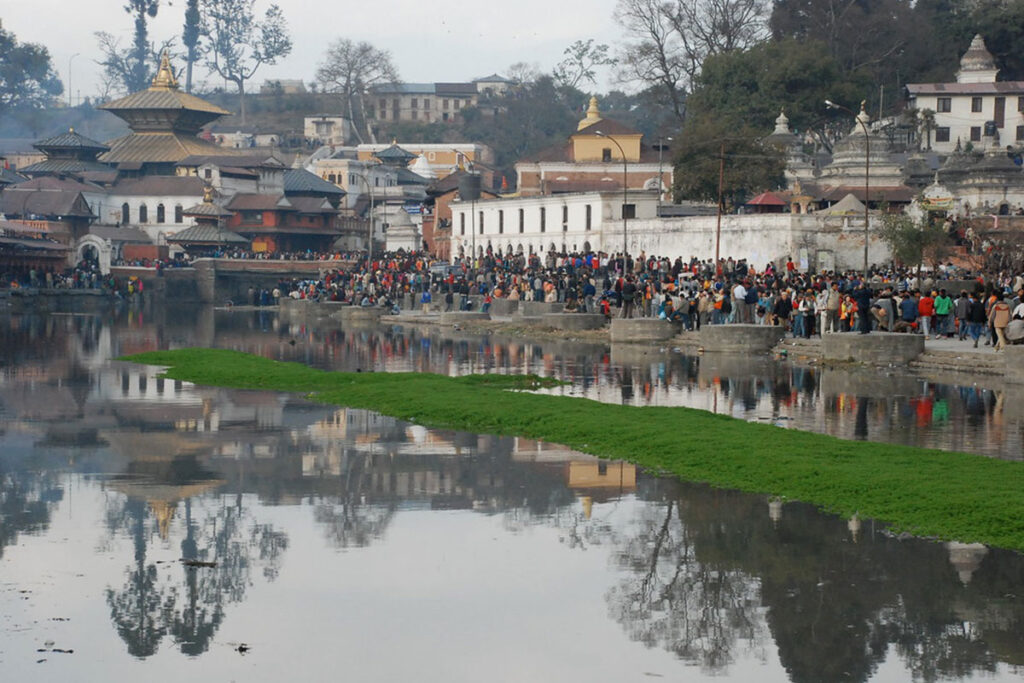
Kathmandu Heritage Multi Day Tours & Hikes
Kathmandu Valley | Heritage Treks & Tours – Nepal
Kathmandu | Full Day World Heritage Sightseeing Tour | Boudhanath, Pashupatinath & Swayambunath
Kathmandu is filled with World Heritage sites and sacred destinations, crowded with traditional neighborhoods and colorful festivals. Spend a few days exploring Nepal’s exotic capital and the history-laden Kathmandu valley. We can arrange sightseeing guide, vehicles and guides as required. See Kathmandu Heritage + Happenings for more details.
We recommend beginning with Pashupatinath in the early morning, and moving on to Boudhanath mid-morning. Hindu Pashupatinath on the sacred Bagmati river and its sacred temple complex is one of Nepal’s most important sites, a powerful cremation site and Nepal’s most important Hindu temple. Here, monkeys run up and down the steps of the burning ghats, and trident-bearing saddhus draped in burnt-orange and saffron sit serenely meditating, when they’re not posing for photos-for-rupees. Local guides can explain the significance of the complicated ceremonies. Please be respectful when taking photos.
Boudhanath, in the midst of traditional monasteries (gompas) and hung with long strings of multi-colored prayer flags, attracts Sherpas, Tibetans and tourists alike for daily circumambulations (koras) of the iconic stupa. The striking Buddha eyes of Boudhanath Stupa watch over a lively and colorful Tibetan community and attract pilgrims from all over the Himalayan Buddhist realm. There are wonderful spots for lunch at Boudhanath (Roadhouse Cafe has wood-oven pizzas and a breathtaking view of the stupa and colorful Nepals circling it), and it’s a good place to learn the technique of thanka painting and purchase a thanka (Buddhist mural). See also Bhaktapur for more options for shopping for thankas.
Wander through the many temples, pagodas, courtyards and the museum at Kathmandu Durbar Square, a timeless gathering spot and a UNESCO World Heritage site. Kathmandu Durbar Square, including the old royal palace, is Kathmandu’s ‘Palace Square’, a showcase for the world renown artisans and craftsmen of Kathmandu and a synthesis of Hindu and Buddhist palaces, temples, stupas and statues. The Malla and Shah kings ruled over the Kathmandu Valley during the centuries of the building of the layers of this Durbar Square. Along with their opulent palaces, the square surrounds numerous courtyards and temples, all works of art with intricate and often erotic carvings. Kathmandu Durbar Square is known as Hanuman Dhoka Durbar Square, a name derived from a statue of Hanuman, the monkey devotee of Lord Ram, at the entrance of the palace. The social, religious and urban focal point of the city, Durbar Square is often the site of festivals, marriages and other ceremonies such as Teej. Some important structures are Hanuman Dhoka Palace, Kumari Ghar (Abode of the Living Goddess), Taleju Temple, built between the 12th and 18th centuries, the 17th century stone inscription set into the wall of the palace with writings in 15 languages.
In the evening (take the interesting back streets from Durbar Square) climb the many steps to the gilded Swayambhunath stupa (known as the monkey temple) which rises from the Kathmandu valley floor at 1420 meters and is one of the holiest Buddhist sites in Nepal. Swayambunath, the ‘self created’ stupa, was founded over 2000 years ago at a time when the Kathmandu valley was filled by a large lake, with a single lotus in the center. Mythology says that Manjusri, a bodhisvatti, drained the lake with one cut of his sword and the lotus flower was transformed into the stupa. From its commanding views of Kathmandu, circumambulate Swayambunath’s white-washed stupa, painted with distinctive Buddha eyes, the complex a unique synthesis of Buddhism and Hinduism. Another interesting time to visit Swayambunath is in the mornings, when Nepalis visit the temple dedicated to the God of Smallpox to with colorful offerings for the goddess.
Stop to photograph reflections in Kathmandu’s many pokhari’s, or ponds, including the beautiful Rani Pokhari (queen’s bath) near New Road, and the Naga Pokhari (pond of the snake gods of the underworld) just beyond the palace gates. The many bathing ghats, square enclosures with steps leading down to water spouts, often decorated with naga heads, are also interesting and colorful gathering spots.
+Entrance Fees not Included for Single Person
Kathmandu | Half Day World Heritage Patan Durbar Square Sightseeing Tour
Visit the third of Kathmandu’s ancient capitals, known as ‘The City of Fine Arts’, best if you have an extra day in hand as Patan is also rich in cultural heritage, has many lovely roof-top cafes for lunch and world-class museums. Some of the highlights of Patan are its Durbar Square, the Krishna Temple within the palace complex of Patan (entirely made of stone, with 21 distinctive spires), and Hiranya Varna Mahavir, or the Golden Buddha Temple.
+ Entrance Fees not Included for Single Person
Kathmandu Valley | Full Day World Heritage Bhaktapur & Changu Narayan Sightseeing Tour
One more day in Kathmandu, with a sightseeing excursion by private vehicle to Bhaktapur. Bhaktapur which translates as ‘Place of Devotees’ and is also known as Bhadgaon, is an ancient Newar city approximately 15 kilometers east of the Kathmandu Valley. Bhaktapur is one of three ancient capitals of the Kathmandu valley, the capital of the Newar Kingdom and a city of artisans and craftspeople famous for its art and architecture: intricate carvings, sculptures, paintings, thankas, pottery, statues and temples, or pagodas. Bhaktapur has a well-preserved ‘durbar square’, or palace square, and has been named a World Heritage site by UNESCO because of its incredible temples, pagodas, wood carvings, stone carvings and metalwork. Bhaktapur is also famous for its yogurt, called curd in Asia, a taste which hasn’t been duplicated anywhere.
Spend the day exploring Bhaktapur and its rich cultural heritage, where a majority of enthnic Newaris live in traditional ways, and life seems to stand still. There are many great restaurants and cafes to rejuvenate, and it’s possibly the best spot in Kathmandu for purchasing a thanka after watching the technique, as well as shopping for endless other locally produced crafts. Bhaktapur is home to countless local festivals, so if you are lucky and arrive on a festival day, enjoy the timeless and colorful events unfold.
You’ll also visit at Changu Narayan, a few km from Bhaktapur and one of Kathmandu’s oldest Newari temple villages. Legend has it that Changu Narayan was given to the daughter, Champak, of a Kashmiri king of Nepal when she wedded the prince of Bhaktapur. The important Vishnu temple is one of the oldest temples in all of Nepal, and was damaged during the 2015 earthquakes.
+ Entrance Fees not Included for Single Person
Everest Sightseeing Mountain Flight
An hour long extravaganza of the world’s 8000 meter peaks. Airport Transfers not Included. (+$250 or Market Price)
Everest Sightseeing Helicopter Tour
Inquire for prices and options for a once in a lifetime helicopter trip flying right over Everest Base Camp, Kala Pattar, the Khumbu Glacier, plus incredible views of Everest, Lhotse, Nuptse, Cho Oyu, Makalu, Ama Dablam, Pumori and more! Cost per helicopter, option to stop at Everest View Hotel for an ‘Everest breakfast’. (+$Inquire for Options)
Cycling Trip Kathmandu Valley
Many options for day trips, or extended trips, in the Kathmandu Valley. We can customize a cycling trip for you in partnership with one of our knowledgeable partners in Kathmandu. (+$Inquire for Options)
Shivapuri Heights Cottages
A wonderful get away 20 km north of Kathmandu, Shivapuri Heights Cottages are stylishly designed and personal cottages built around a ‘common house’, where you can breakfast overlooking the stunningly beautiful Kathmandu valley. Massages available on request. (+$Inquire for Options)
Extra Days in Kathmandu | Customize your Journey!
We have plenty of great suggestions for extra days, or weeks, in Nepal! See our Nepal & Kathmandu Modules | Customize Your Trip! for ideas to put together the perfect journey.
We recommend Kathmandu Valley heritage tours to Bhaktapur or Patan (the Kathmandu Valley’s other historic capital cities), mountain biking, river rafting, yoga retreats, get-aways to Gorkha, Bandipur, Panauti or Namo Buddha to visit traditional hill villages, temples, monasteries and fortresses or a tour of the Newari temple of Changu Narayan and a night at the Fort Hotel in Nagarkot for sublime Himalayan panoramas!
Everest sightseeing flight or an epic helicopter tour over Everest Base Camp, a luxurious stay at Temple Tree Resort & Spa in Pokhara or Himalayan Front in Sarangkot, paragliding, hiking or zip-lining over Phewa Lake, a spa + wellness getaway at Dwarikas Resort in Dhulikhel, a relaxing, luxury wildlife excursion to Chitwan National Park staying at Tharu Lodge or Maruni Sanctuary Lodge, a chic wildlife safari in Bardia National Park at Tiger Tops, a weekend of adventure, sauna and pampering at The Last Resort or 5-star treatment in historic Dwarika’s Heritage Hotel in Kathmandu.
Kamzang Journeys can customize any of these wonderful excursions for you!
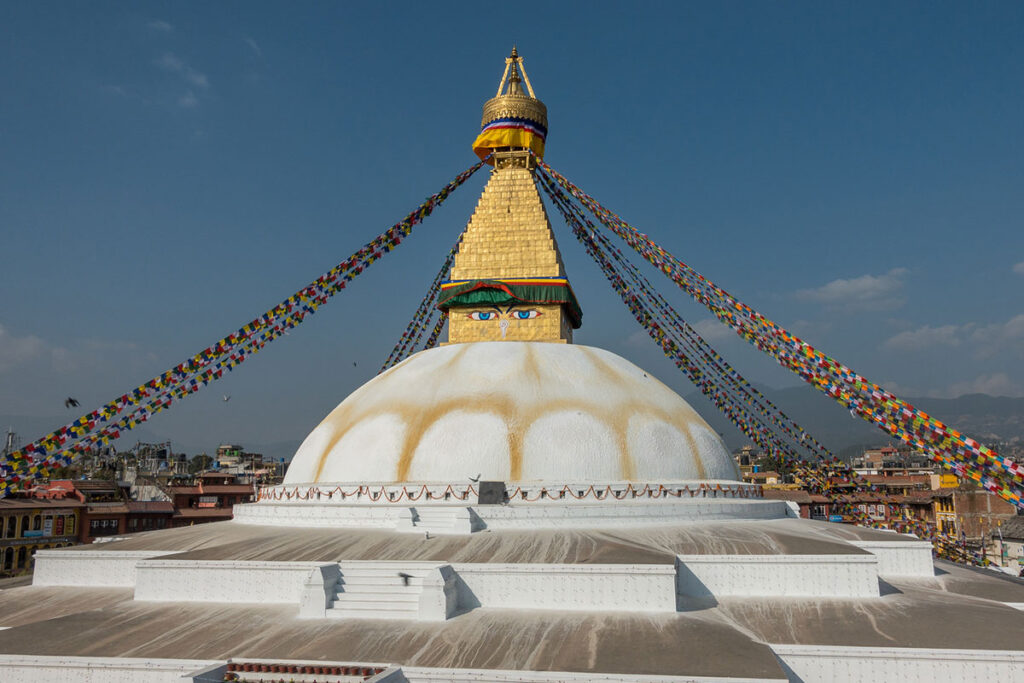
Everest Heli Tours
Everest Helicopter Tour Kwondge | Dinner Sunset & Sunrise over Everest – Yeti Mountain Home
An epic private helicopter tour for an extra day in the spectacular Khumbu region. Sunset dinner and sunrise breakfast overlooking some of the best Himalayan views on the planet! Board your private helicopter from Namche for the quick flight to Kwongde YMH Lodge, and enjoy lunch overlooking this vast panorama of peaks. Views include some of the highest peaks on the planet, including Everest, Lhotse, Makalu, Cho Oyu, Gyajung Khang (the highest peak under 8000m), and the majestic Ama Dambam. From the YMH Lodge, you can look down on Kwonde Lake, generally hidden, and up the awe-inspiring Khumbu valley. The Kwongde YMH (Yeti Mountain Home) is a luxury lodge, one of the world’s highest hotels in one of the Himalaya’s most dramatic locations. Your epic helicopter tour finishes back in Namche Bazaar, but you have the option to charter the helicopter back to Lukla or Kathmandu.
+ Price Per Helicopter – Namche to Namche ($1800)
+ Max 4 Passengers
+ Price Per Person Yeti Mountain Home – Breakfast + Dinner ($175)
+ Single Supplement ($75)
Everest Mountain Helicopter Sightseeing Tour | Namche to Namche | Lukla, Everest Base Camp, Cho La Pass (Gokyo Valley), Renjo La Pass (Thame Valley) & Namche
A once in a lifetime helicopter tour of the Everest region’s spectacular peaks, glaciers, and Himalayan passes! Your private helicopter picks you up in Namche Bazaar, from where you will fly over the Khumbu Glacier and to Everest Base Camp, as well as the incredible Everest icefall. You will have a chance to stop on Kala Pattar for photos of this spectacular setting. Back in your helicopter, your flight path takes you over Dzongla Lake, the glaciated Cho La pass, and into the stunningly beautiful Gokyo valley, flying low over the turquoise Gokyo Lake, with another touch down to splash some sacred lake on yourself before crossing the Renjo La pass to the traditional Thame valley, the old trade route to Tibet. Your epic helicopter tour finishes back in Namche Bazaar, but you have the option to charter the helicopter back to Lukla or Kathmandu.
+ Price Per Helicopter ($2750) – Namche to Namche
+ Max 4 Passengers
Everest Mountain Epic Sightseeing Tour | Kathmandu to Kathmandu | Lukla, Everest Base Camp, Cho La Pass (Gokyo Valley) & Namche
The full helicopter deal, all the way from Kathmandu to Everest Base Camp, and much more! A once in a lifetime helicopter tour of the Everest region’s spectacular peaks, glaciers, and Himalayan passes! Your private helicopter picks you up at Tribhuvan Airport in Kathmandu, from where you will fly up to the fabled Tenzin Norgay airport in Lukla. After a cup of tea in Lukla, you will reboard your helicopter and fly over the Khumbu Glacier and to Everest Base Camp and the sublime Everest icefall. You will have the unique chance to stop at Everest Base camp for photos of this spectacular setting.
Back in the helicopters, your flight path takes you over beautiful Dzongla Lake, the glaciated Cho La pass, and into the stunningly beautiful Gokyo valley, flying low over the turquoise Gokyo Lake and down the Gokyo Valley. Your epic helicopter continues by flying back over Namche Bazaar, and back through Nepal’s lush middle hills to Kathmandu.
+ Price Per Helicopter ($5000) – Kathmandu to Kathmandu
+ Max 4 Passengers
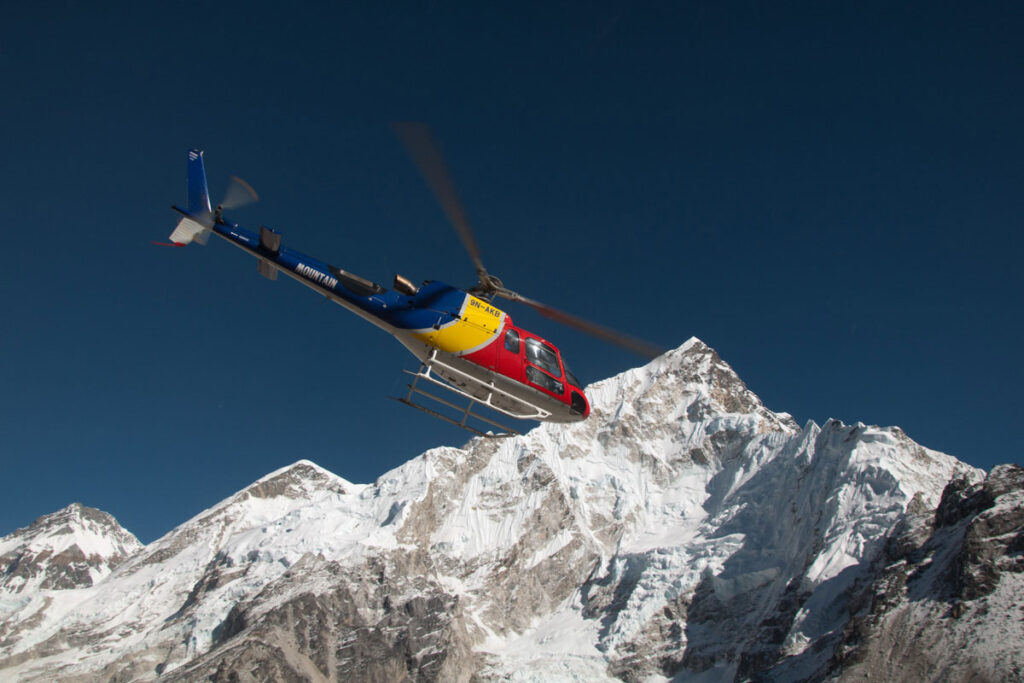
Great Stays
BOUTIQUE & LUXURY HOTELS | KATHMANDU VALLEY
Kathmandu Guest House
Kathmandu Guest House
The Kathmandu Guest House is one of Kathmandu’s first hotels, originally a Rana Palace. Located in the heart of Thamel, the Kathmandu Guest House is a beautiful, lively hotel with a large garden and lovely outdoor cafes, centrally located in Thamel with a wide range of restaurants, cafes, yoga and shopping surrounding it. KGH offers a wide selection of rooms, including their wonderful deluxe rooms.
“Travelers know that the frenetic pace of a crowded city like Kathmandu needs an escape. The Kathmandu Guest House, a converted Rana dynasty mansion with fragrant gardens and airy corridors, has provided the peaceful refuge of choice since 1967. Since the days of being the first and only hotel in Thamel, the packed tourist district of Kathmandu, it’s become something of an institution. It’s close to everywhere and its gate is the meeting point that nobody can mistake. As a guidebook put it, “Kathmandu Guest House acts as a magnet for mountaineers, pop stars, actors and eccentric characters.” Even the Beatles stayed here in 1968. Whether you’re returning from the mountains or arriving from the airport, come and relax at the courtyard restaurant, order a cup of fine Italian coffee or a chilled Gorkha Beer, and escape for a moment in the historic surroundings of Kathmandu’s most loved guesthouse.”
Kathmandu Guest House Timeline
KGH History
Dwarika’s
Dwarika’s Hotel
Dwarika’s, Kathmandu’s premier hotel built and decorated with traditional Kathmandu valley architecture, is an oasis of calm located near the airport, where you can relax by the pool, visit the award-winning spa, enjoy the serene, historic surroundings and dine at one of their world-class restaurants.
“Dwarika’s Hotel was registered in 1977, with the idea of reviving the architectural splendour of the valley. All the terracotta work was made in the valley, using local clay and skills. The couple also incorporated elements of Nepal’s diverse cultural heritage, including those from beyond the valley, when designing the rooms. The furniture was crafted by families of traditional carpenters, and the linen, textiles and embroideries were hand woven and used Nepali patterns. In all purposes, Dwarika Das Shrestha took some of the finest elements of Nepali crafts, and presented them in a way that had not been done before. In explaining his vision, he once stated: “My project is to recreate a 15th-17th century environment where tourist and Nepali alike would have a sensation of the original. The hotel as a commercial enterprise is merely a vehicle to finance and carry my dream forward.”
History of Newari Culture in Kathmandu. Inspiration for the Heritage Architecture of Dwarika’s
Newari History in Kathmandu
History of Dwarika’s
Dwarika’s History
Dwarika’s Resort Dhulikhel
Dwarika’s Resort
A top-notch resort, with a wonderful spa, and wellness, and yoga retreats, on the Kathmandu Valley rim. “With the belief in the need for maintaining harmony between the body, mind, spirit and the planet for a peaceful, healthy and balanced life; the Dwarika’s Resort is built on the philosophy of respecting nature and self. The resort takes its inspiration from ancient Hindu Vedic scriptures (Vedas), Buddhist medicine and traditional Himalayan knowledge. The Himalayan belt has been home to holistic healing and wellbeing for more than three thousand years. The region’s approach to wellbeing, its serene natural beauty and rare medicinal herbs has attracted great sages through time. The Hindu Vedic scriptures describe Ayurveda, the science of life, as a comprehensive approach to wellbeing that encompasses the study of biology, spirituality, psychology, astronomy, nutrition and beauty. Originating from the same roots the Buddhist approaches to wellbeing also follows similar path and views health as harmony between the mind, body, spirit and one’s environment.
The resort has been designed based on the knowledge of these ancient understanding about holistic wellbeing with all the spaces being consecrated and brought to life. The lifestyle spaces within the resort are designed to attract positive energy and keep negative energy at bay. When you go around the resort you can find details we have placed in various spaces to ensure the energy within the resort is as positive as possible. For example, the resort is surrounded by Cactus (Ketuki), which is believed to cleanse the space around it of all the negative energy and attract positive energy instead. Hence, adding to the calm and nurturing environment offered within the resort. The resort also offers various activities within these spaces to enhance and add value to our guests’ experience.”
Yak & Yeti
Yak & Yeti
Yak & Yeti is one of Kathmandu’s historic 5-star hotels, steeped in history, with a lovely pool and garden, located just off Durbar Marg, a tree-lined, upscale road of shops and hotels. ” Yak & Yeti opened in 1977 as a 120 room, 5-star hotel – the first of its kind in Nepal. A new wing of an additional 150 rooms was built in harmony with the architectural features of the old palace, Lal Durbar, bringing the room total to 270. The whole hotel is a sumptuous array of beautiful artifacts, art, and traditionally crafted fixtures. Attention to detail has been meticulously considered throughout, giving the feeling you aren’t just in a hotel as much as an art gallery or museum. Over the years the hotel has been upgraded and extended and now boasts a shopping arcade, a swimming pool, two tennis courts and a state-of-the-art fitness center and luxury spa.”
Hyatt Regency
Hyatt Regency
The Hyatt is a stylish, 5-star hotel located near Boudhanath, with a large pool, a great buffet breakfast, a gym and a mix of Buddhist and Hindu decor in the lobby and rooms. “Hyatt Regency Kathmandu is a five-star luxury hotel and resort in Kathmandu, set on 37 acres of landscaped grounds and created in the traditional Newari style of Nepalese architecture. This beautiful hotel and resort is located on the road to the Boudhanath Stupa: the most holy of all Tibetan Buddhist shrines outside of Tibet and a UNESCO World Heritage Site located within a five-minute walk from the hotel. The hotel is just 4km (2.4m) from the Tribhuvan International Airport and 6 km (3.7m) from the city center of Kathmandu.”
Hotel Tibet
Hotel Tibet
“Since 1998, Hotel Tibet has set the standard for showcasing the warmth of Tibetan hospitality. Newly renovated post-COVID, we have worked towards merging modern elements with traditional Tibetan aesthetic to provide you with the utmost convenience and comfort and to make your stay with us a memorable experience. We have newly-renovated rooms, divided into deluxe, club, and suite categories that combine contemporary and traditional Tibetan designs. Our rooms are especially designed with your comfort in mind, featuring plush bedding, modern furnishings, and elegant decor.”
Dusit Princess
Dusit Princess
Kathmandu’s BEST rooftop bar, restaurant and pool. Brother of the owner of Hotel Tibet, which shares the property. “Make Dusit Princess Kathmandu your base for exploring Nepal’s vibrant capital. Comfort, value and convenience will define your stay, with warm Thai and Nepalese hospitality woven into every moment. Conveniently located in upmarket Lazimpat, the hotel has international restaurants and Narayanhiti Palace Museum on its doorstep.”
Marriott
Marriott
The Marriot was completed in 2020, located just near Nag Pokhari, with Kathmandu’s best buffet! “Retreat to Kathmandu Marriott Hotel, a 214-room contemporary hotel in the capital city of Kathmandu. Settle into spacious, well-appointed rooms and suites, many with views of the Himalayan range. Dine in our hotel restaurants, featuring International cuisine at Thamel Kitchen and Asian cuisine at Edamame. Relax at Raksi Music Bar with delicious food and beverages overlooking our waterfall terrace. Get pampered in our full-service hotel spa and salon, take a dip in our outdoor pool or work out in our 24-hour fitness center.”
Sheraton Hotel
Sheraton Hotel
One of Kathmandu’s great rooftop bars and pools! “Surrounded by the Himalayas, The Sheraton Kathmandu Hotel is conveniently located along the city’s main road, Kantipath. Once the Royal Palace for the kings of Nepal, The Narayanhiti Palace Museum is nearby as are embassies, banks and corporate offices. Tribhuvan International Airport is forty minutes away.
Kathmandu’s most popular tourist area, Thamel is located adjacent to the hotel and is filled with restaurants, bars, cafés and shops. In addition to traditional woolen items, pashmina shawls and scarves, as well as mountaineering equipment, you can savor some delightful Nepalese cuisine, including dumplings called momos, dal, and kwati, a delicious Newari curry soup made with a variety of beans.
This 20,000 SM GFA, 218-key Sheraton Hotel is located on a 6,647 SM site in the center of Kathmandu. The hotel includes food and beverage, a 900 SM banquet hall, meeting rooms, spa and gymnasium facilities and back-of-house areas.”
The Terraces
The Terraces
“The Terraces Resort and Spa is a luxury resort in Nepal, offering stunning views of the Kathmandu Valley and majestic Himalayas located near the border of Bhaktapur with easy access from Lalitpur. We provide the perfect environment to unwind, reconnect with nature and celebrate life’s special moments. Our friendly and professional staff is dedicated to catering to your every need, guiding you to discover the best of Nepal’s culture and nature through bespoke activities and tours. Immerse yourself in the historical sites of Bhaktapur or venture into the scenic landscapes of Lakuri Bhanjyang, creating unforgettable experiences that embrace the essence of Nepal. The Terraces is not just a luxury resort in Kathmandu – it is a destination where you can savor life to the fullest.
The resort, located just 16km from Kathmandu’s Tribhuvan International Airport, fuses international sensibilities with the best of what Nepal has to offer: Stunning mountain views, fresh air, wide open spaces and organic food. Each spacious room or suite comes with a terrace balcony. The only barrier between you and the beautiful world outside is floor-to-ceiling windows.”
BOUTIQUE HOTELS
There are many other boutique and character-filled hotels and guesthouses around the Kathmandu Valley. Just a few that we like listed, but this is not AT ALL an extensive list.
KATHMANDU | THREE CAPITALS
Potala Guesthouse – Thamel
Hotel Roadhouse – Thamel
Kantipur Temple House – Thamel
Nepali Ghar – Thamel
Aloft by Marriot – Thamel
Hotel Mulberry – Thamel (Pool)
1905 Suites – Nag Pokhari
Hotel Manaslu – Lazimpat
Hotel Shambala – Bainsbari – Maharajganj (Pool)
Babar Mahal Vilas – Babar Mahal
Hotel Padma – Boudhanath
Rokpa Guest House – Boudhanath
Hotel Shambaling – Boudhanath
Hotel Tibet International – Boudhanath
Hotel Lotus Gems – Boudhanath (Pool)
Cozy Nepal – Patan
Pahan Chhen – Patan
Traditional Stay Patan – Patan
The Inn Patan – Patan
Traditional Homes | Swota – Patan
Peacock Guest House – Bhaktapur
Hotel Heritage – Bhaktapur
KATHMANDU VALLEY & AROUND
The Fort Resort – Nagarkot
Hotel Mystic Mountain – Nagarkot
Gaia Holiday Home – Dhulikhel
Gokarna Forest Resort – Gokarna
Shivapuri Heights Cottages – Budhanilkanta, Shivapuri
The Old Inn – Bandipur
The Famous Farm – Nuwakot
Gorkha Gaun Resort – Gorkha
Terraces Resort – Lhakuri Bhanjyang Lamatar
Balthali Village Resort – Panauti
Park Village Resort – Budhanilkhanta (Pool)
POKHARA & AROUND
Begnas Lake Resort – Begnas Lake (Pool)
Hotel Karuna – Pokhara
Temple Tree Hotel & Spa – Pokhara (Pool)
Lakeview Resort – Pokhara
Hotel Barahi – Pokhara (Pool)
Summit River Lodge – Kurintar (Kathmandu – Pokhara Highway)
Ghale Gaun Homestay – Ghale Gaun (Near Besi Sahar)
FARMHOUSES & HOMESTAYS
Namo Buddha Resort – Namo Buddha
Herb Nepal – Bhaktapur
Nagarkot Farmhouse – Nagarkot
Srijana Farms – Tansen, Palpa
The Bosan Farmhouse – Bosan Danda
Almost Heaven Farm – Ilam
Barpeepal Bisauni Homestay – Ilam
KATHMANDU POOLS
Hyatt Regency – Boudhanath
Dwarika’s Hotel – Near Airport
Park Village Resort – Budhanilkhanta
Hotel Shanker – Lazimpat
Hotel Shambala – Bainsbari – Maharajganj
Marriott – Nag Pokhari
Yak & Yeti – Durbar Marg
Hotel Mulberry – Thamel
Photos
KIM BANNISTER PHOTOGRAPHY | HIMALAYAN TREKS, CYCLE TRIPS & TRAVELS
Kim Bannister Photography
CYCLE THE HIMALAYA PHOTOS
Guided Cycling Trips
KAMZANG JOURNEYS | ALL ABOUT US IN PHOTOS
Explore Kamzang Journeys
KAMZANG JOURNEYS | YELLOW TENT PHOTOS
The Yellow Tent of Eternal Happiness
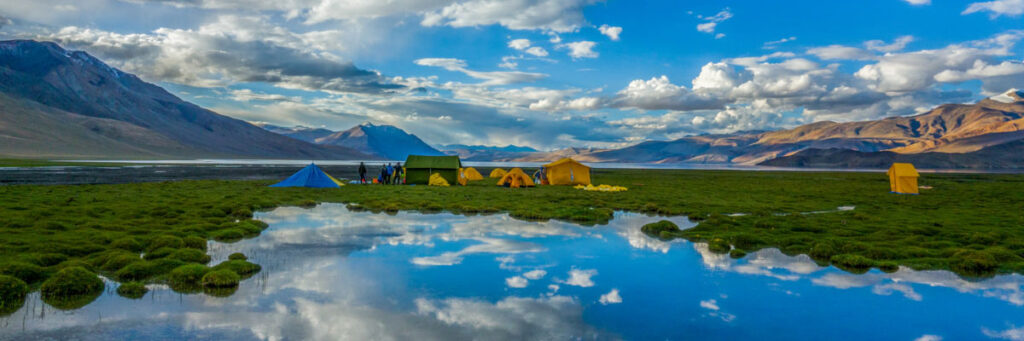
HIMALAYAN WILDLIFE, BIRDS & FLOWERS PHOTOS
Himalayan Wildlife, Birds & Plants
HIMALAYAN DESIGN & CULTURAL PHOTOS
Himalayan Design & Cultural Photos
KAMZANG JOURNEYS GROUP PHOTOS
Kamzang Journeys Groups
KAMZANG JOURNEYS STAFF PHOTOS
Kamzang Journeys Staff
THE KAMZANG FUND & KAMZANG KIDS PHOTOS
The Kamzang Fund
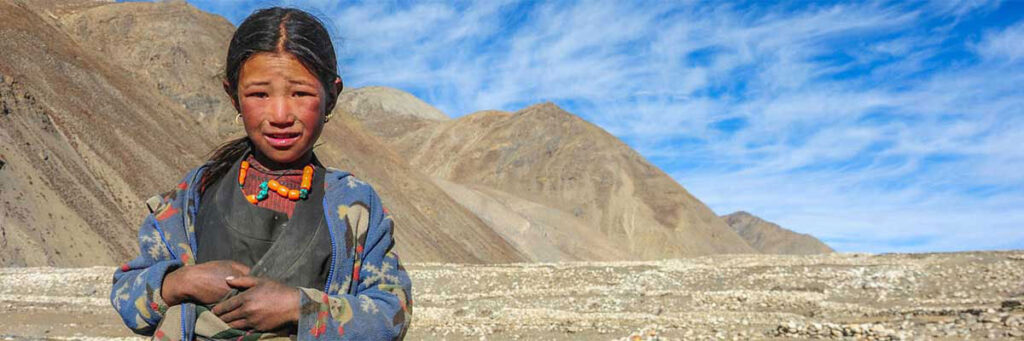
NEPAL JOURNEYS PHOTOS
Nepal Journey
INDIA JOURNEY PHOTOS
India Journeys
TIBET JOURNEYS PHOTOS
Tibet Journeys
BHUTAN JOURNEYS PHOTOS
Bhutan Journeys
MYANMAR (BURMA) JOURNEYS PHOTOS
Myanmar (Burma) Photos
MONGOLIA JOURNEYS PHOTOS
Mongolia Journeys
SOUTHEAST ASIA PHOTOS
South East Asia Photos